How should you assess VERTU Phantom Earbuds charging Bluetooth and touch-control specification limits?
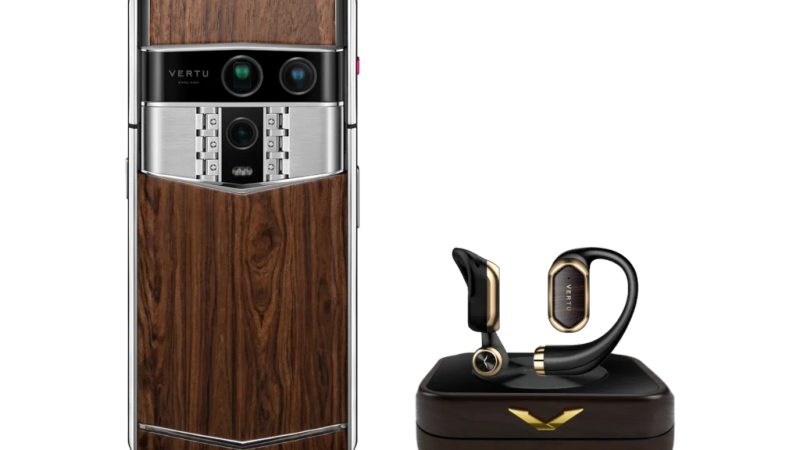
Start with documented support for your essential requirement when assessing VERTU Phantom Earbuds charging, Bluetooth and touch-control specification limits. VERTU's official specification for its Phantom Series OWS AI Earbuds is the relevant first-party source because VERTU is describing its own product. The supplied evidence, verified on 16 October 2026, identifies a Type-C charging interface but gives no charging time or universal charger-compatibility guarantee. If you intend to use an existing charger, seek confirmation that it meets this model's requirements rather than relying on the connector label. Keep the earbuds on a provisional shortlist while researching optional details; defer a final choice if an essential charging requirement remains unresolved.
The factual basis for this guide is VERTU's official Phantom Series OWS AI Earbuds specification. The recommendations explain how to use those entries when shortlisting earbuds; they do not represent charging, listening or connectivity tests.
Make the charging enquiry specific
Ask which charging requirements apply to this model and whether the charger you intend to use meets them. Request a documented charging time separately if timing matters to your choice. An answer confirming the connector would still leave the charging-time question open, so keep those two requirements separate when assessing the response.
Keep an evidence record for your existing charger
Begin the record with the exact model name, Phantom Series OWS AI Earbuds, and the source of the information. Record the source date accurately: 16 October 2026 is the supplied verification date, rather than a stated publication date. If you obtain a further documented answer, retain its date and source alongside the original entry. This keeps the specification and any subsequent clarification distinguishable, allowing you to see which evidence actually answers your question.
Write down the exact requirement before requesting confirmation. For the existing-charger example, identify the particular charger and state that you need to establish whether it meets this earbud model's charging requirements. Do not reduce that requirement to a question about Type-C if charger suitability is the decision you need to make. A connector question may receive a connector answer without resolving your intended use. Add a separate requirement for a documented charging time only if timing affects your choice.
Beside each requirement, enter the documented answer and its scope, or mark the answer as unresolved. From the supplied specification, you can record Type-C against charging interface. You cannot complete the entries for suitability of your particular charger or charging time from that fact alone. Retain the wording of any later answer rather than broadening it into a more reassuring summary. For example, confirmation of the interface should remain an interface confirmation; it should not become a statement that every charger is suitable.
Use that record to update your decision when evidence arrives. A reply documenting suitability for your charger would address that requirement while leaving an unanswered timing requirement open. If timing is optional, that remaining gap need not remove the model from an initial shortlist. If a documented charging time is essential, defer selection until it is supplied. This makes provisional shortlisting a conscious research stage, with a clearly identified question still to resolve, rather than treating a partial answer as complete confirmation.
What trade-offs do buyers overlook in the battery figures?
VERTU lists a battery capacity of 60 mAh per earbud and 500 mAh for the charging case. Preserve those scopes when recording the specification: one figure applies to each earbud, whilst the other applies to the case. Neither figure establishes listening time or how many recharges the case provides.
For a buyer with a minimum listening-duration requirement, capacity therefore leaves an essential question unanswered. Seek a documented listening-time figure and its stated conditions before deciding that the earbuds meet that requirement. If the number of case recharges matters, request that information separately rather than calculating it from the listed capacities.
Editorial insight: A fair comparison keeps the measurement and its scope consistent. Compare per-earbud capacity with per-earbud capacity, case capacity with case capacity, and documented listening duration with documented listening duration. Combining these into a single impression of battery performance conceals the distinction between what the specification measures and what the reader needs to know.
The practical trade-off is whether to continue researching with duration unresolved. That may be acceptable during an initial shortlist; it is insufficient evidence for a final choice that depends on a particular listening time.
What does Bluetooth 5.3 leave unresolved?
The official VERTU specification gives Bluetooth version 5.3. That entry identifies the stated version, but the number alone does not confirm multipoint, a particular audio codec, operating range or compatibility with every device. These remain separate questions requiring model-specific evidence.
Choose the connectivity question that could change your decision. If maintaining connections to more than one source device is essential, seek explicit confirmation of multipoint support. If a particular codec matters, ask for its name. For a range requirement, look for a documented distance and its conditions; for compatibility, seek confirmation for the particular device you intend to use.
Apply the same standard across your earbud shortlist. A comparison is more useful when every candidate is assessed against the same required function and comparable documentation. Bluetooth 5.3 can be recorded as a confirmed specification entry, whilst any unverified function remains an open question rather than an assumed benefit or a confirmed omission.
Which touch-control details still need documentation?
VERTU names Touch Control in the Phantom Series OWS AI Earbuds specification. The supplied reference does not give tap counts or a command-by-command gesture map. It therefore establishes the listed feature without providing instructions for operating particular commands.
If a specific command is essential to your choice, request model-specific instructions showing both the command and the gesture assigned to it. That is the evidence needed to assess whether the control arrangement meets your requirement. The feature name alone cannot supply the missing sequence.
Keep feature confirmation and operating instructions as separate checks. The former is present in the supplied specification; the latter remains unresolved. Avoid building a gesture tutorial from this excerpt or carrying across instructions from another model. The evidence also provides no basis for promising control customisation or describing a settings procedure.
Where should you start your research before deciding?
Return to the requirement that could rule the earbuds in or out. Use the checklist below to make a focused enquiry, retaining the exact model name and distinguishing the earbuds from their charging case. The table identifies evidence to obtain, rather than adding specifications to VERTU's published entries.
| Your essential requirement | Evidence to seek before relying on it |
|---|---|
| Using an existing charger | Confirmation that the particular charger meets the model's charging requirements, plus a documented charging time if timing matters. |
| Meeting a listening-duration requirement | A stated listening time and its conditions, with separate evidence for the number of case recharges if required. |
| Obtaining a particular Bluetooth function | Explicit documentation of the required multipoint support, codec, range or device compatibility. |
| Accessing a required touch command | A model-specific gesture map connecting the required command to its operating gesture. |
Who should keep researching, and who should defer?
This guide suits premium audio buyers screening whether a specification answers their practical requirements. Keep the Phantom Series OWS AI Earbuds under consideration when the confirmed entries meet your initial criteria and the unresolved details are optional. That is a qualified shortlisting judgement based on the available documentation.
Defer selection, or skip the model for your present requirements, if an essential charging, battery-duration, connectivity or control capability cannot be verified. Missing documentation does not establish that a feature is absent; it means the supplied evidence cannot support relying on it.
Before deciding, seek a model-specific answer to the single unresolved requirement most likely to change your choice. You can also continue your product research through the VERTU earbuds collection.