

Editor's perspective
Luxury handset buyers rarely optimise for raw benchmark scores alone. Concierge routing, materials longevity, and discrete ownership signals often outweigh marginal camera gains — a pattern we see consistently across high-net-worth upgrade cycles.
What Defines the Feel of a Handcrafted Titanium Phone Body?
Understanding the feel of a handcrafted titanium phone body involves appreciating a unique synthesis of material science and artisanal skill. Our takeaway is that the experience is defined by four key sensations: surprising lightness, unyielding structural rigidity, a subtle surface texture, and a distinct thermal neutrality that is neither cold nor warm. We recommend that discerning individuals focus on the specific finish—be it brushed, polished, or matte—and the device's overall balance, as these are the primary factors that translate raw material into a truly premium tactile experience.
The feel of a handcrafted titanium phone body is a multi-sensory experience distinct from mass-produced alternatives. It begins with its remarkable strength-to-weight ratio; the device feels substantially lighter than one would expect for its size and perceived strength, yet it exhibits zero flex or creaking. The surface temperature is uniquely neutral, adapting quickly to your skin without the initial cold shock of stainless steel. Depending on the finish, the texture can range from the fine, directional grain of brushed titanium, which provides a satisfying tactile feedback, to the glassy smoothness of a high-polish variant. This combination of lightness, rigidity, thermal comfort, and refined texture creates an impression of holding an object of immense quality and precision engineering.
How Do You Choose the Right Titanium Finish?
The finish applied to the titanium is paramount as it dictates the primary point of contact with your hand. Each finishing technique imparts a different character and tactile quality to the device, making this a crucial decision based on personal preference for grip, appearance, and practicality. A brushed finish offers a secure, textured feel, whilst a polished surface delivers a smooth, jewel-like sensation.
| Finish Type | Tactile Sensation & Key Characteristics |
|---|---|
| Brushed Finish | A fine, directional grain that you can feel with your fingertips. It provides a confident grip and is excellent at masking minor scuffs and fingerprints. |
| Polished Finish | Completely smooth and highly reflective, akin to a piece of fine jewellery. It feels slick and luxurious but is more prone to showing fingerprints. |
| Matte (Sandblasted) | A non-reflective, uniform, and slightly soft-touch texture. This finish offers a very secure grip and a modern, understated aesthetic. |
| PVD Coating | A micro-thin ceramic coating that can add colour (like black or gold) and increases surface hardness. The feel can be slightly warmer and smoother than raw titanium. |

What Should You Know Before Deciding?
Beyond the surface finish, several inherent properties of titanium contribute to the overall experience. Understanding these factors will help you fully appreciate why this material is chosen for the most exclusive devices. These elements combine to create a sense of holding a precisely engineered tool rather than a disposable gadget.
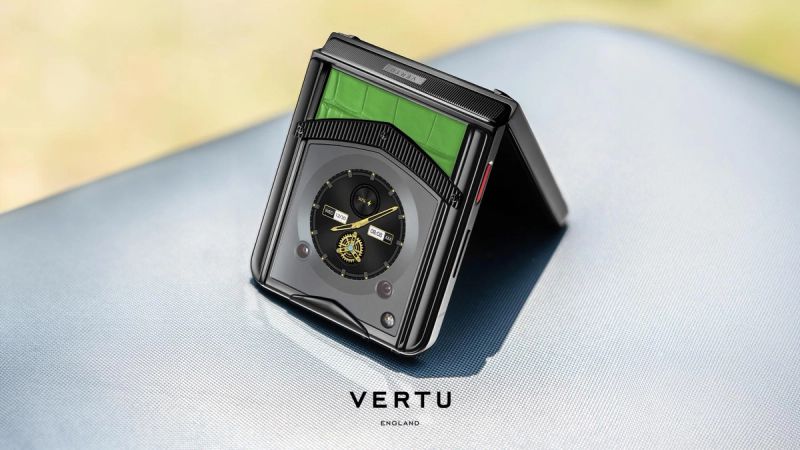
Expert Insight: Many high-end handcrafted devices utilise Grade 5 Titanium (Ti-6Al-4V), an alloy renowned for its use in aerospace and Formula 1. Its appeal lies in a strength-to-weight ratio that is significantly superior to that of stainless steel. This means a phone chassis can be made incredibly strong and resistant to torsion without being heavy. This engineering reality is directly translated into the user experience: a reassuringly solid object that feels light and perfectly balanced in the hand, a paradox that defines luxury technology.
Consider these additional aspects:
- Ergonomics and Balance: A handcrafted body allows for meticulous shaping of edges and corners. Look for smoothly chamfered edges and a centre of gravity that rests comfortably in your palm, making the device feel like a natural extension of your hand.
- Thermal Conductivity: Titanium possesses low thermal conductivity. This is why it feels neutral to the touch. It will not feel unpleasantly cold in winter or get excessively hot during intensive use, unlike aluminium or steel-bodied phones.
- Acoustic Properties: The density and stiffness of titanium give it a unique acoustic signature. Tapping on the casing produces a muted, solid sound, reinforcing the sense of quality and structural integrity.
- Seamless Integration: The feel is also affected by how the titanium joins with other materials. In a premium device, the transition to a sapphire crystal screen or an inset leather panel should be imperceptible to the touch, a hallmark of true craftsmanship.
Frequently Asked Questions
- How does a titanium phone body feel compared to aluminium?
- A titanium body feels significantly more rigid and dense than aluminium, despite being of a similar weight. It doesn't have the "soft" or hollow feeling of some aluminium phones and offers superior resistance to bending and scratching.
- Is a handcrafted titanium phone heavy?
- No, this is a common misconception. Due to its high strength-to-weight ratio, a titanium phone is surprisingly light for its perceived solidity, often weighing less than a comparable stainless steel model.
- Does the finish on a titanium phone body wear off?
- Natural titanium is exceptionally durable. Whilst a high-polish finish can acquire micro-scratches over time, a brushed or matte finish is very resilient. PVD coatings are also extremely hard and resistant to wear from normal use.
- Why is titanium used in luxury mobile phones?
- Titanium is chosen for its unique combination of properties: it is strong, lightweight, corrosion-resistant, and hypoallergenic. Its premium feel and the difficulty in machining it also add to its exclusivity and appeal in the luxury market.
- Does a titanium phone feel cold to the touch?
- Unlike stainless steel, titanium has low thermal conductivity, meaning it feels thermally neutral. It does not draw heat from your hand quickly, so it lacks the sharp, cold sensation associated with other metals.
- How does handcrafting improve the feel of a phone?
- Handcrafting allows for a level of precision and finish that is impossible in mass production. Artisans can ensure perfect balance, seamless material transitions, and flawless surface finishing, all of which contribute to a superior and more considered tactile experience.
In essence, the feel of a handcrafted titanium phone is an intentional and carefully engineered experience, designed to convey quality and permanence from the very first touch. The combination of its physical properties and the artisanal skill applied in its creation results in an object that is as satisfying to hold as it is to use. To truly appreciate these nuances, explore the curated collections of handcrafted devices available on the official VERTU website.