Types of Watch Mechanisms: A Comparison Guide
Understanding the different types of watch mechanisms is fundamental to selecting a timepiece. The core debate centres on two distinct technologies: the traditional automatic movement versus the modern quartz movement. Each offers a unique balance of artistry, precision, and practicality.
The Automatic Movement: A Tradition of Craftsmanship
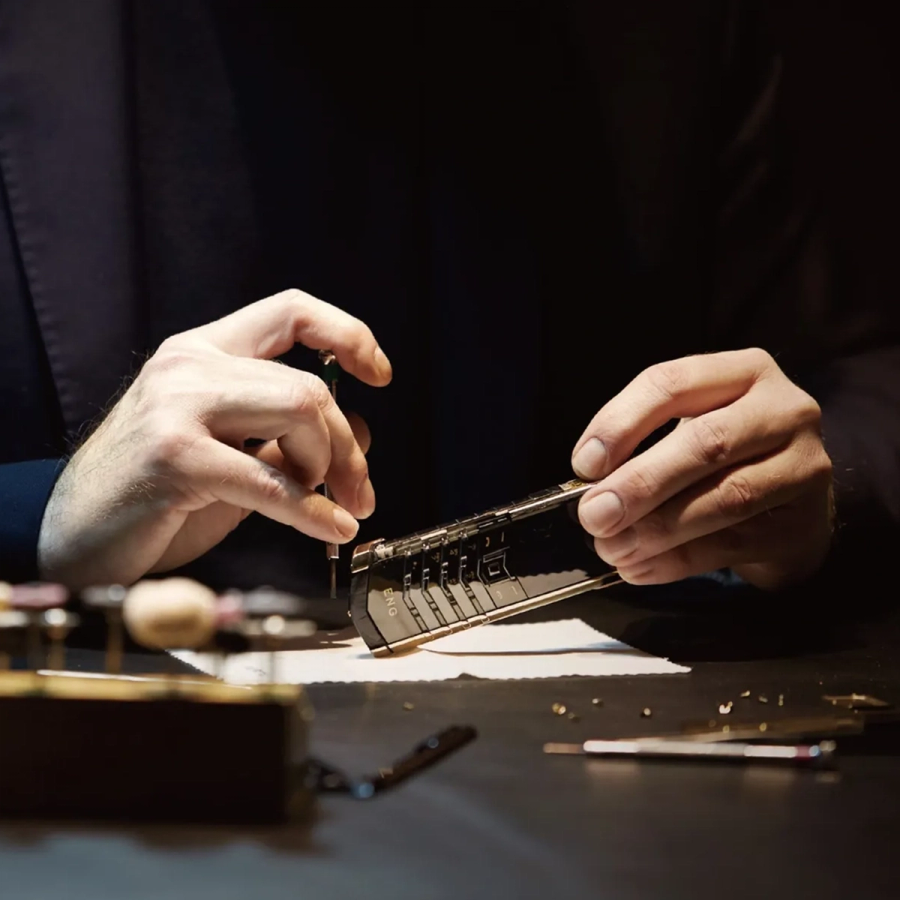
An automatic, or self-winding, movement is a purely mechanical system powered by the kinetic energy generated by the wearer's wrist. It does not require a battery, instead relying on an intricate assembly of springs and gears.
- Primary Advantage: It represents the pinnacle of horological artistry, with a smooth, sweeping seconds hand that connoisseurs favour.
- Consideration: While masterfully engineered, it is less accurate than a quartz counterpart and may require periodic servicing to maintain performance.
The Quartz Movement: The Standard for Precision
A quartz movement is powered by a battery that sends an electrical signal through a tiny quartz crystal. This causes the crystal to vibrate at a precise frequency, driving the motor that moves the watch hands.
- Primary Advantage: It delivers exceptional accuracy, reliability, and greater resistance to shocks, making it a highly practical choice for daily wear.
- Consideration: It requires battery changes and lacks the intricate mechanical soul that defines traditional watchmaking.