

COR Ring Heart Age and wellness score limits: start with intended use
To understand COR Ring Heart Age and wellness score limits, treat Heart Age and other interpreted scores as estimated wellness context, and use longer-term trends for a personal overview rather than a clinical conclusion. VERTU's documented COR RING guidance is relevant because it describes general-wellness insights across heart rate, heart rate variability (HRV), sleep, recovery, stress and activity, while explicitly distinguishing interpreted scores from clinical measurements. The ring is not intended to diagnose, treat, cure or prevent disease, so a score alone should not guide a diagnosis or treatment decision. Before deciding whether this kind of ring suits you, establish whether you want personal wellness context or an answer requiring assessment by a qualified healthcare professional.
What the Heart Age label cannot establish
The name Heart Age does not establish that the result measures biological age or identifies disease. The supplied evidence provides no calculation method, reference population, error range or clinical interpretation thresholds. There is consequently no supported basis here for declaring a particular value reassuring, concerning or a target to reach.
VERTU also identifies cycle insights, recovery, stress and other interpreted scores as estimates. This qualification belongs alongside each result: a precise-looking number does not, by itself, establish clinical precision. These limits concern what the result can tell you, rather than whether the presentation is convenient or appealing.
Read an estimated score alongside the longer-term wellness view
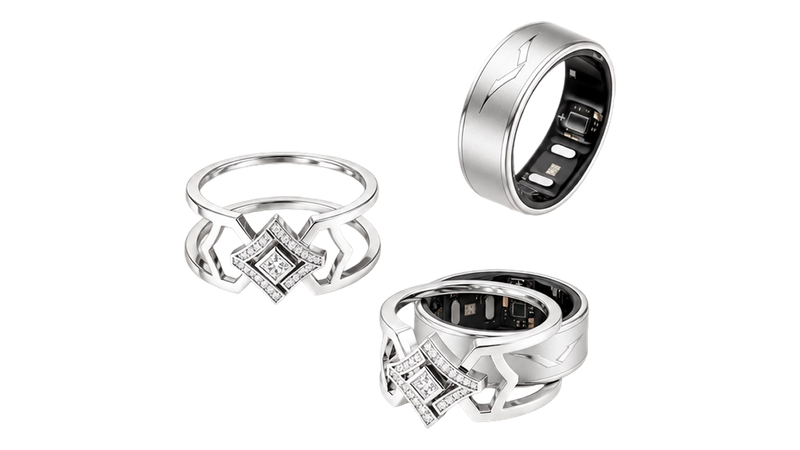
VERTU describes COR RING as bringing sixteen wellness signals into one personal view, with longer-term trends and permission-based sharing. That supports a particular ownership purpose: considering personal wellness information together over time. It does not establish that every signal is a direct measurement or that all sixteen have the same evidential status.
Keep two questions separate when reading the information. A trend concerns how a measure varies over time; an interpreted score offers an estimated summary. Following the former does not remove the limitations of the latter. The supplied facts do not specify the period covered by the longer-term view or how Heart Age relates to the other signals.
A practical wearing decision
If you are considering a ring because you want to review sleep, activity and recovery together, COR RING's documented wellness scope is relevant. The useful decision is whether that personal overview serves your purpose. It does not establish that a change in activity explains a recovery estimate, or that a change in either proves a change in health.
This keeps the ownership trade-off tangible. You may value having several aspects of wellness in one view, whilst still needing a different source of assessment for a clinical question. Choosing jewellery with wellness technology need not mean expecting it to answer every health question.
Editorial insight: VERTU's sixteen-signal overview and its explicit estimate warning should be read together. The number of signals describes the breadth of the personal view; it does not establish the accuracy of Heart Age, explain its calculation or demonstrate clinical validation. The meaningful selection criterion is whether the documented interpretation is sufficient for the decision you intend to make.
How to shortlist rings by the answer you need
A sound recommendation starts with intended use. Here, the evidence supports assessing COR RING as a generic wellness-ring example. It does not support ranking named editions, comparing their score accuracy or assuming identical capabilities across variants.
- Consider this approach if you want personal wellness context. The documented overview may suit a reader interested in longer-term trends across the supplied wellness areas, provided interpreted scores remain estimates in their decision-making.
- Skip COR RING for a clinical assessment purpose. If your essential requirement is disease diagnosis, treatment guidance or a clinical measurement, its stated intended use does not meet that requirement. Keep those decisions with qualified healthcare professionals.
- Reserve judgement if the score's meaning is decisive. If your purchase depends on knowing exactly what Heart Age represents, obtain the applicable official explanation before choosing. The supplied evidence cannot resolve its formula, thresholds or clinical validity.
When comparing wellness rings, use equivalent questions: what is each product intended to do, which results are interpreted estimates, and what evidence supports their stated meaning? Apply those questions to the exact model and app context. A similarly named score is insufficient evidence that two products calculate or interpret it in the same way.
Comfort and jewellery preference can remain personal selection criteria, but they cannot resolve a score's evidential limits. No edition-specific fit, wearing-performance or material evidence is allocated here, so those factors cannot support a model recommendation in this guide.
What to confirm in the official score documentation
The next useful check is the documentation for the exact ring and app you would use. Look for explanations that connect the score's name to its intended interpretation, rather than relying on the label alone.
- Model and app context: Check which model, edition and app version the explanation covers, and whether it applies to the score you are considering.
- Score interpretation: Look for a definition of Heart Age, its stated limitations and any evidence offered for its use. Do not supply your own clinical thresholds where none are documented.
- Trend scope: Establish which signals appear in the personal view and what period its longer-term trends cover. Neither detail is fully specified in the supplied facts.
- Sharing terms: Confirm what information can be shared, with whom and under which permissions, including how permission can be withdrawn. The knowledge base does not describe those controls or interface steps.
Permission-based sharing is a documented feature, but it does not establish particular storage safeguards, a clinical sharing workflow or clinical validity. Sharing an interpreted score does not change its status as an estimate.
Before choosing a ring for Heart Age, check the official explanation for your exact model and app, then decide whether a personal wellness estimate answers your need. If your question requires a clinical conclusion, take that question to a qualified healthcare professional.


