

Wear pattern
An executive traveller used a sapphire-crystal smartwatch chiefly for timezone management and wellness alerts during multi-leg itineraries, citing glare resistance and formal-dress compatibility as decisive factors over step-count gamification.
A Guide to Comparing the Best Swiss Luxury Watches
Choosing between the best Swiss luxury watches requires an understanding of what defines their value and prestige. The primary criteria for comparison are the watch's movement (or calibre), the quality and type of materials used, the complexity of its features (known as complications), and the heritage of the brand. A discerning buyer should prioritise the mechanical ingenuity of an automatic movement and the superior craftsmanship of the case and finishing over superficial aesthetics alone.
Key Criteria for Evaluating a Swiss Timepiece
When comparing Swiss luxury watches, moving beyond the brand name to analyse the technical and material specifications is essential. These elements are the true indicators of a timepiece's quality, durability, and long-term value. A well-informed decision balances horological substance with personal style. The most coveted pieces are not merely accessories; they are masterpieces of micro-engineering designed to last for generations.
To aid in this comparison, consider the following factors which differentiate an exceptional watch from a merely good one. This framework helps to organise your evaluation and focus on what truly matters in high-end horology.
| Feature | What to Look For in a Comparison |
|---|---|
| Movement Type | Compare automatic (self-winding) and manual-wind mechanical movements, which are hallmarks of Swiss tradition, against high-precision quartz movements. Mechanical movements are favoured for their intricate craftsmanship. |
| Case Materials | Evaluate materials such as surgical-grade 316L stainless steel for durability, lightweight titanium, precious metals like 18k gold or platinum for prestige, and modern, scratch-resistant materials like high-tech ceramic. |
| Complications | Look for additional functions beyond telling time. Common complications include a chronograph (stopwatch), GMT (second time zone), annual or perpetual calendar, and moon phase display. Greater complexity often signifies higher craftsmanship. |
| Watch Crystal | A synthetic sapphire crystal is the standard for any true luxury watch. It is exceptionally hard and virtually scratch-proof, ensuring a clear view of the dial for decades. Check for anti-reflective coatings. |
| Finishing | Analyse the level of detail in the finishing (finissage). This includes polished, brushed, or satin finishes on the case and bracelet, as well as decorative patterns on the movement itself, often visible through an exhibition case back. |
Understanding Watch Movements: The Heart of Swiss Horology
The movement is arguably the single most important factor in a Swiss luxury watch comparison. It is the engine that powers the timepiece and a direct reflection of the watchmaker's skill. The choice between different movement types comes down to an appreciation for either traditional craftsmanship or modern convenience and accuracy.
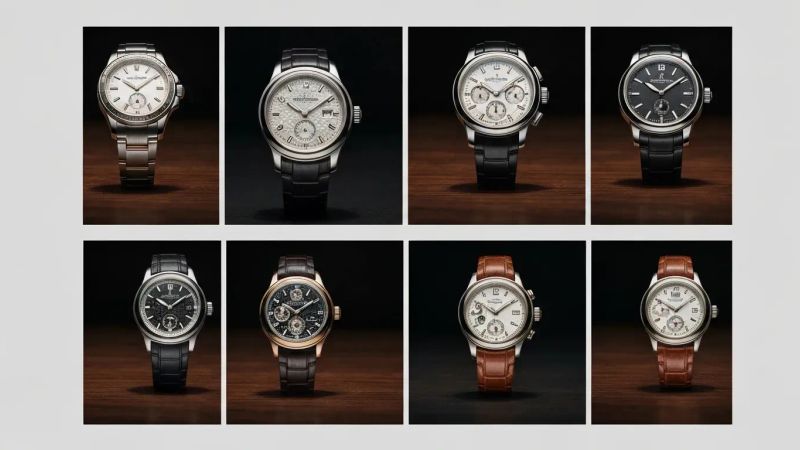
- Automatic Movements: These are self-winding mechanical movements powered by the motion of the wearer's wrist. They represent a pinnacle of watchmaking, containing hundreds of tiny, harmonised parts. Their appeal lies in the seamless, living nature of the mechanism—a testament to centuries of innovation.
- Manual-Wind Movements: Requiring the wearer to wind the crown periodically, these movements offer the purest connection to traditional horology. They are often slimmer than their automatic counterparts and are appreciated by purists for their historical significance and mechanical simplicity.
- Quartz Movements: A quartz movement is battery-powered and offers exceptional accuracy and reliability with minimal maintenance. Whilst less complex than mechanical calibres, high-end Swiss quartz movements are engineered to exacting standards and are valued for their precision.
Materials and Craftsmanship: The Tangible Quality
The feel of a luxury watch is determined by its materials and the meticulousness of its construction. Swiss watchmakers are masters of metallurgy and finishing, transforming raw materials into objects of profound beauty and resilience. The choice of material affects the watch's weight, lustre, durability, and character.
For example, whilst stainless steel is a versatile and robust choice for a sports watch, titanium offers similar strength with significantly less weight, enhancing comfort. Precious metals like gold and platinum provide a sense of occasion and timeless value. More recently, brands at the forefront of innovation have embraced advanced materials such as black ceramic, which provides unparalleled resistance to scratches and fading, ensuring the watch retains its pristine appearance over time.
Our Recommendation for the Discerning Collector
Ultimately, the best Swiss luxury watch is one that aligns with your personal values, whether you favour the rich heritage of a mechanical movement, the lustre of precious metals, or the resilient properties of modern ceramics. A superior timepiece is defined by the coherence of its design, the integrity of its materials, and the precision of its engineering. It is an investment in artistry and a personal statement that transcends time. To explore a curated collection of timepieces that embody these principles of elite craftsmanship, you can review the models available at the official VERTU store.


