| Display Feature | Samsung Galaxy Z TriFold | Huawei Mate XT Ultimate |
|---|---|---|
| Main Screen Size | 10.0 inches | 10.2 inches |
| Main Screen Resolution | 2160 x 1584 (QXGA+) | 3184 x 2232 pixels |
| Main Screen PPI | 269 ppi | 354 ppi |
| Main Screen Brightness | 1,600 nits peak | Not specified |
| Main Screen Refresh Rate | 120Hz adaptive (1-120Hz) | 90Hz adaptive |
| Main Screen Technology | Dynamic AMOLED 2X | Flexible LTPO OLED |
| Cover Screen Size | 6.5 inches | 6.4 inches |
| Cover Screen Resolution | 2520 x 1080 (FHD+) | 2232 x 1008 pixels |
| Cover Screen PPI | 422 ppi | 387 ppi |
| Cover Screen Brightness | 2,600 nits peak | Not specified |
| Cover Screen Refresh Rate | 120Hz adaptive (1-120Hz) | 90Hz adaptive |
| Mid-Size Configuration | Not specified | 7.9 inches (2232 x 2048) |
| PWM Dimming | Not specified | 1440Hz high-frequency |
In a groundbreaking announcement that has sent shockwaves through the mobile technology industry, Samsung Electronics officially unveiled the Galaxy Z TriFold on December 1, 2025, marking the tech giant's bold entry into the revolutionary tri-fold smartphone segment. After watching Huawei dominate this innovative category for over a year, Samsung is now ready to leverage its decade of foldable expertise to challenge the Chinese manufacturer's early lead.
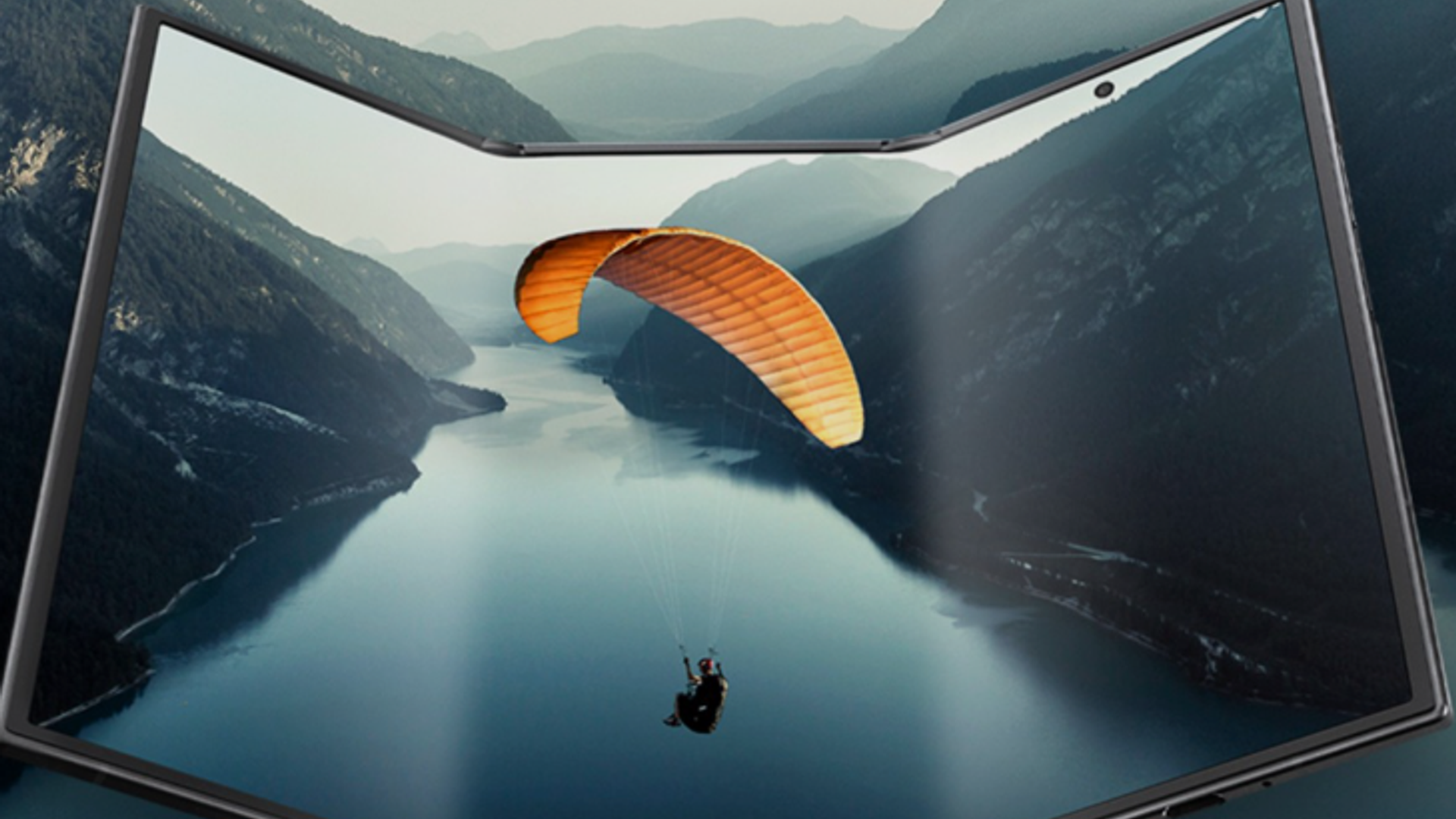
The Galaxy Z TriFold represents Samsung's most ambitious foldable project to date, featuring a massive 10-inch display when fully unfolded—the largest screen ever integrated into a Samsung smartphone. This launch signals a new era of competition in the premium foldable market, where innovation meets practical productivity.
Samsung's Strategic Market Entry: Timing and Positioning
Samsung's decision to enter the tri-fold market in late 2025 is both calculated and aggressive. While Huawei launched the world's first tri-fold smartphone, the Mate XT, in September 2024, Samsung has used this time to refine its technology and engineering approach. The result is a device that aims to combine cutting-edge innovation with the reliability and global reach that Samsung is known for.
TM Roh, Chief Executive Officer and Head of Device eXperience Division at Samsung Electronics, emphasized that the Galaxy Z TriFold addresses one of the mobile industry's most persistent challenges—achieving an optimal balance between portability, premium performance, and productivity in a single device.
Launch Timeline and Availability
Samsung Galaxy Z TriFold Release Schedule:
- South Korea: December 12, 2025 (First launch market)
- International Markets: China, Taiwan, Singapore, UAE (Late December 2025)
- United States: Q1 2026 (Exact date to be announced)
- Pricing: 3.59 million won (~$2,450 USD)
This phased rollout strategy allows Samsung to manage initial production capacity while gathering early user feedback from key markets before the crucial US launch.
Engineering Excellence: Samsung's Decade of Foldable Innovation
Samsung's entry into the tri-fold market is backed by an unprecedented decade of foldable phone development. The company has shipped millions of Galaxy Z Fold and Z Flip devices, establishing itself as the global leader with 32.9% of the foldable market share in 2024.
Revolutionary Design Architecture
The Galaxy Z TriFold measures just 3.9mm at its thinnest point when fully unfolded, featuring Samsung's most advanced Armor FlexHinge system with two differently sized hinges using dual-rail structure that work harmoniously to manage the complex weight distribution inherent in tri-fold designs.
Key Engineering Innovations:
- Armor FlexHinge System : Dual hinges with different sizes work in perfect synchronization, creating smoother and more stable folding despite varying component weights across the device's three panels.
- Reinforced Display Technology : New display architecture specifically engineered for dual-folding applications, featuring a reinforced overcoat added to shock-absorbing layers for enhanced durability.
- Premium Materials Construction : Titanium hinge housing for maximum protection and wear resistance
- Advanced Armor Aluminum frame providing rigidity without additional bulk
- Ceramic-glass fiber-reinforced polymer back panel resistant to cracks
- Corning Gorilla Glass Ceramic 2 on the front cover
- Rigorous Quality Control : Every unit undergoes CT scanning of flexible printed circuit boards and laser scanning to verify component placement precision, ensuring manufacturing accuracy and long-term reliability.
Complete Technical Specifications Comparison
Display Technology Face-Off
Winner: Mixed Results
- Samsung leads in brightness (2,600 nits vs unspecified), refresh rate (120Hz vs 90Hz), and cover screen size
- Huawei offers higher resolution on the main screen and includes a mid-size 7.9″ configuration
- Samsung's Dynamic AMOLED 2X technology provides superior color accuracy with 100% DCI-P3 coverage
Dimensions and Build Quality Comparison
| Physical Specs | Samsung Galaxy Z TriFold | Huawei Mate XT Ultimate |
|---|---|---|
| Height | 159.2 mm | 156.7 mm |
| Width (Folded) | 75.0 mm | 73.5 mm |
| Width (Single Unfold) | Not specified | 143.0 mm |
| Width (Fully Unfolded) | 214.1 mm | 219.0 mm |
| Thickness (Folded) | 12.9 mm | 12.8 mm |
| Thickness (Partially Unfolded) | Not specified | 7.45mm / 4.75mm |
| Thickness (Fully Unfolded) | 3.9mm (thinnest point) | 3.6mm |
| Weight | 309g | 298g (without screen protector) |
| Frame Material | Titanium + Advanced Armor Aluminum | Not fully specified |
| Back Panel | Ceramic-Glass Fiber Reinforced Polymer | Not specified |
| Cover Glass | Corning Gorilla Glass Ceramic 2 | Not specified |
Winner: Huawei (Marginally)
- Huawei is slightly lighter (298g vs 309g) and thinner when fully unfolded (3.6mm vs 3.9mm)
- Samsung offers superior material construction with titanium and advanced armor aluminum
- The 11-gram weight difference may be negligible in real-world usage
Performance and Processing Power
| Performance | Samsung Galaxy Z TriFold | Huawei Mate XT Ultimate |
|---|---|---|
| Processor | Snapdragon 8 Elite (3nm) | Kirin 9010 (7nm) |
| RAM | 16GB | 16GB |
| Storage Options | 512GB / 1TB | 256GB / 512GB / 1TB |
| Operating System | Android 16 with One UI 8 | HarmonyOS 4.2 |
| Google Services | ✅ Full Support | ❌ Not Available |
| MicroSD Expansion | ❌ Not Supported | Not specified |
| 5G Connectivity | ✅ Yes | ✅ Yes |
| Wi-Fi Standard | Wi-Fi 7 | Wi-Fi 6 |
| Bluetooth | 5.4 | 5.2 |
Winner: Samsung (Clear Advantage)
- Snapdragon 8 Elite (3nm) significantly outperforms Kirin 9010 (7nm) in both performance and efficiency
- Wi-Fi 7 provides faster speeds and lower latency than Wi-Fi 6
- Google services integration is crucial for international users
- More advanced Bluetooth 5.4 for better connectivity
Camera Systems Detailed Comparison
| Camera Specifications | Samsung Galaxy Z TriFold | Huawei Mate XT Ultimate |
|---|---|---|
| Main Camera | 200MP Wide-Angle | 50MP Variable Aperture |
| Main Camera Aperture | f/1.7 | f/1.4-f/4.0 (Variable) |
| Main Camera Features | Quad Pixel AF, OIS | OIS, Variable Aperture |
| Main Camera Pixel Size | 0.6μm | Not specified |
| Main Camera FOV | 85° | Not specified |
| Optical Quality Zoom | 2x (Adaptive Pixel) | Not specified |
| Ultra-Wide Camera | 12MP | 12MP |
| Ultra-Wide Aperture | f/2.2 | f/2.2 |
| Ultra-Wide Pixel Size | 1.4μm | Not specified |
| Ultra-Wide FOV | 120° | Not specified |
| Telephoto Camera | 10MP | 12MP Periscope |
| Telephoto Aperture | f/2.4 | f/3.4 |
| Telephoto Features | PDAF, OIS | 5.5x Optical Zoom, OIS |
| Optical Zoom | 3x | 5.5x |
| Digital Zoom | Up to 30x | Not specified |
| Cover Screen Selfie | 10MP (f/2.2) | Not specified |
| Main Screen Selfie | 10MP (f/2.2, 100° FOV) | 8MP |
Winner: Mixed Results
- Samsung: Higher resolution main sensor (200MP vs 50MP), better ultra-wide specs, dual front cameras
- Huawei: Superior optical zoom (5.5x vs 3x), innovative variable aperture (f/1.4-f/4.0)
- Samsung's 200MP sensor enables exceptional detail and advanced zoom capabilities through pixel binning
Battery and Charging Technology
| Battery Feature | Samsung Galaxy Z TriFold | Huawei Mate XT Ultimate |
|---|---|---|
| Battery Capacity | 5,600mAh (3-cell system) | 5,600mAh |
| Battery Thickness | Not specified | 1.9mm (Silicon Carbon) |
| Battery Type | 3-cell distributed system | Silicon Carbon |
| Wired Charging | 45W Super-Fast Charging 2.0 | 66W SuperCharge |
| Wireless Charging | 15W Fast Wireless 2.0 | 50W Wireless |
| Reverse Wireless | ✅ Wireless PowerShare | 7.5W |
| Reverse Wired | Not specified | 5W |
| Charging Speed (0-50%) | ~30 minutes (45W) | Faster with 66W |
| Compatible Standards | QC2.0, AFC, WPC Qi | Huawei SuperCharge |
Winner: Huawei (Charging Speed)
- Huawei offers significantly faster wired charging (66W vs 45W)
- Huawei's wireless charging is more than 3x faster (50W vs 15W)
- Samsung's battery is distributed across three panels for balanced power delivery
- Both devices share the same 5,600mAh capacity—the largest in their respective foldable lineups
Connectivity and Additional Features
| Feature | Samsung Galaxy Z TriFold | Huawei Mate XT Ultimate |
|---|---|---|
| SIM Card Support | Dual Nano SIM + Multi eSIM | Dual Nano SIM |
| Water Resistance | IP48 | Not specified |
| Dust Protection | Limited (>1mm objects) | Not specified |
| Security | Samsung Knox with Knox Vault | Not specified |
| Fingerprint Scanner | Capacitive (side-mounted) | Side-mounted |
| USB | Type-C (likely USB 3.2) | USB 3.1 Type-C |
| NFC | ✅ Yes | ✅ Yes |
| Sensors | Full suite (including barometer) | Standard set |
| Samsung DeX | ✅ Standalone DeX Available | ❌ Not Available |
| Stylus Support | Not announced | ❌ Not Available |
Winner: Samsung (Ecosystem Integration)
- IP48 water resistance provides peace of mind (Huawei rating not specified)
- Samsung Knox offers military-grade security
- Samsung DeX transforms the device into a desktop workstation
- Multi-eSIM support provides greater flexibility
Software and AI Capabilities
| Software Features | Samsung Galaxy Z TriFold | Huawei Mate XT Ultimate |
|---|---|---|
| Operating System | Android 16 | HarmonyOS 4.2 |
| UI Layer | One UI 8 | HarmonyOS UI |
| AI Platform | Galaxy AI | Huawei AI |
| Voice Assistant | Google Assistant + Gemini Live | Celia |
| Multitasking | Up to 3 apps side-by-side | Multi-window support |
| DeX Mode | Yes – 4 workspaces, 5 apps each | Desktop Mode |
| Extended Display | ✅ Yes (DeX Extended Mode) | Not specified |
| Google AI Integration | Gemini Live with multimodal AI | ❌ No Google Services |
| AI Photo Editing | Photo Assist, Generative Edit | Yes |
| Translation | Real-time translation | Yes |
| Browsing Assist | Samsung Internet with AI | Yes |
Winner: Samsung (Software Ecosystem)
- Access to Google Play Store and all Google services is critical for global users
- Gemini Live integration provides advanced multimodal AI capabilities
- One UI 8 offers better app optimization for large screens
- HarmonyOS has limited app ecosystem outside China
Performance Comparison in Real-World Scenarios
Productivity Powerhouse Features
Samsung Galaxy Z TriFold Productivity:
- Multi-Window Excellence : Three 6.5-inch equivalent screens side-by-side across the 10-inch display
- Samsung DeX Standalone : First mobile phone with standalone DeX—no external monitor required
- Four Workspace DeX : Each workspace runs up to 5 apps simultaneously (20 apps total capability)
- Extended Display Mode : Connect to external monitor for dual-screen desktop experience
- Taskbar Integration : Quick access to recently used apps for seamless workflow management
Huawei Mate XT Productivity:
- Triple Screen Versatility : 6.4″ (phone) → 7.9″ (tablet) → 10.2″ (ultra-tablet) configurations
- Desktop Mode : Connect to external displays for PC-like experience
- Multi-Window Support : Run multiple apps simultaneously
- Foldable Keyboard Accessory : Optional accessory for enhanced typing (sold separately)
Productivity Winner: Samsung The standalone Samsung DeX capability with four-workspace architecture provides unmatched productivity potential, especially for professionals who need to manage complex workflows on the go.
Content Consumption and Entertainment
Display Quality Comparison:
| Entertainment Feature | Samsung Galaxy Z TriFold | Huawei Mate XT Ultimate |
|---|---|---|
| Screen Size | 10.0 inches | 10.2 inches |
| Aspect Ratio | Wider format | Taller format |
| Peak Brightness | 1,600 nits (main) | Not specified |
| HDR Support | Yes | Yes |
| Crease Visibility | Minimized (dual crease) | Minimized (dual crease) |
| YouTube Split View | Video + Comments side-by-side | Supported |
| Gaming Performance | Snapdragon 8 Elite (Superior) | Kirin 9010 (Good) |
Entertainment Winner: Tie
- Samsung offers brighter display and superior gaming performance
- Huawei provides slightly larger screen (0.2″ difference is minimal)
- Both deliver exceptional cinematic viewing experiences
Price and Value Proposition Analysis
Pricing Structure Comparison
| Price Category | Samsung Galaxy Z TriFold | Huawei Mate XT Ultimate |
|---|---|---|
| Base Price (USD) | $2,450 | $2,800-$3,364 |
| Launch Market Price | ₩3,590,000 (Korea) | ¥19,999 (China, ~$2,800) |
| International Premium | Standard pricing | Significant markup |
| Storage Options | 512GB / 1TB | 256GB / 512GB / 1TB |
| Early Buyer Benefits | 6-month Google AI Pro trial | Not specified |
| Screen Repair Discount | 50% off (one-time) | Not specified |
| Additional Storage | 2TB Google Cloud (6 months) | Not specified |
Value Winner: Samsung Samsung's $2,450 pricing undercuts Huawei by $350-$914 while offering:
- Superior processor (Snapdragon 8 Elite vs Kirin 9010)
- Google services integration
- Better after-sales support globally
- Valuable bundled services (Google AI Pro, cloud storage, repair discount)
Total Cost of Ownership
Samsung Galaxy Z TriFold:
- Initial Cost : $2,450
- Google AI Pro Value : $240 (6 months at $40/month)
- Cloud Storage Value : $120 (2TB for 6 months)
- Screen Repair Insurance : 50% discount (~$300-400 potential savings)
- Total Package Value : $3,110-$3,210
Huawei Mate XT:
- Initial Cost : $2,800-$3,364
- No Google Services : Need alternative app store solutions
- After-Sales Support : Limited outside China
- Repair Costs : Full price repairs
- Total Package Value : $2,800-$3,364
Market Strategy and Target Audience
Samsung's Strategic Advantages
- Global Distribution Network : Established presence in 190+ countries with extensive retail partnerships
- Brand Recognition : Strong reputation in Western markets where Huawei faces regulatory challenges
- Ecosystem Integration : Seamless connectivity with Galaxy Watches, Buds, tablets, and Smart TVs
- Carrier Partnerships : Strong relationships with major carriers worldwide for subsidized pricing
- After-Sales Service : Comprehensive warranty and repair network globally
Huawei's Unique Position
- First-Mover Advantage : 15-month head start with proven tri-fold technology
- China Market Dominance : 49% of foldable market share, 75% in Chinese tri-fold segment
- Innovation Leadership : Already on second generation (Mate XTs with stylus support)
- Manufacturing Expertise : More experience with tri-fold production and quality control
- Domestic Ecosystem : HarmonyOS provides complete solution for Chinese market
Expert Analysis and Industry Perspective
Market Position Assessment
According to IDC research data, the foldable smartphone market remains a niche but rapidly growing segment. In 2024, foldables accounted for only 1.6% of global smartphone sales (19.3 million units), but this figure is projected to reach 45.7 million units by 2028.
Current Market Share (2024 Foldables):
- Samsung: 32.9% global market share
- Huawei: 23.1% global, 49% China market
- Motorola: 17%
The tri-fold segment represents the ultra-premium tier of this growing market, with average selling prices around $2,450-$3,000. This positions tri-fold devices as aspirational products for technology enthusiasts and professionals seeking maximum productivity.
Consumer Adoption Barriers
Key Challenges for Tri-Fold Adoption:
- Price Sensitivity : At $2,450-$3,000+, tri-folds cost 2-3x more than flagship phones and 5-7x the average smartphone price ($421)
- Durability Concerns : Multiple fold points create potential failure areas, though both manufacturers offer reinforced designs
- App Optimization : Not all apps are optimized for large, multi-folding displays
- Portability Trade-offs : Despite being foldable, 298-309g weight and 12.8-12.9mm thickness when folded exceed standard flagship phones
- Repair Costs : Screen replacements can be extremely expensive (Samsung's 50% discount acknowledges this)
Who Should Buy Each Device?
Samsung Galaxy Z TriFold Ideal For:
✅ Professionals needing mobile productivity : Samsung DeX and multi-window capabilities excel for business users ✅ Google ecosystem users : Seamless integration with Gmail, Google Drive, Google Photos, etc. ✅ Western market buyers : Full app support and carrier availability in US, Europe, and beyond ✅ Photography enthusiasts : 200MP main camera provides exceptional detail and versatility ✅ Samsung ecosystem owners : Perfect complement to Galaxy Watch, Buds, and other Samsung devices ✅ Early adopters wanting support : Comprehensive warranty and 50% screen repair discount provides peace of mind
Huawei Mate XT Ideal For:
✅ Chinese market consumers : Full HarmonyOS ecosystem support and local services integration ✅ Innovation seekers : First-generation technology with proven track record (470,000+ units sold) ✅ Fast charging priority : 66W wired and 50W wireless charging significantly faster than Samsung ✅ Photography with zoom : 5.5x optical zoom superior for telephoto photography ✅ Huawei ecosystem users : Best integration with Huawei phones, tablets, and wearables ✅ Buyers comfortable without Google : Can use alternative app stores and services
Future Outlook and Competition
Industry Evolution Timeline
2025-2026: Duopoly Era
- Samsung and Huawei establish tri-fold standards
- Combined market share likely exceeds 90% of tri-fold segment
- Prices remain premium ($2,400-$3,500 range)
2027-2028: Market Expansion
- Additional manufacturers enter (TCL, Tecno, possibly Xiaomi, Oppo)
- Prices begin declining to $1,800-$2,500 range
- Annual tri-fold sales reach 2-3 million units
2029-2030: Mainstream Premium
- Tri-folds become established premium category
- Apple's potential entry could accelerate mainstream adoption
- Prices stabilize around $1,500-$2,000 for base models
The Apple Factor
Industry analysts universally agree that Apple's eventual entry into foldables (including potential tri-fold) would be a market-transforming event. Apple's design philosophy, ecosystem integration, and marketing prowess could drive tri-fold adoption among mainstream consumers who currently view the category as too experimental.
However, Apple historically waits until technology matures before entering new categories, suggesting a potential tri-fold iPhone is unlikely before 2027-2028.
Comprehensive Verdict: Which Tri-Fold Wins?
Overall Winner: Samsung Galaxy Z TriFold (For Global Market)
Samsung's Decisive Advantages:
- ✅ Superior processor performance (Snapdragon 8 Elite)
- ✅ Full Google services integration
- ✅ Better value ($2,450 vs $2,800-$3,364)
- ✅ Standalone Samsung DeX for unmatched productivity
- ✅ Global availability and carrier support
- ✅ Comprehensive after-sales service
- ✅ Premium materials (titanium, advanced armor aluminum)
- ✅ Better software ecosystem for international users
Huawei's Competitive Strengths:
- ✅ More experience with tri-fold technology (first-mover)
- ✅ Faster charging (66W wired, 50W wireless)
- ✅ Better optical zoom (5.5x vs 3x)
- ✅ Slightly thinner and lighter
- ✅ Strong position in Chinese market
Regional Recommendations
Global Markets (US, Europe, Southeast Asia, Middle East): Winner: Samsung Galaxy Z TriFold
- Google services essential for app ecosystem
- Better carrier support and financing options
- Superior after-sales service network
- DeX provides genuine productivity advantages
China Market: Winner: Huawei Mate XT
- HarmonyOS provides complete domestic ecosystem
- Local services integration superior to Google alternatives
- Established brand loyalty and trust
- Better local support and faster repairs
Technical Specifications Summary Table
| Category | Winner | Margin |
|---|---|---|
| Display Quality | Samsung | Moderate (120Hz, brightness) |
| Processing Power | Samsung | Significant (3nm vs 7nm) |
| Camera Versatility | Tie | Samsung (resolution) vs Huawei (zoom) |
| Battery Capacity | Tie | Both 5,600mAh |
| Charging Speed | Huawei | Significant (66W vs 45W) |
| Build Quality | Samsung | Moderate (materials) |
| Portability | Huawei | Marginal (11g lighter) |
| Software Ecosystem | Samsung | Decisive (Google services) |
| Productivity Features | Samsung | Significant (DeX) |
| Value for Money | Samsung | Moderate ($350-900 less) |
Conclusion: A New Era in Mobile Innovation
The launch of Samsung's Galaxy Z TriFold marks a pivotal moment in smartphone evolution. After more than a year of Huawei's solo run with the Mate XT, the tri-fold market now has genuine competition from a global technology leader.
Key Takeaways:
- Samsung delivers superior overall value through better pricing, Google integration, and global support while maintaining competitive specifications.
- Huawei maintains innovation leadership with proven tri-fold expertise, faster charging, and dominance in the crucial Chinese market.
- Both devices successfully solve the portability-productivity equation , offering tablet-sized screens that fold into pocketable phones.
- The tri-fold category is now validated by two major manufacturers, suggesting this form factor has a viable future in the premium smartphone market.
- Consumer choice benefits from competition , as Samsung's entry will likely drive faster innovation and eventually lower prices.
For most international buyers, the Samsung Galaxy Z TriFold represents the better choice due to its comprehensive ecosystem, superior processor, competitive pricing, and global support infrastructure. However, for Chinese consumers and those already invested in Huawei's ecosystem, the Mate XT remains an excellent option with proven reliability and faster charging capabilities.
The future of tri-fold smartphones looks promising, with both manufacturers committed to advancing this innovative form factor. As production scales and competition intensifies, we can expect even more refined designs, lower prices, and broader adoption in the coming years.
The tri-fold revolution has officially begun—and smartphone users worldwide are the ultimate winners.