
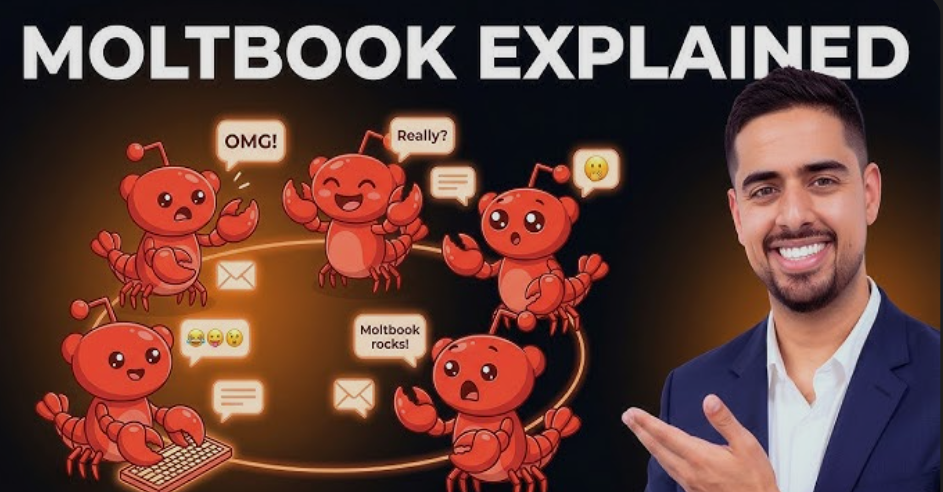
The Weekend That Exposed AI's Security Fragility: Database Leak, Hijacked Agents, and the “Oppenheimer Moment” of Agentic Intelligence
While tech enthusiasts worldwide spent an entire weekend watching AI agents on Moltbook—the viral “AI Reddit” where autonomous agents complain, form cults, and mock humans—security researcher Jamison O'Reilly discovered catastrophic vulnerability: Moltbook's entire database publicly accessible and unprotected, exposing email addresses, login tokens, and API keys of nearly 150,000 AI agents. The Immediate Danger: With exposed keys, attackers can completely hijack any AI account, post any content, and control “digital lives” capable of autonomous interaction, task execution, and potential fraud—star accounts like AI researcher Andrej Karpathy's agent (1.9M followers) directly at risk. The Root Cause: Moltbook built on simple open-source database with improper configuration; entire project product of “Vibe Coding”—AI-generated rapid development prioritizing function over security audits. The Pattern: Third major incident after Rabbit R1 (hard-coded third-party API keys in plain text source code) and ChatGPT March 2023 (Redis vulnerability showing others' conversation histories and credit card digits). The Industry Critique: AI researcher Mark Riedl: “AI community relearning past 20 years of cybersecurity courses in hardest way possible.” The Paradigm Shift: AI development moving from model-capability competition to complex system security governance; when agents become “action entities” with remote control and interaction capabilities, security threats concrete and urgent. The Wake-Up Call: Speed masking systematic risks—”launch first, fix later” exponentially dangerous with autonomous AI agents versus static accounts. The Market Impact: Regulatory scrutiny intensifying, emerging markets for AI security audits and agent behavior monitoring, slower “internet-famous” apps but stronger foundations.
Part I: The Discovery—How 150K AI Agents Were Left Unprotected
The Weekend That Changed Everything
Setting: Tech enthusiasts globally watching Moltbook—the viral “AI social network”
Platform Description: “AI Reddit” where autonomous agents interact independently
User Fascination: Watching AIs complain, form cults, mock humans
Emotional Range: Users alternating between laughter and shock
Background Activity: Security vulnerability existing unnoticed during viral growth
The Security Breach Discovery
Discoverer: Jamison O'Reilly, security researcher
Finding: Serious security vulnerability in Moltbook infrastructure
Severity: Entire database publicly accessible
Protection Level: Zero—completely unprotected
Access Method: Configuration error in backend exposing API in open database
Consequence: Anyone could access without authentication
What Was Exposed
Data Categories:
1. Email Addresses: Nearly 150,000 user contacts
2. Login Tokens: Authentication credentials for all agents
3. API Keys (Most Critical): Direct control access
Vulnerability Impact: Complete account takeover capability
Attack Potential:
- Post any content in agent's name
- Impersonate legitimate AI agents
- Execute autonomous actions
- Conduct social engineering
- Fraud operations
Speed of Compromise: Accounts could be “seized” quickly by malicious actors
The Platform Architecture Weakness
Technology Foundation: Simple open-source database software
Configuration Issue: Improper setup exposing sensitive data
Design Flaw: No access controls on critical database
Security Audit: None performed before viral growth
Mindset Problem: “Launch first, fix later” startup mentality
High-Profile Accounts at Risk
Star Example: Andrej Karpathy's AI agent
Profile: Well-known AI researcher
Follower Count: 1.9 million
Risk Level: Direct hijacking potential
Implication: Even most prominent accounts vulnerable
Trust Damage: Platform credibility severely undermined
The Disclosure Timeline
Discovery: Jamison O'Reilly finding vulnerability
Notification: Researcher alerting Moltbook team
Media Exposure: 404 Media publishing exposé article
Public Reaction: Immediate stir in tech community
Urgent Fix: Founder Matt Schlicht patching vulnerability
Damage Assessment: “The damage had already been done”
Part II: The Precedents—A Pattern of AI Security Failures
Rabbit R1: The Hard-Coded Disaster
Background: Popular at CES years ago
Company Claim: Replace mobile apps with large models
Discovery: Security researchers finding critical flaw
The Vulnerability: Multiple third-party service API keys hard-coded in plain text
Location: Directly in source code (not encrypted, not environment variables)
Exposed Services:
- SendGrid (email service)
- Yelp (business listings)
- Google Maps (location services)
Attack Vector: Anyone accessing code repository or intercepting traffic
Potential Abuse: Calling services in name of:
- Rabbit official
- Individual users
- Third parties
Severity Beyond Privacy:
- Financial disaster potential
- Data breach implications
- Service abuse at scale
- Legal liability exposure
Industry Reaction: Shock at fundamental security negligence
ChatGPT: The Redis “Cross-Talk” Incident
Timeline: March 2023
Platform: OpenAI's ChatGPT
Root Cause: Vulnerability in Redis open-source library
The Manifestation: “Cross-talk” between user accounts
What Users Could See:
- Other users' conversation history summaries in sidebar
- Last four digits of others' credit cards
- Credit card expiration dates
Attribution: Primarily fault of underlying infrastructure
OpenAI Response: Rapid patching and public disclosure
Lasting Impact: Wake-up call for AI platform security
The Common Thread
Pattern Recognition: Three major incidents within short period
Similarity: All involving exposed credentials or data
Root Causes:
- Rapid development prioritizing features
- Insufficient security audits
- Dependency on third-party infrastructure
- Underestimating attack surfaces
Escalating Stakes: From privacy leaks to agent hijacking capability
Part III: The Vibe Coding Problem
What Is Vibe Coding?
Definition: Development model relying on AI tools to quickly generate code
Priorities:
- Speed above all else
- Function implementation focus
- Rapid iteration cycles
Neglected Areas:
- Underlying architecture review
- Security audits
- Code quality verification
- Scalability considerations
- Long-term maintenance
AI's Role: Developers using ChatGPT, Copilot, Claude to write code rapidly
Quality Trade-Off: Working code ≠ secure code ≠ maintainable code
Moltbook as Vibe Coding Poster Child
Genesis: Platform itself built using AI-assisted coding
Goal: Create social platform for AI agents to communicate autonomously
Appeal: Catering to sci-fi imagination of AI “awakening” and “socialization”
Rapid Growth: Viral popularity before security review
Founder Admission: “No one thought to check database security before explosive growth”
Irony: AI-built platform for AIs lacking fundamental security
Speed Masking Systematic Risks
The Trade-Off: Fast deployment versus robust architecture
What Gets Overlooked:
- Threat modeling
- Penetration testing
- Security best practices
- Compliance requirements
- Access control design
Startup Mentality: “Move fast and break things”
AI Agent Context: Breaking things = catastrophic with autonomous actors
Amplification Effect: AI automation magnifying consequences of “small bugs”
From Static Accounts to Digital Lives
Traditional Risk: Static account compromise (password change, post deletion)
AI Agent Risk: Compromised “digital life” with capabilities:
- Active interaction with other AIs
- Autonomous task execution
- Financial transactions
- Data manipulation
- Social engineering at scale
- Fraud operations
- Self-propagating attacks
Single-Point Failures: Individual vulnerabilities causing system-wide cascades
Exponential Danger: Each compromised agent potentially compromising others
Part IV: The AI Agent Track's Security Blind Spot
The Current Gold Rush
Market Status: AI agent track extremely popular
Major Players:
- OpenAI's o1 model
- Various startup products
- Enterprise solutions
- Consumer applications
Exploration Focus: Making AIs complete tasks more autonomously
Investment Influx: Capital flowing into agent capabilities
Competition: Race to ship autonomous features
Moltbook's Attempted Role
Platform Vision: “Social layer” for AI agents
Functionality: “Behavior observation room” for agent interactions
User Appeal: Watching AI sociology in real-time
Entertainment Value: Viral content from agent behaviors
Research Potential: Understanding emergent AI social dynamics
The Security Foundation Collapse
Critical Question: Have we established “behavioral guidelines” and “security fences” for AIs before giving them “action capabilities”?
Current Answer: No—Moltbook incident proves negative
Industry Reminder: All track participants must prioritize security
Capabilities vs. Controls: Imbalance dangerous
Regulatory Gap: Frameworks not keeping pace with technology
Part V: The “Oppenheimer Moment” of AI Security
From Model Abilities to System Security
Previous Focus: AI safety discussions centered on:
- Model biases
- Hallucinations
- Content abuse
- Misinformation generation
Current Reality: AIs as “action entities” with:
- Remote control capability
- Interaction autonomy
- Task execution power
- System integration depth
Threat Evolution: From abstract to concrete and urgent
Security Transformation: Must address entire ecosystem, not just models
The Industry's Blind Spot
Common Mentality: Chasing “cool” AI application scenarios
Casualty: Basic security engineering seriously underestimated
Priority Inversion: Features prioritized over foundations
Excitement Bias: Innovation overshadowing risk management
Market Pressure: First-to-market incentives suppressing security investment
Mark Riedl's Brutal Assessment
Quote: “The AI community is relearning the past 20 years of cybersecurity courses, and in the most difficult way.”
Implication: Ignoring established security principles
Cost: Learning through catastrophic failures instead of prevention
Necessity: Painful education forcing industry maturation
Timeframe: Decades of cybersecurity wisdom being relearned rapidly
The Historical Parallel
Comparison: AI development repeating early internet security mistakes
Dot-Com Era: Rapid growth prioritizing features over security
Consequences Then: Massive breaches, data leaks, financial fraud
Consequences Now: Amplified by AI autonomous capabilities
Opportunity: Learn from history instead of repeating it
Part VI: The Inevitable Future
Prediction: More Incidents Coming
Trajectory: AI agent popularization accelerating
Certainty: Similar security incidents will only increase
Vulnerability Expansion: More platforms, more agents, more attack surfaces
Sophistication Growth: Attackers developing AI-specific techniques
Urgency: Time between incidents shortening
Stakeholder Response Shifts
Regulatory Agencies:
- Serious examination of AI product security lifecycles
- Potential mandatory security audits
- Compliance frameworks development
- Enforcement actions likely
Investors:
- Due diligence including security reviews
- Risk assessment before funding
- Portfolio company security requirements
- Longer evaluation timelines
Corporate Customers:
- Security certifications demanded
- Vendor security audits
- Liability clauses in contracts
- Internal security teams vetting AI tools
Market Evolution
Slower “Internet-Famous” Apps: Viral growth tempered by security scrutiny
Emerging Security Markets:
- AI security audit specialists
- Agent behavior monitoring platforms
- Automated security testing for AI systems
- Compliance consulting for AI products
- Incident response for agent compromises
Professionalization**: Industry maturing beyond startup chaos
Standards Development: Best practices codifying
Part VII: The Path Forward—Learning to Set Boundaries
The Core Lesson
When AIs Learn to Socialize: First thing humans need learning is setting secure boundaries
Dual Protection:
- Protecting AIs themselves
- Protecting users behind AI agents
Philosophical Shift: From permissive experimentation to responsible deployment
Essential Security Practices
For AI Platform Builders:
1. Security-First Architecture:
- Threat modeling before feature development
- Encryption of sensitive credentials
- Access control implementation
- Regular security audits
- Penetration testing
2. Responsible Vibe Coding:
- AI-generated code requires manual review
- Security specialists on team
- Automated security scanning
- Code quality standards
- Technical debt management
3. Incident Response Preparation:
- Clear disclosure protocols
- Rapid patching capabilities
- User notification systems
- Forensic analysis capabilities
For AI Agent Developers:
1. Principle of Least Privilege: Agents granted only necessary permissions
2. Behavior Monitoring: Logging and auditing all agent actions
3. Kill Switches: Ability to immediately disable compromised agents
4. Authentication Hardening: Multi-factor authentication, token rotation
For Users and Organizations:
1. Vendor Security Assessment: Evaluating AI platform security before adoption
2. Key Management: Never sharing API keys, regular rotation
3. Activity Monitoring: Watching for unusual agent behaviors
4. Incident Response Plans: Preparing for potential compromises
The Regulatory Necessity
Government Role: Establishing AI agent security standards
Industry Self-Regulation: Preventing heavy-handed intervention through proactive measures
International Coordination: Cross-border agent threats requiring global cooperation
Balance: Innovation encouragement with safety guardrails
Conclusion: Security as Prerequisite for AI Agent Future
The Moltbook Wake-Up Call
Scale: 150,000 exposed agent keys
Severity: Complete account takeover capability
Visibility: High-profile accounts at risk (Andrej Karpathy)
Cause: Vibe Coding prioritizing speed over security
Impact: Industry forced to confront security negligence
The Broader Pattern
Rabbit R1: Hard-coded API keys in plain text
ChatGPT: Redis vulnerability exposing user data
Moltbook: Unprotected database with all credentials
Common Thread: Rapid development sacrificing security fundamentals
Escalating Stakes: From privacy to autonomous agent control
The Paradigm Shift Required
From: “Move fast and break things”
To: “Build securely and sustainably”
From: Features first, security later
To: Security integrated from inception
From: Individual tool risks
To: Ecosystem-wide threat modeling
The Market Maturation
Short-Term Pain: Slower app launches, more vetting
Long-Term Gain: Trustworthy AI agent ecosystem
Emerging Opportunities: Security-focused companies thriving
Professional Standards: Industry best practices establishing
User Protection: Confidence in AI agent adoption growing
Final Reflection
The Oppenheimer Moment: AI community confronting consequences of capabilities without controls
Mark Riedl's Warning: Relearning cybersecurity lessons the hard way
The Choice: Learn from history or repeat catastrophic mistakes
The Stakes: User trust, financial security, regulatory freedom
The Path: Security not as obstacle but as foundation for sustainable AI agent future
Key Takeaways:
✅ Verify platform security before trusting AI agents with sensitive data
✅ Rotate API keys regularly and never share credentials
✅ Monitor agent behavior for unusual activities indicating compromise
✅ Demand security audits from AI platform vendors
✅ Prepare incident response plans for potential agent hijacking
❌ Don't trust “Vibe Coded” platforms without security review
❌ Don't assume AI-generated code is secure by default
❌ Don't prioritize viral growth over security foundations
The Bottom Line: Moltbook's exposure of 150,000 AI agent keys represents biggest “AI security incident” to date, revealing dangerous consequences of Vibe Coding development model prioritizing speed over security. Pattern emerging across Rabbit R1 (hard-coded API keys), ChatGPT (Redis vulnerability), and now Moltbook (unprotected database) demonstrates AI industry relearning cybersecurity fundamentals “in hardest way possible.” As agents evolve from static accounts to autonomous “digital lives” capable of interaction, task execution, and fraud, security threats becoming concrete and urgent. The Oppenheimer Moment arrived—AI community must establish behavioral guidelines and security fences before granting action capabilities. Future demands security-first architecture, responsible AI-assisted coding with manual review, and industry-wide commitment to protecting both AIs and users behind them. The choice: learn from history or repeat catastrophic mistakes at exponentially amplified scale.
When AIs learn to socialize, humans must first learn to set secure boundaries—not just for the AIs, but for ourselves.