If you are asking what wrist to wear a watch on, start with the non-dominant wrist: left for most right-handed people, right for most left-handed people. It often keeps the watch away from your busiest hand. That is a useful starting point, not a rule of etiquette. The better wrist is the one that feels comfortable, lets you use the watch and suits your daily movements.
Why is the non-dominant wrist the usual starting point?
The hand you use to write, carry, open doors or work with tools often makes more contact with desks and other surfaces. Wearing the watch on the opposite arm may put it in the way less often. It also leaves your active hand free to operate a crown, clasp or touchscreen. Timex describes non-dominant wear as a common practical choice while noting that comfort and preference matter.
Tradition can explain why a watch is often seen on the left wrist, but it cannot tell you which wrist will suit your routine. A right-handed person who frequently wears a protective glove on the left may prefer the right. A left-handed person with a right-sided watch crown may find one orientation easier to adjust than another. The choice is about the whole activity, not just handedness.
Does a watch have to go on the left wrist?
No. The left-wrist convention reflects how many people are right-handed, rather than an obligation attached to a watch. You can wear a mechanical dress watch, a sports watch or a connected watch on either arm if it fits securely and the maker's instructions permit it. There is no general rule that a different wrist signals anything about status, gender or taste.
Look at how the case sits before thinking about appearance. A crown at the three o'clock position may be easier to reach with the other hand when the watch is on the left; on the right, its position against your hand may feel different. But case size, crown guards and the shape of your wrist can change the experience. Try the exact reference while bending both wrists and typing. A diagram cannot substitute for that test.
Should a left-handed person always wear a watch on the right?
No. The right wrist is a sensible first trial for a left-handed wearer, but the answer remains personal. Left-handedness does not mean every task is performed with the same hand. Some people write left-handed but use a mouse on the right; others wear bracelets on one arm or carry a bag on a particular side. Watch placement should accommodate the combination.
Test both sides during the tasks you perform most: reaching for a keyboard, pulling on a coat, carrying a case and reading the time while holding something. Notice whether the watch knocks a tabletop or slides toward your hand. If the right wrist is more comfortable but a conventional crown presses against the back of your hand, try a different case design or strap fit before abandoning the preferred side.
What if the watch is connected?
Connected watches introduce display orientation, button access and sensor contact. Some models let the wearer specify which wrist and button orientation they use. For example, Apple documents wrist-orientation settings for its own watches. That is an Apple-specific feature, not evidence that every connected watch offers the same control. Check the exact watch's settings or manual before assuming you can reverse its interface.
Fit also matters for a watch that uses optical sensors. Apple's fit guidance says its watch should be snug but comfortable and positioned above the wrist bone for skin contact. This describes Apple Watch, not a guaranteed measurement for another brand. A loose watch may move or lose contact; overtightening is not a solution. Follow the instructions supplied with your particular device and stop wearing it if the strap causes discomfort.
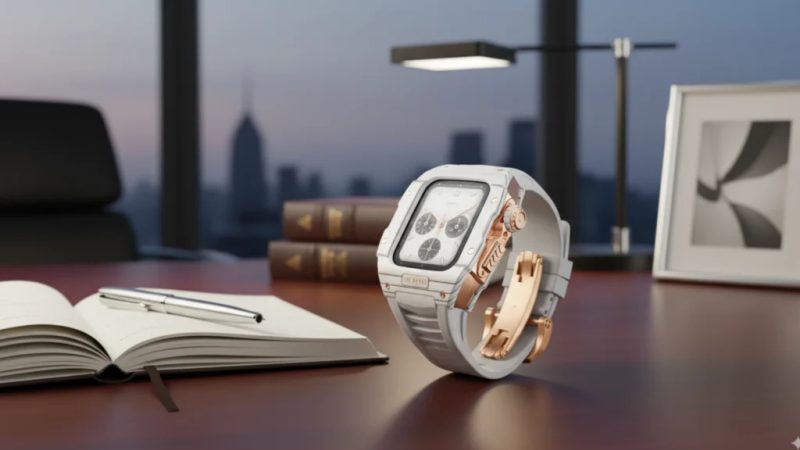
VERTU offers the Agent Watch and the Grand Watch collection as connected-watch options. Their product identity makes wrist fit and interface access relevant, but the available product facts do not establish a universal VERTU wrist setting or promise identical readings on both arms. If you are considering either, try the specific case and strap, and check its current manual for orientation and wearing instructions.
How do work and daily habits change the answer?
Think about where the watch meets the world. Someone who writes on paper may notice the case rubbing the desk if worn on the writing arm. A person who carries a bag on the same forearm may repeatedly hit a buckle against the case. If your job involves gloves, equipment or a dress cuff, whichever wrist leaves the watch secure and readable may be the better one.
A watch should not make a necessary task awkward. Consider how you glance at it while holding a phone, steering a vehicle, carrying a child or presenting to a client. These are different movements. A trial across an ordinary day can reveal whether the watch is actually less exposed on the non-dominant arm. If the opposite proves true for your habits, choose the side that works.
Do not assume that moving a watch to the less active arm eliminates damage. Cases can still strike door frames, straps can still catch, and jewellery worn alongside a watch can make contact with it. Leave space between hard pieces if repeated contact concerns you. Your preferred wrist can change when you change straps, jobs, activities or watch size.
Where should the watch sit on the chosen wrist?
Position and tightness often matter more than left versus right. The case should generally sit on the flatter part of the wrist above the wrist bone, without being pushed into the hand when you bend it. Timex's wearing guide treats comfort above the wrist bone as a useful placement check. The exact position depends on case shape, strap and wearer.
Try two movements after fastening it: let your arm hang naturally, then bend the wrist as if typing. The watch should not rotate freely, climb over the bone or press sharply into the skin. A metal bracelet may need link adjustment; a leather strap may need a different hole or length. Avoid making it excessively tight simply to keep it still. If the watch leaves deep pressure marks or feels uncomfortable, revisit the size and fitting.
Does style or jewellery determine the wrist?
Style can be part of the decision, but it need not overrule comfort. Some people prefer to keep a watch separate from bracelets so the materials do not repeatedly knock together. Others like a deliberate stack, provided the surfaces and movement are acceptable to them. A statement watch may feel visually balanced on one side of an outfit; a discreet watch may be easier beneath a cuff on the other.
Consider visibility in the contexts where you wear it. When you shake hands, sit at a table or write, different sides become more noticeable. Neither choice is inherently more refined. A watch can be a personal object, and wearing it on the arm that suits the wearer often looks more composed than following an inherited convention at the cost of awkward movement.
How can you decide in one day?
Wear the watch on the non-dominant wrist for a few hours, then switch it to the other side if the strap and device permit. Keep the fit comparable. Note four things: comfort while bending the wrist, ease of reading and operating controls, contact with surfaces, and interaction with sleeves or jewellery. A connected watch may require a setting change after switching wrists; check its own manual.
Do not judge by a static mirror view alone. The most convincing answer appears when you use both hands in ordinary situations. If one side causes frequent knocks or makes the crown awkward, favour the other. If both feel equally good, choose the one you like seeing on your arm. There is no penalty for changing your mind with a different watch.
Frequently asked questions
Is it wrong to wear a watch on the dominant wrist?
No. It may encounter more contact in some routines, but comfort and access can make it the right choice for you. Try it during your actual daily tasks.
Do men and women follow different wrist rules?
No. Handedness, fit, activities and personal preference are more useful than gender-based conventions.
Can I switch wrists during the day?
Yes, if the fit and device allow it. For a connected watch, check whether orientation or wrist selection should be updated.
Should a watch sit directly on the wrist bone?
Usually it is more comfortable on the flatter area above the bone. Check the maker's instructions for a connected watch and adjust the strap so it stays secure without pressure.
Conclusion
The practical answer to what wrist to wear a watch on is to begin with your non-dominant side, then test the other if work, fit or comfort suggests it. Check crown access, surface contact and strap security during ordinary movements. For a connected choice such as the VERTU Grand Watch collection, confirm the model's wearing guidance rather than assuming every watch handles wrist orientation alike.