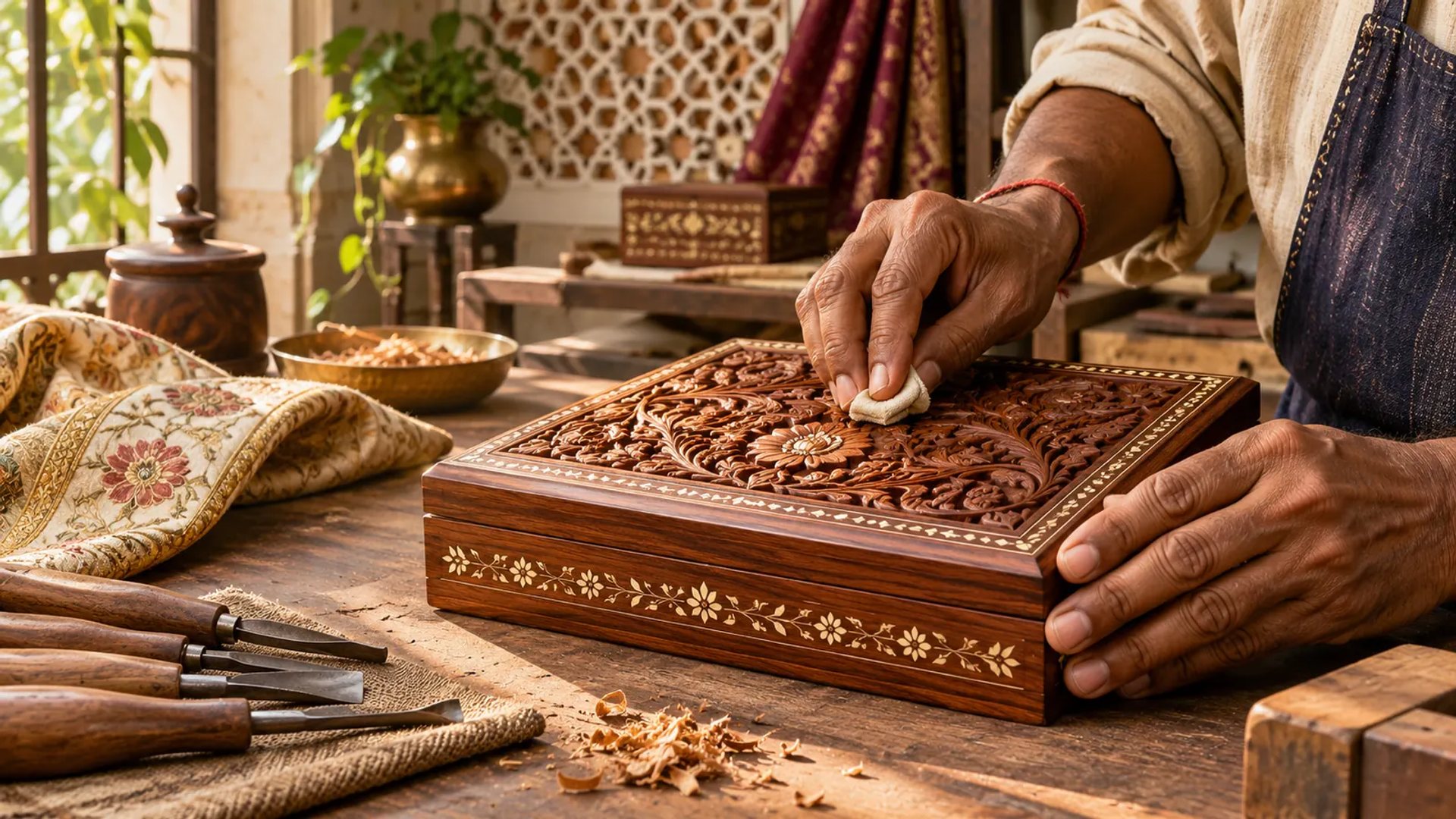
The India luxury market is increasingly discussed as a place that creates luxury brands as well as buys imported ones. That is a useful direction to examine, but it is not a completed national transformation. A November 2026 statement by a domestic spirits executive makes the argument from one company's perspective; independent consumer research points to interest in Indian craftsmanship and provenance. The stronger question for a buyer or brand is whether a specific Indian-made product can demonstrate design, making, quality control and service at the level its price promises.
Key Takeaways
- “From buying to making” is an industry argument and editorial framework, not an official measure of the whole Indian luxury economy.
- Domestic design and making should be judged through documented materials, makers, process and after-sales support.
- Ipsos's 2026 India luxury research discusses heritage, provenance and interest in locally rooted craft; it does not prove that all buyers choose domestic labels.
- A limited domestic release can demonstrate an ambition to serve local collectors without establishing a nationwide market shift.
- International and Indian brands both need to provide a complete ownership experience, not just a compelling origin story.
What does “India moving from buying to making” mean?
At a 2026 business summit, Radico Khaitan executive Abhishek Khaitan argued that India is moving from a luxury-consuming nation towards a luxury-creating one, as reported by Fortune India on 23 November 2026. This is an attributed business view. It is not a government statistic or proof that domestic luxury sales now exceed imports. The language describes an opportunity: more Indian firms seek to design, produce, brand and sell high-value goods whose identity is rooted in local materials, techniques or cultural knowledge.
That opportunity can be evaluated at several levels. A maker may use skilled Indian workshops but sell under an overseas label. Another may design and own an Indian brand while sourcing components globally. A third may control design, making and distribution domestically. Each contributes differently to the idea of creation. “Made in India” on its own is too broad to explain the depth of design input or the conditions of production. Buyers who care about origin should ask which stages took place where, who made the object and how the quality is checked.
What evidence supports interest in Indian luxury craft?
Ipsos's 2026 Luxury Reimagined report on India describes a market in which cultural heritage, storytelling and provenance influence how some consumers understand luxury. Its discussion of locally rooted craftsmanship supports a more nuanced reading than “Indian buyers now reject international brands”. It suggests that makers who can explain where an object comes from and why its construction matters may find a receptive audience. The report is a research interpretation, not a census of every purchase, and its conclusions should be read alongside its methodology.
Craft deserves more than a poetic description. A credible maker can identify the material, its source where known, the technique, the people or workshop responsible, the time-sensitive stages and the checks before delivery. A garment's embroidery, a piece of jewellery's setting and a leather item's finishing present different challenges. Their quality cannot be reduced to a single shared “artisan” label. A buyer should be able to inspect stitching or setting, ask about repair and understand how variation is handled. The story earns attention when it helps explain the object, not when it substitutes for evidence.
What does a limited domestic launch demonstrate?
Reports of a 25 November 2026 domestic release of limited Indian single malt editions by Radico Khaitan offer one example of a company testing high-end demand at home. The contemporaneous exchange-news summaries describe tightly limited bottles and a high list price, but the full original filing was not independently retrieved for this article. For that reason, the precise bottle count and rupee price are not repeated here as verified facts. The documented broader company context is available in a November 2026 investor presentation filed with the National Stock Exchange of India. A single product launch illustrates one maker's strategy; it cannot establish the size or success of India's entire luxury sector.
The distinction matters beyond spirits. A small edition can be a way to test packaging, pricing, distribution and collector response. It can also simply be a marketing choice. To assess its significance, look for how many units were actually made, which markets received them, whether the stated price was the transaction price, and whether buyers returned for the next release. Those are different questions from whether the story attracted attention. A headline about a launch is the beginning of a market investigation, not its conclusion.
How do Indian makers compete beyond the origin story?
They need repeatable quality, clear design and dependable delivery. A one-off object may display extraordinary skill, but a growing brand must explain how it selects materials, trains or contracts its makers, manages defects and preserves consistency without flattening the character of handmade work. The challenge is not to remove every variation. It is to distinguish intentional handwork from an avoidable fault and to tell the customer which one they are seeing. Documentation, provenance and a sensible repair route can carry that promise into years of ownership.
Distribution is another test. A beautiful product shown in a campaign has little commercial reach if buyers cannot view it, receive a reliable quote or obtain support after delivery. Retail partners need accurate product information and a clear explanation of service responsibility. Digital presentation can introduce a maker to distant customers, but high-value purchases may still benefit from a showroom or appointment where fit and finish can be checked. None of this means every brand must build a global boutique network. It means the route to purchase must match the value being claimed.
Why is “Indian luxury” not one category?
Jewellery, fashion, hospitality, spirits, furniture and technology follow different supply chains and regulations. An observation about domestic single malt cannot automatically be applied to a watch or a phone. Nor does an increase in affluent consumers guarantee equal growth for every maker. Some categories depend on scarce skilled labour; others require advanced industrial components or an international service network. The India luxury market is therefore better understood as a set of distinct buying and production decisions than as a single upward line on a chart.
Consider two hypothetical products: a hand-finished piece of furniture and a digitally connected device. For the furniture, provenance of timber, joinery and repairability may dominate the purchase. For the device, software support, connectivity and parts availability become central alongside material finish. These are illustrative scenarios, not accounts of real customers. The buyer's evidence checklist must change with the category. A domestic origin can be meaningful in either case, but it cannot answer the functional questions on its own.
What should an international luxury brand learn from this shift?
Listen to local preferences without assuming they are uniform. Some Indian buyers may value a design with a clear connection to Indian craft; others may seek an international maker for a very different reason. A brand entering or serving the market should explain its product's actual materials, service and suitability rather than relying on a generic image of aspiration. If it collaborates with Indian makers, it should credit their work and define the collaboration honestly. Cultural reference without a real production relationship risks looking superficial.
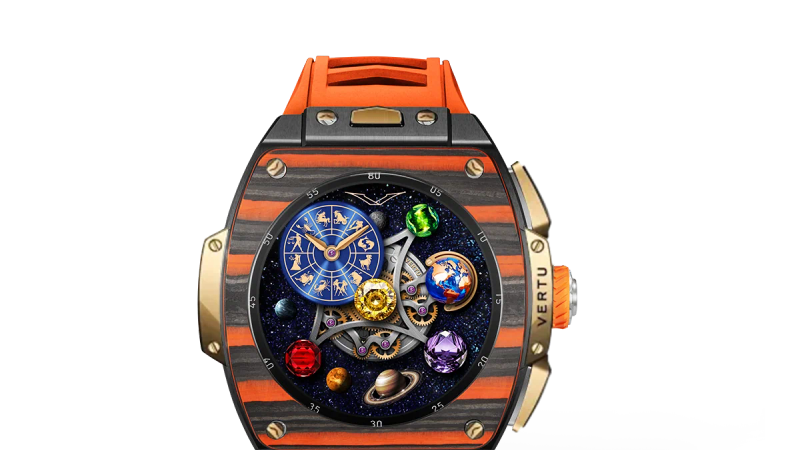
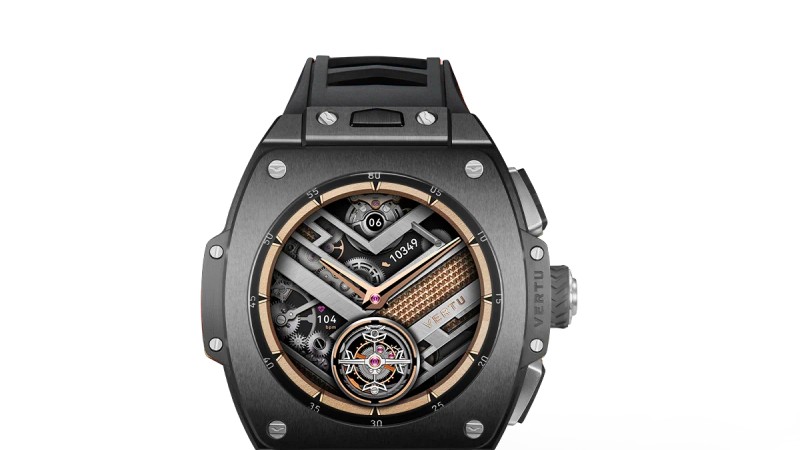
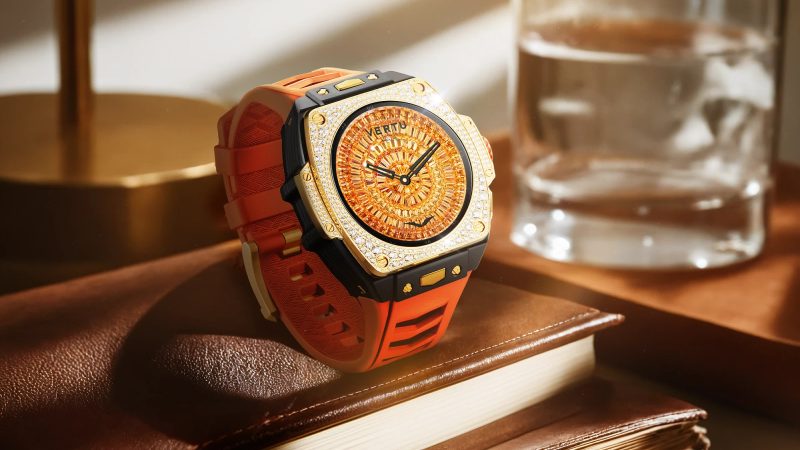
For VERTU readers, the practical lesson is about verification. The official VERTU catalogue is the place to identify current model and finish options; any claim about a specific material, service or Indian-market availability should be checked against the current official listing and authorised channel. This article does not infer that VERTU makes a particular product in India or promises a particular local service. A compelling material description matters most when the buyer can connect it to the exact item and its ownership terms.
How should a buyer evaluate a made-in-India luxury item?
- Identify the maker, exact product and place of design and production, without treating a broad country label as a complete explanation.
- Request specific information about materials, skilled work, quality checks and any edition claim.
- Inspect the piece or ask for close photographs and measurements that reveal construction.
- Confirm the total price, taxes, delivery, warranty, repair route and return terms in writing.
- Decide whether the object's use and craftsmanship justify the price for you even without a speculative resale story.
This checklist applies equally well to a local maker and an international one. It asks the brand to make its value legible and gives the buyer a way to compare objects that tell very different stories. A convincing Indian luxury product need not imitate an established European template; it does need to show how its own choices improve the object and its life with the owner.
What would show that the market really is changing?
Look for sustained evidence across several categories and years: domestic brands with repeat customers, durable export demand, rising capability in design and making, credible after-sales systems and transparent financial reporting where available. A few launches can signal experimentation; a broad shift requires a series of results. The right measures also differ by question. Revenue shows sales value, units show scale, margins show economics, and repeat purchase can reveal satisfaction. None should be substituted for another merely because it makes a stronger headline.
India's luxury story is therefore more interesting than a simple handover from importing to producing. It is a negotiation between local skill, modern organisation, global influence and buyers who may want different things from each category. The strongest makers will make their case in the object itself and in the service that follows it. The strongest reporting will keep executive ambition separate from measured outcomes.
Frequently asked questions
Is India now mainly a luxury producer rather than a buyer?
No. That claim is too broad. The “from buying to making” language is an attributed business view about a developing opportunity, not a measured reversal of the whole market.
What is distinctive about India's luxury craft?
India has deep traditions of materials and skilled making, but quality must be assessed product by product. Ask who designed and made the object, how it was checked and how it can be serviced.
Does a limited release prove strong demand?
No. A launch shows a maker's intention and an available offer. Sales, repeat orders and sustained distribution would provide stronger evidence of demand.
Should buyers prefer a domestic label?
Choose the object that meets your needs and standards. Provenance can matter, but fit, construction, price, warranty and service remain essential for either a domestic or international brand.
How can a brand substantiate a craft story?
Identify the materials, maker or workshop, production stages and quality checks, then provide a clear repair and service route. Specific evidence is more useful than broad heritage language.