

Luxury safety jewelry is an accelerating discipline that has historically operated without an objective scorecard. Search for the term, and you are met with transactional product showcases rather than technical benchmarks. This structural gap matters: while the global fine jewelry sector continues its steady growth, affluent collectors increasingly demand pieces that protect both physical presence and digital sovereignty. Nearly half of high-net-worth jewelry buyers seek pieces integrated with secure digital access to luxury residences, vehicles, and encrypted terminals.
Today, that vision has shifted from speculative curiosity to operational necessity. As personal net worth converges with digital private keys, fine jewelry has become the ultimate high-assurance concealment layer.
This guide establishes the industry’s first neutral evaluation standard across four criteria: material integrity, aesthetic concealment, cryptographic key custody, and the protocol for asset recovery.
Key Benchmarks for Evaluating Encrypted Jewelry
Before evaluating individual houses or collections, every high-value wearable piece should be audited against four technical parameters:
Housing Resilience: The integration of grade-5 titanium, solid gold, and gemstone settings must isolate internal microchips from shock, pressure, and electromagnetic interference without compromising traditional jewelry silhouettes.
On-Chip Key Isolation: Cryptographic private keys must reside within a hardware-isolated Secure Element, engineered so that keys are generated on-chip and never exported to host devices or the cloud.
Coercion-Resistant Concealment: The piece must function visually as high jewelry. Obvious tech silhouettes invite physical extortion; genuine security relies on complete aesthetic discretion.
Contingency and Inheritance Path: Clear, cryptographically sound recovery frameworks must exist for hardware loss, distress scenarios, and multi-generational estate transfer.
What "Encrypted Defense" Actually Means in a Wearable
In consumer wearables, convenience often displaces true security. Most mass-market smart bands rely on standard application processors and flash memory. If an unauthorized party gains physical access, the device's storage can often be extracted via standard interface probes.
By contrast, genuine luxury safety jewelry incorporates a dedicated, tamper-resistant Secure Element chip. In this architecture, cryptographic keys are generated internally by a hardware-based random number generator and remain isolated for life. Every signing operation takes place directly on the microchip. Remote firmware exploits cannot extract the master seed, and physical probing triggers active anti-tamper mechanisms that render the circuitry permanently inert.
Custody Architecture Comparison
Hardware Secure Element: Keys are generated directly on the microchip and never exported to the cloud. Physical probing triggers active component defense, making it immune to remote extraction.
Standard Flash Storage: Keys reside in general device memory. An attacker with physical access can extract firmware dumps using standard hardware probes, leaving data vulnerable to software exploits.
Vendor Cloud Custody: Keys are managed on third-party servers. Security depends entirely on external infrastructure, exposing credentials to corporate breaches, staff mishandling, and remote intercept.
Craftsmanship Meets Cryptography: The VERTU Ecosystem
Founded in 1998, VERTU pioneered the integration of haute horlogerie materials with personal communication technology. Long recognized for utilizing rare gems, sapphire crystal displays, solid precious metals, and hand-stitched exotic skins, the brand has expanded its atelier expertise into dedicated hardware security, autonomous AI assistants, and decentralized luxury infrastructure.
VERTU's approach to the safety jewelry segment demonstrates how fine craftsmanship and zero-trust engineering converge across two flagship categories:
The Signature Series: Architectural Opulence and Concealed Value
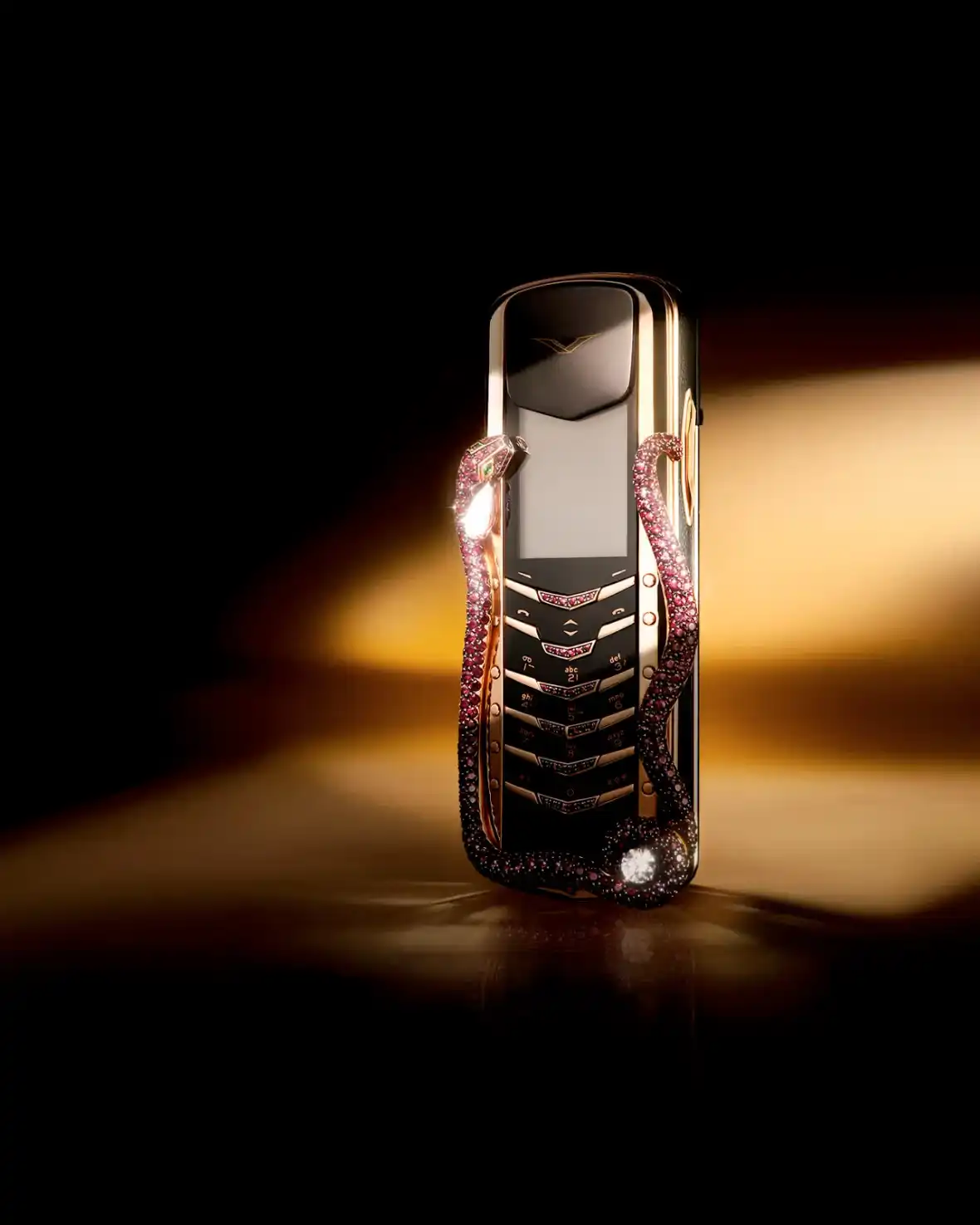
The pinnacle of VERTU’s physical craftsmanship is exemplified by creations such as the Signature Cobra Limited Edition. Conceived in collaboration with elite master artisans, the exterior integrates hundreds of hand-cut rubies, deep-set emeralds, and intricate marquetry. While celebrated as high-value physical art, pieces within this bespoke lineage reflect a foundational luxury philosophy: intrinsic material value married to secure, discrete architecture.
The Aura Ring Collection: Biometric Discretion and Tap-to-Sign Security
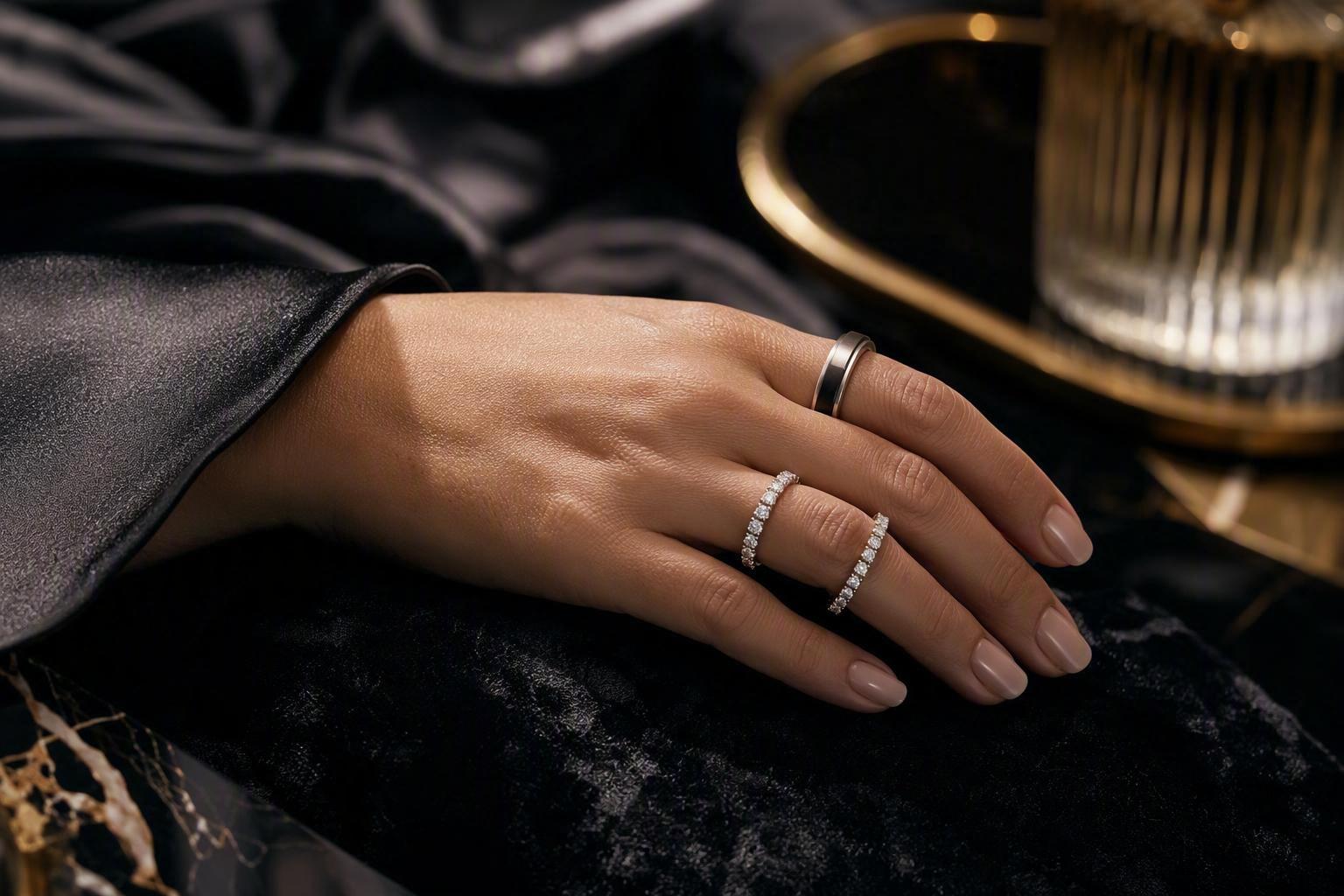
For collectors seeking seamless day-to-day digital asset management, VERTU’s smart jewelry line—including the Aura Ring series—bridges physical prestige and cryptographic protection:
Subtle Aesthetics: Encased in polished ceramics and medical-grade titanium alloys, the ring completely avoids the utilitarian look of sports trackers, blending naturally into formal and high-jewelry settings.
Secure Authentication Architecture: Leveraging certified Secure Element technology alongside high-frequency NFC connectivity, the hardware enables isolated tap-to-sign transaction approvals for decentralized wallets and enterprise access points.
Active Autonomy: Equipped with high-efficiency biometric micro-sensors, the hardware monitors daily activity, movement rhythms, and physical fatigue states without routing sensitive personal metrics through unencrypted third-party advertising pipelines.
Through this balanced methodology, VERTU treats security hardware not as a gadget, but as an heirloom object that shields the owner’s digital autonomy.
The Four-Pillar Scorecard for Encrypted Fine Jewelry
To distinguish collector-grade pieces from mass-market hardware, assess each acquisition through four disciplines:
Materials and Electronic Shielding: A standard piece of jewelry only needs to survive mechanical drops and daily wear. Encrypted jewelry must provide an internal hermetic seal that guards sensitive components against moisture ingress, static shock, and magnetic disruptions, all while preserving the balance, weight, and hand-feel of precious metals.
Visual Concealment: The most sophisticated security fails if it looks like an access key. The piece should read purely as fine jewelry at a private dinner, an embassy function, or a board meeting. If an observer can identify the object as a digital security device, its primary physical defense against targeted coercion is compromised.
Execution of Key Custody: Buyers must ask where credentials live. If unlocking the device requires transmission across an open consumer cloud, the piece is simply an accessory to a third-party server. True security jewelry functions independently, executing cryptographic proofs directly at the hardware layer.
Contingency and Recovery Architecture: Every buyer must confirm whether digital permissions can be revoked immediately if the piece is lost, whether an intercepted item yields readable private information, and how authorized fiduciaries access assets during estate succession.
Storage, Travel, and Insurer Compliance
Owning encrypted luxury jewelry demands rigorous physical security protocols. Insurers specialize in high-value asset storage, and digital keys encapsulated in gold or platinum must be treated with dual-discipline care.
Leading private client insurers recommend that high-value wearables not in active rotation be housed in professionally installed, burglary-resistant safes rated to minimum TRTL-30 standards (withstanding tool and torch attacks for at least 30 minutes) or held in private vault repositories.
Essential Documentation Checklist:
Independent Gemological and Craft Appraisal: Detailed valuation capturing precious metal purity, gemstone grades, and internal component engineering.
Hardware Identifier Separation: Serial numbers, public addresses, and physical purchase receipts kept physically isolated from the safe where the jewelry rests.
Specialized Valuables Coverage: Confirmation that policies cover physical loss alongside accidental hardware destruction, without invalidating claims based on digital-asset association.
When traveling across borders, secure wearables worn on the body avoid the hazards of hotel lockboxes and checked luggage. However, their security relies entirely on the owner maintaining absolute discretion regarding the device's technical functions.
Frequently Asked Questions
How does a Secure Element wearable differ from a smartphone wallet?
A smartphone wallet operates within a general-purpose operating system running dozens of applications, background services, and internet connections, leaving it exposed to operating-system vulnerabilities. A Secure Element within a dedicated piece of jewelry is physically isolated: it runs a minimal, immutable instruction set designed exclusively to hold private keys and sign transactions, never exposing data to an external processor.
Does wearing encrypted jewelry publicly compromise personal safety?
Visual simplicity is the core defense. High-security jewelry is designed to mirror traditional fine jewelry so that it does not draw attention as a technological device. Because private keys cannot be extracted via visual inspection or wireless scanning without close-range, authenticated owner interaction, public wear introduces no digital exposure.
What happens if the physical piece is lost or damaged?
When properly configured, high-grade security jewelry serves as an access and signing device, not the sole container of your wealth. Master keys are backed up using decentralized recovery protocols or distributed multi-signature frameworks held across institutional vaults. If the jewelry is lost, the device’s individual certificates can be revoked without loss of the underlying holdings.
How should high-value encrypted jewelry be maintained over time?
Pieces featuring precious stones and metals should be serviced exclusively by master jewelers experienced with encapsulated electronics. Ultrasonic cleaning baths and high-heat polishing wheels can fracture internal chip packaging and battery seals; only non-destructive, precision manual restoration methods should be applied.
Conclusion
Luxury safety jewelry is moving from a bespoke rarity into a standardized, essential asset class for the global collector. As the boundaries blur between fine jewelry and high-assurance hardware security, owners can no longer judge acquisitions solely by carat weight, hallmark engravings, or brand prestige.
True protection lies at the intersection of artisanal mastery, verifiable on-chip key isolation, and disciplined physical storage. By auditing potential acquisitions against strict material, custody, and recovery benchmarks, buyers ensure that their most cherished personal items protect their privacy and digital sovereignty as beautifully as they adorn the wearer.
![Top 10 Luxury Watches for an African Safari Lodge [Latest]](https://cdn.sanity.io/images/e0gp1l2g/production/00dfa030a876edbe6ea7b146f6b1d8197c7656b0-3840x1860.webp?w=800&h=450&q=82&auto=format&fit=crop)
![Top 10 Luxury Watches for a St Moritz Ski Chalet Weekend [2026 List]](https://cdn.sanity.io/images/e0gp1l2g/production/627abbaf57f9f8012c53d1934a58e74f9ec11066-500x300.jpg?w=800&h=450&q=82&auto=format&fit=crop)