| Design Element | Classic Dress | Sport / Utility | Avant-Garde |
|---|---|---|---|
| Case Material | 18k Gold or Platinum | Stainless Steel or Titanium | Sapphire, Carbon, or Tantalum |
| Dial Aesthetic | Enamel or Guilloché | High-Contrast Matte | Skeletonized or 3D Architecture |
| Strap Choice | Alligator Leather | Articulated Bracelet | Technical Fabric or Rubber |
| Key Feature | Slim Profile | Water Resistance/Lume | Exotic Mechanics (e.g., Tourbillon) |
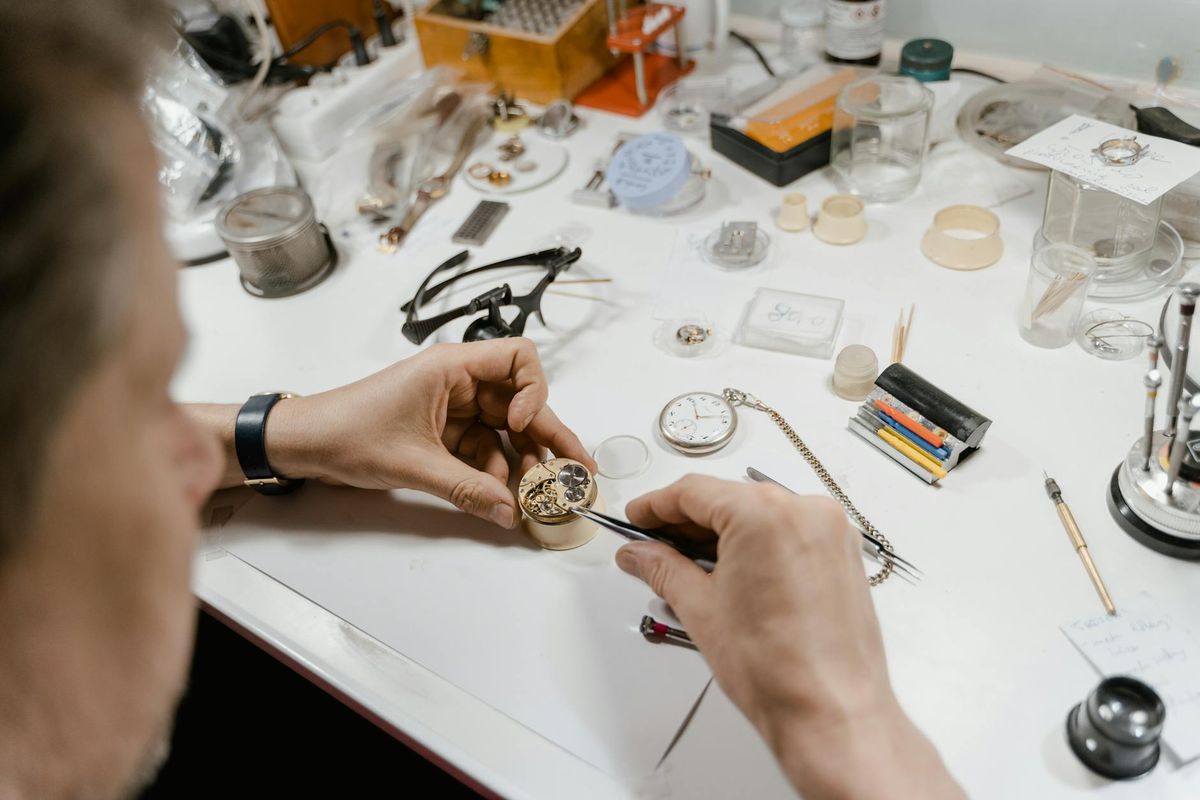
Image source: Pexels
Are you ready to elevate your style beyond the ordinary in 2025? In a world saturated with mass-produced luxury, true distinction lies in personalization. Imagine glancing at your wrist and seeing a timepiece that exists nowhere else on Earth—a mechanical reflection of your unique personality.
This is the captivating allure of commissioning a bespoke watch , an experience that transforms a simple accessory into an intimate personal statement. It is more than just telling time; it is about telling your story through artisanal craftsmanship.
Navigating the world of custom horology can feel daunting, but the reward is a legacy piece built to your exact specifications. This guide will walk you through the exciting journey of creating your dream timepiece in the evolving 2025 market. We will explore how to articulate your creative vision, select the perfect artisan, and understand the critical nuances of materials and movements. From the initial sketch to the final polish, let us demystify the process of bringing your one-of-a-kind masterpiece to life.
Defining Your Vision: The Genesis of Your Dream Watch
Commissioning a timepiece is the ultimate expression of horological passion. It is not merely a purchase; it is a journey of creation. At the heart of this process lies the bespoke watch , a singular object that exists solely because you imagined it. This section guides you through the foundational steps of turning an abstract concept into a mechanical reality.
Understanding 'Bespoke': More Than Just Customization
To grasp the core concept of a 'bespoke timepiece', one must distinguish it from simple modification. While customization might involve engraving a caseback or swapping a bezel on an existing model, bespoke is a "ground-up" philosophy.
It is a unique creation tailored to your exact specifications, where the movement, case geometry, and finishing techniques are determined by your vision rather than a manufacturer's catalog.
"True bespoke horology is the translation of personality into mechanics, offering an experience that mass luxury cannot replicate."
Articulating Your Style: From Classic to Contemporary
Clearly defining your aesthetic preferences is the critical next step. You must consider every variable: case shape, dial colors, strap materials, and the overall narrative of the piece. Are you drawn to the understated elegance of a minimalist dress watch, or does your lifestyle demand the rugged utility of a sporty chronograph?
To help articulate your vision, consider how different design elements align with specific stylistic archetypes:
Budgeting for Your Bespoke Masterpiece
Finally, you must establish a realistic budget early on. The financial scope of a custom project is fluid, as prices for bespoke watches can vary significantly based on complexity and materials.
- Development Costs: Engineering a unique case shape or modifying a movement caliber requires significant R&D hours.
- Material Rarity: Sourcing specific precious metals, meteorites for dials, or gemstones impacts the bottom line heavily.
- Finishing Level: Hand-chamfering, black polishing, and engraving add hundreds of artisan hours to the final cost.
By balancing your aesthetic desires with financial realities, you ensure the creation of your dream watch remains a pleasure rather than a burden.
Choosing Your Artisan: Partnering with the Right Watchmaker
Commissioning a bespoke watch is more than a simple transaction; it is a patronage of the arts that requires a deep synergy between the collector and the craftsman. The journey begins with selecting a partner who possesses not only the technical prowess to execute your vision but also the artistic sensitivity to elevate it.
Researching Reputable Watchmakers
In the evolving landscape of 2025, the market has solidified its position as a hub for independent horology. When seeking out experienced watchmakers , prioritize those with a strong reputation for serving the domestic market.
A reputable artisan will have a verifiable track record of delivering complex projects on time. Look for specialists who are transparent about their capabilities and have established relationships with component suppliers, ensuring that your timepiece is built on a foundation of reliability and prestige.
Evaluating Portfolios and Craftsmanship
Before committing, scrutinize the artisan's past work to ensure their aesthetic aligns with your definition of fine watches . A portfolio is a window into the watchmaker's soul; it reveals their mastery over textures, their eye for proportion, and their attention to detail.
"True craftsmanship is not just about how a watch looks, but how it feels and functions over generations."
To help you distinguish between a standard customizer and a true artisan, consider the following differentiation in craftsmanship levels:
| Evaluation Criteria | Standard Customization | True Bespoke Artisan |
|---|---|---|
| Design Autonomy | Limited to pre-set catalog parts | Fully custom design from scratch |
| Movement Finishing | Standard machine finish | Hand-chamfering, perlage, & black polish |
| Material Sourcing | Generic stainless steel | Precious metals, titanium, or exotic alloys |
| Exclusivity | Reproducible designs | One-of-a-kind (Piece Unique) |
The Consultation: Your Ideas Come to Life
The consultation phase is the cornerstone of the watchmaking process . This is where abstract concepts transform into engineering realities. Engage in a thorough dialogue regarding materials—whether you prefer the warmth of 18k rose gold or the resilience of Grade 5 titanium.
A skilled watchmaker will guide you transparently through the technical constraints and aesthetic possibilities. This ensures that your bespoke watch is not only visually stunning but mechanically sound. By establishing clear communication early, you ensure the final result is a true reflection of your personal legacy.
The Art of Creation: Materials, Movements, and Personalization
Crafting a bespoke watch is a journey that transcends simple acquisition; it is an artistic endeavor where engineering meets individual expression. Unlike mass-produced items, a custom timepiece is a reflection of your personality, designed to offer an experience that is as tactile as it is visual. This process allows you to curate every element, ensuring the final result is a legacy piece.
Selecting Your Materials: Case, Dial, and Straps
The foundation of your timepiece begins with the case material, which dictates the watch's weight, durability, and aesthetic character.
- Stainless Steel: The industry standard for a reason, offering a robust, versatile look suitable for daily wear.
- Gold (Rose, Yellow, White): Elevates the piece to a status symbol, adding a luxurious weight and warmth.
- Titanium: Perfect for a modern, hypoallergenic feel; it is incredibly strong yet significantly lighter than steel.
Your choice of strap further defines the watch's purpose. A supple leather strap exudes classic elegance for formal settings, while a metal bracelet offers resilience for active lifestyles.
Understanding Watch Movements: Automatic vs. Manual
The "heart" of your watch determines how it lives and breathes on your wrist. While quartz options exist, true aficionados of bespoke timepieces often prefer the soul of mechanical watches. Whether you choose a reliable automatic or a classic manual-wind depends on your desired relationship with the object.
| Feature | Manual Wind (Mechanical) | Automatic (Mechanical) |
|---|---|---|
| Power Source | Hand-wound via crown | Kinetic wrist energy (Rotor) |
| Interaction | Daily tactile ritual | "Set and forget" convenience |
| Profile | Often slimmer design | Slightly thicker due to rotor |
| Aesthetic | Unobstructed view of gears | Rotor visible through case back |
"A manual watch requires a moment of connection every day, whereas an automatic moves with you effortlessly."
Adding Your Unique Touch: Engravings and Details
The final step in creating a truly one-of-a-kind piece is personalization. This goes beyond selecting colors; it involves permanent modifications that stamp your identity onto the metal.
Consider engraving a significant date, initials, or a family crest on the case back. Some artisans allow for custom-colored hands or unique dial textures. These subtle details transform standard analog watches into intimate heirlooms, ensuring your bespoke watch tells your story for generations.
Bringing Your Bespoke Watch to Life: The Production Journey
Commissioning a bespoke watch is less about purchasing a product and more about curating a legacy. This process is an intimate dance between your vision and the artisan’s hand, transforming abstract concepts into a mechanical reality that rests upon your wrist. It is a journey defined by precision, patience, and personal expression.
From Sketch to Reality: The Design and Prototyping Phase
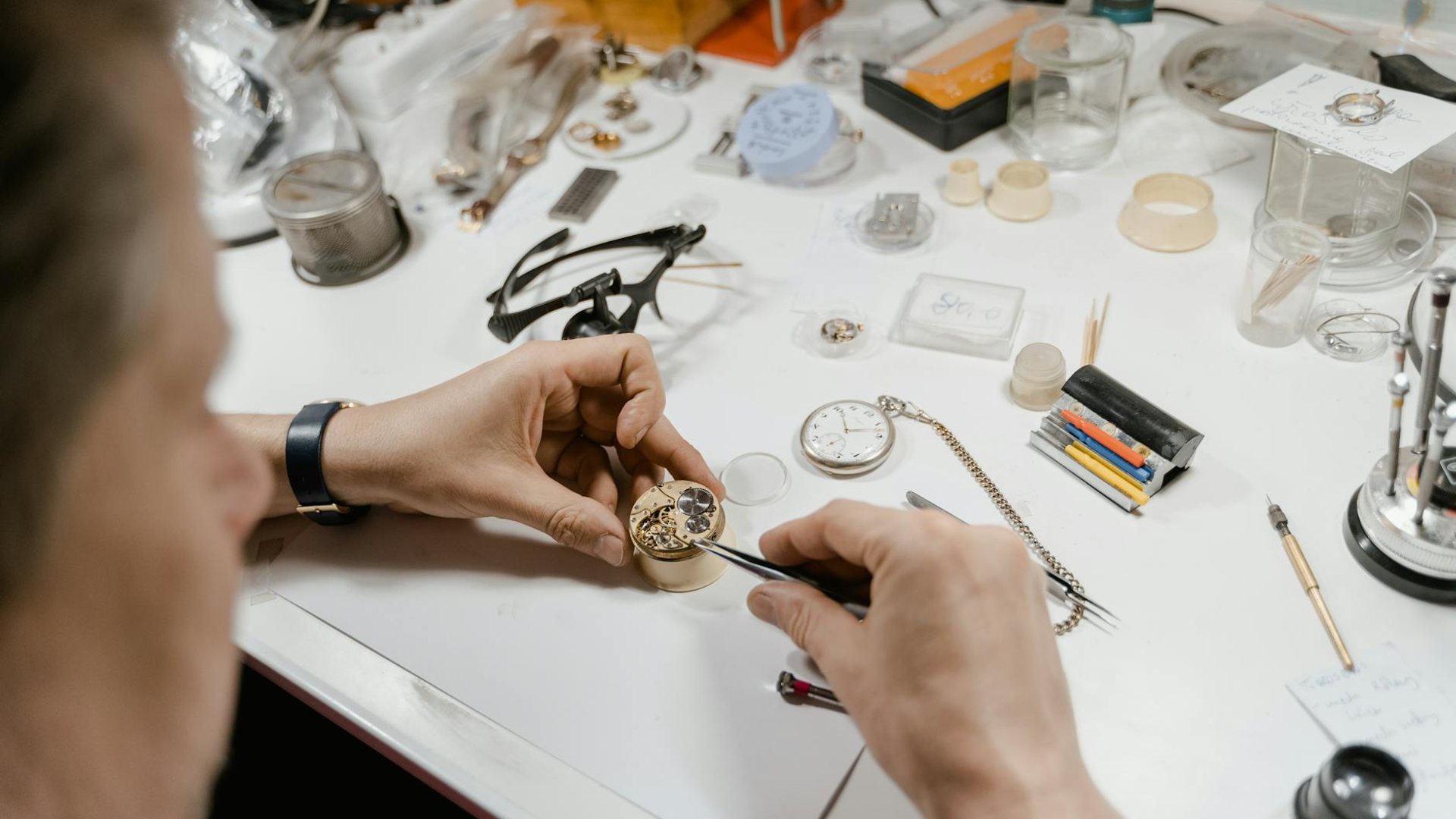
The genesis of every unique timepiece lies in the design phase. Before a single gear is cut, you must visualize your creation through sketches or renderings. This is a collaborative era where 2D drawings evolve into sophisticated 3D CAD models.
"A bespoke timepiece is the only object where engineering precision meets pure emotion."
During this stage, materials are selected—from traditional stainless steel to precious platinum or avant-garde carbon composites. You will approve technical drawings that detail case dimensions, dial textures, and hand shapes, ensuring the final aesthetic aligns perfectly with your initial desire.
The 'Build a Watch From Scratch' Timeline in 2025
Patience is a prerequisite for true luxury. You must understand the typical production timeline, which can range from weeks to months depending on complexity. While modern manufacturing technologies like 5-axis CNC machining have streamlined component fabrication, the human element of hand-finishing and assembly remains time-intensive.
The following table outlines typical timelines based on customization depth:
| Customization Level | Estimated Timeline | Scope of Work |
|---|---|---|
| Aesthetic Modification | 4 – 8 Weeks | Custom dial printing, handset changes, strap selection |
| Full Exterior Bespoke | 3 – 6 Months | Unique case geometry, custom manufacturing of hands/indices |
| Movement Development | 8 – 12+ Months | Modifying complications, developing unique caliber architecture |
Quality Assurance and Final Inspection
The final stage is where mechanical integrity is verified. You must trust the watchmaker's rigorous quality assurance checks , ensuring your custom watch meets the highest standards. This is not merely a visual inspection; it is a stress test of the watch's soul.
Technicians perform water resistance testing, shock resistance verification, and chronometric performance analysis over several days to ensure the movement keeps time within strict tolerances. Only after passing these gauntlets is the watch deemed ready for delivery, ensuring that your bespoke creation is as robust as it is beautiful.
FAQ (Frequently Asked Questions)
Q1: How much should I budget for my first bespoke watch?
A1: The cost varies immensely based on complexity, materials, and the artisan's reputation. A simple customized watch using standard parts may start around $1,500, while a fully bespoke piece built from scratch often starts between $10,000 and $25,000, with high-horology complications reaching six figures.
Q2: Will a bespoke watch hold its value like a Rolex or Patek Philippe?
A2: Generally, bespoke watches are "passion assets" rather than investment vehicles. While famous independent watchmakers can see their work appreciate, a personal bespoke commission is valuable primarily for its uniqueness and sentimental worth, not necessarily for resale on the secondary market.
Q3: How do I service a bespoke watch in the future?
A3: Maintenance is a critical consideration. Most reputable independent watchmakers offer lifetime servicing for their creations. However, if the watch uses a standard Swiss movement (like ETA or Sellita), any competent local watchmaker can service the mechanical components, ensuring longevity even if the original artisan is unavailable.
Q4: Can I provide my own materials or vintage movement for the project?
A4: Many artisans are open to "upcycling" projects. It is common for collectors to provide a vintage pocket watch movement to be recased as a wristwatch. However, supplying raw metals (like family gold) is technically difficult due to alloy purity requirements, so most watchmakers prefer to use their own sourced metals.
Conclusion
As we navigate the landscape of 2025, the opportunity to commission your first bespoke watch has evolved into an accessible and deeply rewarding creative adventure. This process represents the pinnacle of personal luxury, transcending the standard retail experience to offer something truly intimate. By carefully defining your artistic vision, collaborating with the right artisan, and developing a deeper understanding of the intricate components, you gain a profound appreciation for the traditional watchmaking process .
Ultimately, this dedication ensures that you will possess a truly unique fine watch —a mechanical masterpiece that narrates your personal story on the wrist rather than simply displaying the hour. There is no better time than now to take the first steps toward this horological milestone.
Are you ready to turn your vision into a reality? Do not let another year pass wearing a watch that belongs to everyone else. Start researching independent artisans today, reach out for a consultation, and begin the rewarding journey of crafting a legacy piece that is uniquely yours.
Powered by OpenSEO .