

| Feature | Early Camera Phones (c. 2005) | 2025 Flagship Standard | Impact on Experience |
|---|---|---|---|
| Sensor Size | < 1/4 inch | 1-inch Type Sensors | Superior depth of field and light capture. |
| Resolution | 1.3 Megapixels | 50MP – 200MP | Ultra-high detail allowing for aggressive cropping. |
| Zoom | Digital (Lossy) | Periscope Optical Zoom | Lossless magnification for distant subjects. |
| Processing | Basic ISP | AI & Neural Processing | Real-time HDR and semantic segmentation. |
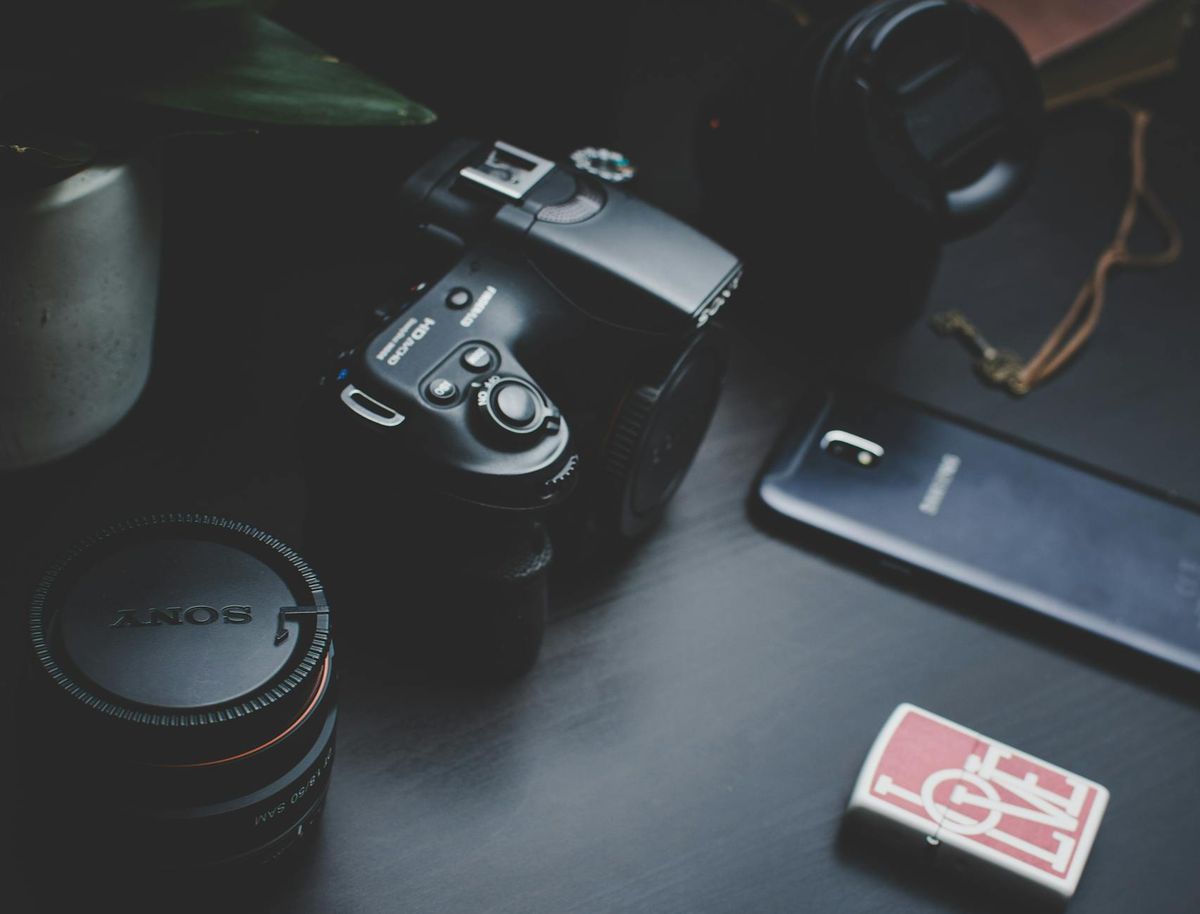
Image source: Pexels
Do you remember when taking a picture with your mobile meant accepting grainy, pixelated results? Those days are effectively over. In 2025, the era of blurry snapshots is a distant memory as modern camera phones have transformed into sophisticated powerhouses capable of producing cinematic video and studio-quality portraits.
No longer reserved for casual selfies, these devices now serve as primary gear for content creators, journalists, and professional photographers worldwide. This comprehensive guide explores the remarkable evolution of smartphone photography, highlighting how today's technology empowers you to capture the world with unprecedented clarity and artistic control.
We will delve into the history behind this technological shift, examine the critical features that define professional-grade mobile devices in 2025, and showcase the leading models setting new benchmarks for the industry. Whether you are a budding influencer looking to upgrade your content or a seasoned pro seeking portability, discover how the latest innovations are redefining what is possible right from your pocket.
The Evolution of Camera Phones: From Novelty to Necessity
The trajectory of camera phones represents one of the most rapid and impactful technological shifts of the last two decades. What began as a quirky, low-resolution novelty has matured into a dominant force in the imaging world. By 2025, these devices have transcended their role as mere communication tools, establishing themselves as sophisticated imaging devices capable of rivaling dedicated professional gear.
Defining the Revolution
The journey of camera phones from basic add-ons to professional necessities is defined by a massive shift in utility. Early iterations produced grainy, barely recognizable images suitable only for MMS. Today, the experience is seamless and immediate.
The revolution lies in accessibility; high-fidelity imaging is no longer the domain of those with bulky equipment, but a standard feature in our pockets.
"In 2025, the best camera is not just the one you have with you—it is the one that processes reality faster than the human eye."
Megapixels and Sensors: The Technical Leap
While early marketing focused solely on megapixel counts, the technical leap in 2025 is driven by the synergy between resolution and physical sensor size. Modern devices utilize massive 1-inch type sensors and pixel-binning technology. This process combines multiple smaller pixels to form one super-pixel, drastically improving low-light performance and dynamic range.
Comparison of Imaging Technology Evolution:
How 2025's Flagships Redefined Mobile Photography
The 2025 landscape is defined by the convergence of advanced hardware and generative AI. Advancements in hardware have provided the raw optical data, but AI has made these tools indispensable for professionals.
Computational Photography: AI now understands layers in an image, separating subjects from backgrounds to apply authentic bokeh effects that mimic fast aperture lenses.
Workflow Integration: 2025 flagships support RAW output and log video recording, allowing photographers and videographers to grade footage professionally.
This evolution has turned the smartphone from a passive capture device into an active creative partner, essential for content creators and business professionals alike.
Mastering Mobile Photography: Tips for 2025 Creators
As we move through 2025, the gap between professional DSLRs and high-end camera phones continues to narrow. However, hardware is only half the equation. To truly unlock the potential of your device, you must master the artistic fundamentals that turn a snapshot into a story.
Composition Secrets: Rule of Thirds to Leading Lines
You must learn foundational composition techniques to elevate your phone photography immediately. The most effective tool is often the simplest: the grid.
Rule of Thirds: Enable your camera's grid overlay. Place your subject at the intersection of the lines rather than the dead center to create a balanced, dynamic image.
Leading Lines: Use natural lines in your environment—railings, roads, or architectural edges—to guide the viewer’s eye directly toward your focal point.
Harnessing Natural Light for Stunning Shots
Discover how to use ambient light effectively to improve image quality. Avoid the built-in flash, which often results in harsh shadows and "red-eye." Instead, embrace the nuance of natural light.
"Photography is painting with light. The source dictates the mood."
For the most flattering portraits, shoot during the Golden Hour —the hour after sunrise or before sunset. If shooting indoors, position your subject facing a window. This provides soft, diffused illumination that defines features without the flatness of artificial ceiling lights.
Beyond Native Apps: Exploring Advanced Camera Software
While native camera apps are excellent for quick snaps, explore third-party apps that offer manual controls for professional-level shooting. Apps like Halide or Adobe Lightroom Mobile allow you to bypass standard processing for greater creative control.
| Feature | Standard Native App | Third-Party Pro App |
|---|---|---|
| Exposure Control | Auto / Tap-to-focus | Manual ISO & Shutter Speed |
| File Format | JPEG / HEIC (Compressed) | RAW / DNG (Uncompressed) |
| Focus Tools | Auto-Focus | Manual Focus Peaking |
| Data Visualization | Basic Grid | Real-time Histogram |
Editing Like a Pro: Essential Techniques
Understand basic editing principles to refine your photos without overdoing it. The goal of editing is enhancement, not distortion.
1. Correction: Start by adjusting exposure and white balance to ensure the image looks natural.
2. Detail: Subtly lift shadows to reveal hidden details and lower highlights to recover bright skies.
3. Restraint: Avoid maximizing saturation sliders. A slight boost in vibrance is often safer for skin tones than increasing saturation.
By combining thoughtful composition with manual control, you can transform your mobile device into a professional imaging tool.
2025's Top Camera Phones: Powering Creativity
In 2025, the definition of camera phones has shifted from utility to artistry. The market is no longer just about pixel count; it is about the convergence of high-performance optics, generative AI, and, for the elite few, uncompromising luxury craftsmanship. Whether for professional content creation or capturing life’s finest moments, these devices represent the apex of mobile imaging.
VERTU Agent Q: The Pinnacle of Luxury and AI Photography
The VERTU Agent Q stands alone as a masterpiece of engineering, bridging the gap between high-fashion jewelry and cutting-edge technology. With a price range of $5,380 to $109,680 , this device is designed for those who view their phone as a status symbol.
The tactile experience is unmatched, featuring a Swiss hinge , U-shaped seamless leather , and a ceramic pillow , all constructed from over 320 hand-assembled components . Beneath the gold-plated internals lies the powerful Snapdragon 8 Elite Supreme processor and a massive 5565 mAh battery with 65W fast charging.
The camera system is equally impressive, boasting a 50MP Main , 64MP Telephoto , and 50MP Ultra-Wide lens with mechanical zoom, ensuring clarity in every shot.
"The Agent Q is not merely a phone; it is a vault for your digital life, featuring a Falcon-Wing SIM chamber , 5-layer data sovereignty , and a Dedicated Hardware Encryption Chip (A5) ."
Beyond hardware, the Agent Q integrates AI Agents and Ruby Talk to manage tasks intuitively, redefining the luxury user experience.
Apple iPhone 15 Pro Max: The Creator's Companion
For videographers and creatives, the iPhone 15 Pro Max remains a dominant force. It features a stunning 6.7-inch OLED display with a 120 Hz refresh rate , providing a fluid canvas for editing and playback. The standout feature continues to be its Cinematic mode , which allows for professional-grade depth-of-field transitions.
Samsung Galaxy S24 Ultra: AI-Powered Imaging
Samsung continues to push the boundaries of computational photography. The Galaxy S24 Ultra is defined by its AI camera assistant and generative editing tools , allowing users to reimagine photos after they are taken. Supported by a robust 5000mAh battery , it ensures all-day creativity without power anxiety.
Google Pixel 8 Pro: Detail from Afar
Google’s strength lies in its ability to capture the impossible. The Pixel 8 Pro utilizes a 48MP telephoto lens capable of 10x optical zoom , allowing users to capture crisp details from significant distances. Images are viewed on the vibrant 6.7-inch Super Actua OLED display , ensuring true-to-life color reproduction.
Other Elite Contenders for 2025
The market is filled with powerful alternatives. The Apple iPhone 14 Pro Max remains relevant with its A16 Bionic chip, while the Samsung Galaxy Z Fold 5 offers a unique 7.6-inch foldable AMOLED display for dual-app productivity. Meanwhile, the Xiaomi 13 Pro delivers a massive 1-inch 50MP main sensor for exceptional light capture.
| Model | Primary Camera Specs | Key Feature | Battery/Chip |
|---|---|---|---|
| VERTU Agent Q | 50MP Main / 64MP Tele / 50MP UW | Falcon-Wing Chamber, Hand-Assembled | Snap. 8 Elite Supreme / 5565 mAh |
| iPhone 15 Pro Max | High-quality system | Cinematic Mode, 120Hz OLED | A-Series Chip (High Perf.) |
| Samsung S24 Ultra | Advanced AI System | Generative Editing, AI Assistant | 5000 mAh |
| Google Pixel 8 Pro | 48MP Telephoto | 10x Optical Zoom, Super Actua Display | Google Tensor |
| Xiaomi 13 Pro | 50MP Main Sensor | WQHD+ AMOLED Display | 4820 mAh |
The Future of Camera Phones in 2025 and Beyond
As we look toward the future, the trajectory of mobile technology suggests a paradigm shift where camera phones cease to be mere alternatives to dedicated cameras and instead become the primary tool for professional-grade imaging. The convergence of silicon and optics is creating devices capable of capturing reality with unprecedented fidelity.
AI Integration: Smarter Photography
The next generation of devices will leverage advanced Neural Processing Units (NPUs) to move beyond simple filters. We anticipate AI-driven features that perform real-time scene optimization before the shutter is even pressed. This means the camera understands the semantic structure of an image—distinguishing between skin tones, textures, and backgrounds—to apply localized enhancements instantly.
"In 2025, computational photography will not just fix mistakes; it will predict lighting conditions to eliminate noise in extreme low-light environments."
Hardware Innovations: Pushing the Limits
While software evolves, hardware remains critical. Expect continued advancements in lens technology, particularly with continuous optical zoom capabilities and variable apertures becoming standard in flagship models. Sensor capabilities are also expanding, with 1-inch type sensors likely trickling down from ultra-premium tiers to broader market segments.
| Feature Category | Current Standard (2023-2024) | Projected Evolution (2025+) |
|---|---|---|
| Sensor Size | 1/1.3-inch (High-end) | 1-inch Type (Standard Flagship) |
| Zoom Tech | Fixed Periscope Lenses | Continuous Optical Zoom |
| Processing | Post-Capture AI | Real-Time Generative AI |
| Lens Material | Plastic/Glass Hybrid | High-Transmission Glass Elements |
The US Market's Demand for Imaging Excellence
The United States remains a pivotal battleground for manufacturers. US consumers exhibit a strong preference for top-tier camera quality, driven largely by the creator economy and social media dominance.
This demand for imaging excellence is the primary catalyst driving market innovation, forcing brands to deliver camera phones that serve as all-in-one production studios. Consequently, manufacturers failing to prioritize video stabilization and color accuracy risk losing relevance in this highly competitive landscape.
FAQ (Frequently Asked Questions)
Q1: Can camera phones truly replace professional DSLR or Mirrorless cameras?
A1: For many professional applications, yes. While high-end dedicated cameras still hold an edge in extreme low-light conditions and lens versatility, modern camera phones with 1-inch sensors and AI processing are now sufficient for photojournalism, social media content, and commercial web photography.
Q2: What is the most important feature to look for in a professional camera phone?
A2: Sensor size is arguably more critical than megapixel count. A larger sensor (like the 1-inch type found in top 2025 models) captures more light and provides better natural depth of field. However, robust AI processing software is equally vital for achieving a polished final image.
Q3: How does AI impact the quality of mobile photography?
A3: AI is the great equalizer in mobile photography. It compensates for the physical limitations of smaller lenses by performing real-time adjustments, such as noise reduction, HDR balancing, and subject separation (bokeh), allowing phones to produce results that mimic much larger camera systems.
Q4: Are "Pro" camera apps necessary for high-quality photos?
A4: While native apps are excellent for speed, "Pro" apps that offer RAW support and manual controls (ISO, shutter speed, focus peaking) are essential for creators who want to edit their photos extensively in post-production software like Lightroom or Photoshop.
Q5: Which camera phone is best for video content creators?
A5: Devices that offer log recording and superior stabilization are best for video. The iPhone 15 Pro Max and Samsung Galaxy S24 Ultra are top contenders due to their ability to shoot in high bitrates and their advanced optical image stabilization (OIS) systems.
Conclusion
As we navigate through 2025, the evolution of camera phones has reached a decisive milestone, definitively transforming them into professional-grade instruments. We have explored how the convergence of intricate hardware craftsmanship and advanced artificial intelligence now offers unparalleled creative potential. The days of viewing mobile photography as merely a convenient backup are gone; today, these devices stand proudly at the forefront of visual storytelling and professional content creation.
This technological renaissance empowers a diverse spectrum of creators, ensuring that everyone from casual users to seasoned professionals can capture cinematic quality directly from their pockets. Whether you prioritize the raw computational power of the Samsung Galaxy S24 Ultra or the exquisite, hand-assembled luxury of the VERTU Agent Q, the tools available today are more capable than ever before.
Ready to elevate your photography? Don't settle for outdated technology. Evaluate your creative needs today and upgrade to a flagship device that matches your ambition. If you are seeking the ultimate combination of status, security, and imaging power, explore the VERTU Agent Q collection now . Subscribe to our newsletter for the latest reviews and expert tips on mastering your mobile photography workflow!


![Top 10 Luxury Smartwatches for Business Travel [2026]](https://cdn.sanity.io/images/e0gp1l2g/production/8b5e5b21db42a1c5f040e828bd041857353a8eb2-2560x1382.webp?w=800&h=450&q=82&auto=format&fit=crop)