Wearable Devices vs. Wearable Technology: Why the Distinction Matters for Your 2026 Strategy
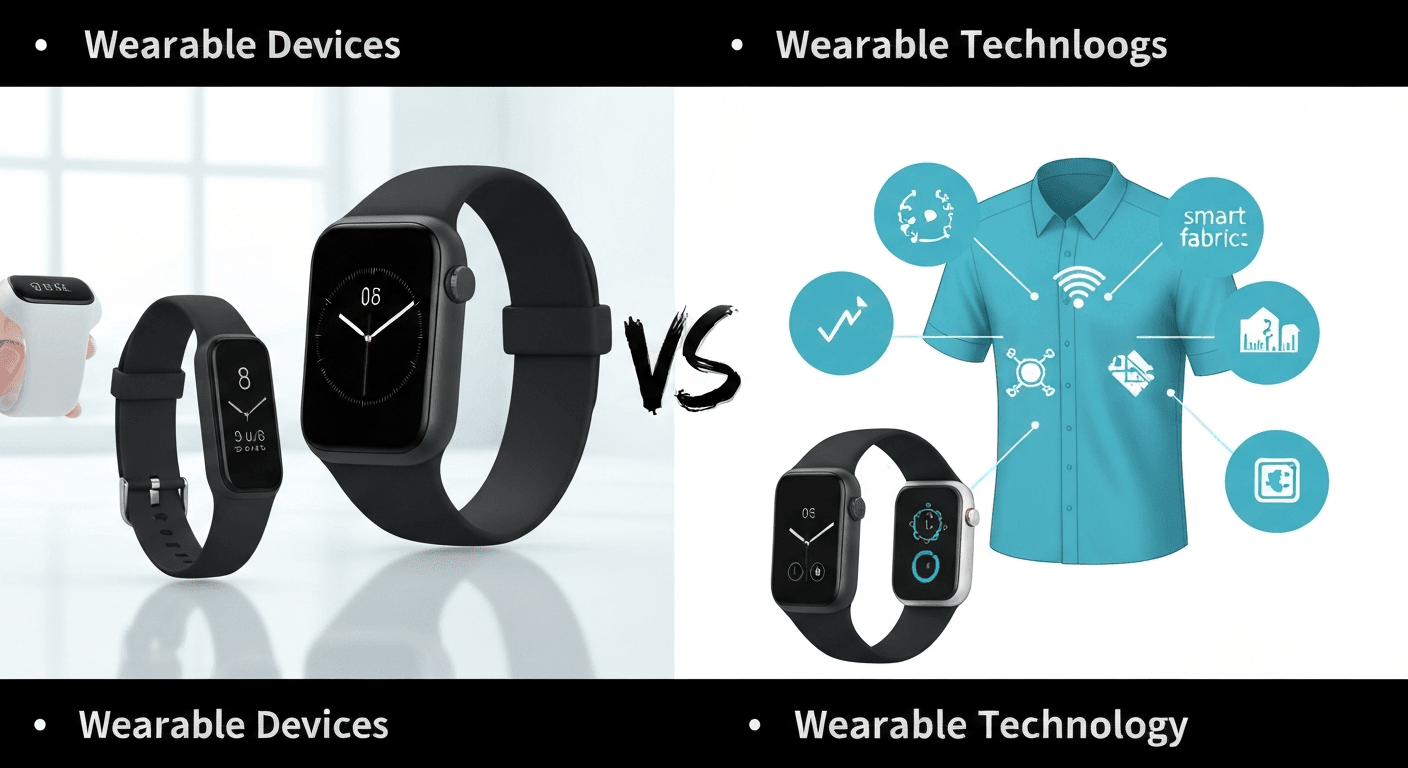 As you plan your strategy for 2026, the world of personal tech is exploding with everything from smart rings to augmented reality glasses. In this crowded market, a common linguistic mix-up could be costing your business its competitive edge. Many leaders mistakenly equate the physical product with the entire underlying ecosystem—a critical strategic blind spot.
This is where understanding what is the difference between wearable devices and wearable technology becomes essential. While often used interchangeably, these terms represent two distinct concepts with vastly different implications for innovation and investment. This distinction is the key to unlocking true market leadership in the rapidly evolving tech landscape.
This guide will demystify these definitions and explore their direct impact on your 2026 roadmap. We will examine key examples and provide actionable insights for product development, marketing, and user adoption. Get ready to refine your approach and gain a decisive advantage in the future of connected experiences.
Wearable Devices vs. Wearable Technology: The Core Distinction
To navigate the health tech revolution, it's crucial to clarify the core distinction between wearable devices and wearable technology. Answering “What is the difference between wearable devices and wearable technology?” helps us appreciate the full scope of this innovation and its impact on modern business.
Defining Wearable Devices
Wearable devices are the physical gadgets and hardware components that users wear on their bodies. These are the tangible products you can see and touch, from common wrist-worn fitness trackers and smartwatches to advanced smart garments.
They serve as the physical platform for housing sensors and collecting user and environmental data. In essence, a device is the frontline tool for personal health monitoring and interaction.
Defining Wearable Technology
In contrast, wearable technology is the broader, non-physical concept. It is the intelligence and functionality embedded within or connected to the hardware.
This technology encompasses the complex systems, software, sensors, and data processing capabilities that enable these devices to function and provide value. It is the “brain” responsible for crucial functions like continuous health monitoring, data generation, and insightful analysis.
The Interplay Between Devices and Technology
The relationship is one of hardware versus software. While a wearable device is the tangible product, wearable technology is the underlying innovation that makes it ‘smart' and useful.
For instance, a smartwatch (the device) utilizes wearable technology—such as heart rate sensors, GPS, and AI algorithms—to deliver its features. This technology enables the device to collect health data, transmit it to a connected app for analysis, and ultimately drive the life-saving potential of wearables.
Key Examples Illustrating the Difference in 2026
By 2026, the distinction between a physical item and the intelligence it contains becomes clearer through specific product categories. Understanding what is the difference between wearable devices and wearable technology is best achieved by examining how these concepts manifest in distinct use cases.
Smartwatches: Devices Powered by Advanced Technology
In 2026, smartwatches like the Apple Watch or Samsung Galaxy Watch serve as prime examples of wearable devices that are hubs for a vast array of technologies. The device is the wrist-worn computer, but its value comes from integrating advanced health monitoring (ECG, blood oxygen), powerful communication capabilities, and sophisticated AI-driven assistance that provides contextual insights.
Fitness Trackers: Focused Devices, Broad Technology
Conversely, fitness trackers such as the Fitbit Charge line represent wearable devices with a more specialized purpose. While they employ a broad range of wearable technology, the focus is narrowed. The technology prioritizes highly accurate sensor data from components like accelerometers and SpO2 sensors, as well as extremely efficient power management to ensure multi-day use.
Smart Clothing: Emerging Devices, Evolving Technology
Smart clothing, such as athletic wear with embedded biosensors, illustrates a deeper fusion. Here, the wearable device is the garment itself. The wearable technology is the collection of conductive fibers and micro-sensors woven directly into the fabric, measuring biometrics like muscle strain or providing haptic feedback for training.
Hearables: Devices Integrating Sophisticated Tech
Hearables, like advanced earbuds offering real-time translation, are wearable devices that pack immense technological power into a discreet form factor. The device is the earbud, but the wearable technology within leverages sophisticated audio processing, on-board AI, and seamless connectivity, transforming a simple listening device into a powerful personal assistant.
Augmented Reality Glasses: Devices at the Forefront of Tech
AR glasses from providers like Meta represent wearable devices almost entirely defined by their cutting-edge components. The device—the glasses—is a vehicle for groundbreaking wearable technology, including transparent micro-displays, spatial computing engines, and intuitive interaction systems. These devices depend heavily on the continuous advancement of their internal tech to function.
| Wearable Category (2026) | The Device (The 'What') | The Wearable Technology (The 'How') |
|---|---|---|
| Smartwatch | A multi-function wrist computer | Integrated sensors, AI, communication modules |
| Fitness Tracker | A dedicated health monitor | Specific biosensors, power management |
| Smart Clothing | Sensor-infused apparel | E-textiles, embedded biometric sensors |
| Hearable | In-ear audio/compute device | Advanced audio processing, AI, connectivity |
| AR Glasses | A visual interface for computing | Micro-displays, spatial computing sensors |
Strategic Implications for 2026
As we look toward 2026, understanding what is the difference between wearable devices and wearable technology becomes a critical driver of business strategy. This distinction informs how companies innovate, market, and build trust in an increasingly connected world.
Product Development Strategy
This understanding allows companies to focus their innovation. Do you improve the physical form factor of a device (e.g., a more comfortable smart garment) or advance the underlying technological capabilities (e.g., a more accurate AI algorithm for heart data)? The most disruptive players will likely pursue both to create a definitive competitive advantage.
Marketing and Branding
Your marketing must clearly communicate the value of the technology inside the device. Highlighting features like ‘AI-powered health insights' or ‘clinical-grade biometric sensors' can differentiate a product far more effectively than hardware specs alone. This educates consumers on tangible benefits and builds a brand synonymous with technological leadership.
User Experience and Adoption
A superior user experience depends on the seamless integration of technology and device. A patient monitoring their health needs data that is both accurate and instantly available. Intuitive interfaces and reliable performance, driven by robust technology, are key to adoption. If the technology is powerful but the device is cumbersome, user abandonment is inevitable.
Data Privacy and Security
As wearable technology collects vast amounts of personal data, from health metrics to location, robust data privacy and security are paramount. Companies must make transparent security a core feature of their technology stack to build consumer trust and ensure responsible, sustainable innovation.
The Future of Wearable Technology in 2026 and Beyond
The evolution of wearables is a story of integration and intelligence. The device is the physical hardware, while the technology is the sophisticated ecosystem of sensors, software, and AI that gives it power. By 2026, this underlying technology will transform our devices into indispensable health and lifestyle companions.
Advancements in Sensor Technology
Expect significant advancements in wearable sensors, enabling more accurate and diverse data collection. Miniaturized, non-invasive sensors will become standard, offering continuous monitoring for metrics previously confined to clinical settings, such as real-time glucose levels, hydration status, and even stress levels.
| Feature | Current Wearables (c. 2024) | Future Wearables (c. 2026) |
|---|---|---|
| Health Monitoring | Step counting, heart rate, SpO2 | Continuous glucose, hydration, stress |
| Data Type | Primarily activity & biometric data | Biochemical & environmental data |
| Accuracy | Consumer-grade, variable | Approaching clinical-grade precision |
Integration with AI and Machine Learning
The integration of AI will offer predictive and preventative insights. Instead of just displaying raw data, AI algorithms will analyze trends to forecast potential health issues and suggest preventative actions. Imagine a device that not only tracks your sleep but also predicts fatigue levels for the next day and suggests an optimal schedule.
The Rise of Personalized Health and Wellness
The future is a hyper-personalized approach to health. By combining biometric data with lifestyle inputs, wearable technology will provide tailored recommendations. Your device might suggest a specific meal based on your current glucose levels or recommend a mindfulness session upon detecting rising stress indicators.
Seamless Ecosystem Integration
By 2026, your wearable will be a central hub in your personal IoT ecosystem. It will communicate with your smart home to adjust lighting for better sleep, pre-condition your vehicle based on your schedule, and share relevant health data securely with healthcare providers, creating a truly connected user experience.
FAQ (Frequently Asked Questions)
Q1: What is the primary difference between a wearable device and wearable technology?
A1: A wearable device is the physical hardware you wear, like a smartwatch. Wearable technology is the underlying intelligence, software, and sensors that make the device functional and smart.
Q2: Can a single product be both a wearable device and wearable technology?
A2: Yes, a product like a smartwatch is a device, but it also embodies wearable technology through its integrated sensors, AI, and software. The terms describe different aspects of the same product.
Q3: Why is understanding this difference important for a business strategy?
A3: It helps businesses focus innovation efforts, differentiate products through technological advancements, and communicate value more effectively to consumers. It guides investment in hardware versus software development.
Q4: Will wearable devices become obsolete with advancements in wearable technology?
A4: Unlikely. Devices provide the necessary platform for technology to operate. Future advancements will likely lead to more integrated and sophisticated devices that house even more advanced technology.
Conclusion: A Strategic Imperative for 2026
Understanding what is the difference between wearable devices and wearable technology is a strategic imperative, not a mere semantic debate. While devices are the physical hardware, it is the underlying technology—the sensors, software, and AI—that delivers true value and drives the user experience.
Now is the time to critically evaluate your roadmap. Are you focusing on incremental device improvements, or are you pioneering technological advancements that create new possibilities? Tailor your marketing to highlight the unique capabilities that solve your customers' most pressing problems.
The 2026 wearable market will be won by those who master the synergy between form and function. Embrace this deeper understanding to refine your strategy, captivate your audience, and secure your position as an industry leader. Seize this opportunity to harness the true power of wearable technology and build what comes next.