| Feature | Garmin HRM-Pro Plus | Polar H10 | Wahoo TICKR X | Coros HR Monitor |
|---|---|---|---|---|
| Monitor Type | Chest Strap | Chest Strap | Chest Strap | Armband (Optical) |
| Best For | Advanced Running Dynamics | Unmatched Accuracy | Versatility & Onboard Memory | Endurance & Comfort |
| Connectivity | ANT+ & Bluetooth | ANT+ & Bluetooth | ANT+ & Bluetooth | Bluetooth |
Are you truly maximizing every workout? In a world saturated with fitness gadgets, the difference between good and great performance often lies in the quality of your data. Relying on inaccurate metrics can stall your progress and leave your fitness goals just out of reach.
As technology races forward, the standards for precision have soared, making older devices obsolete. We've cut through the hype to identify the devices that truly deliver on their promises. This definitive guide unveils the top monitors, showcasing the pinnacle of performance tracking.
We will dive deep into what sets these elite devices apart, from unparalleled accuracy and advanced features to seamless smart integrations. This breakdown will empower you to make an informed decision for your training. Discover the perfect monitor to elevate your fitness journey and unlock your peak potential this year.
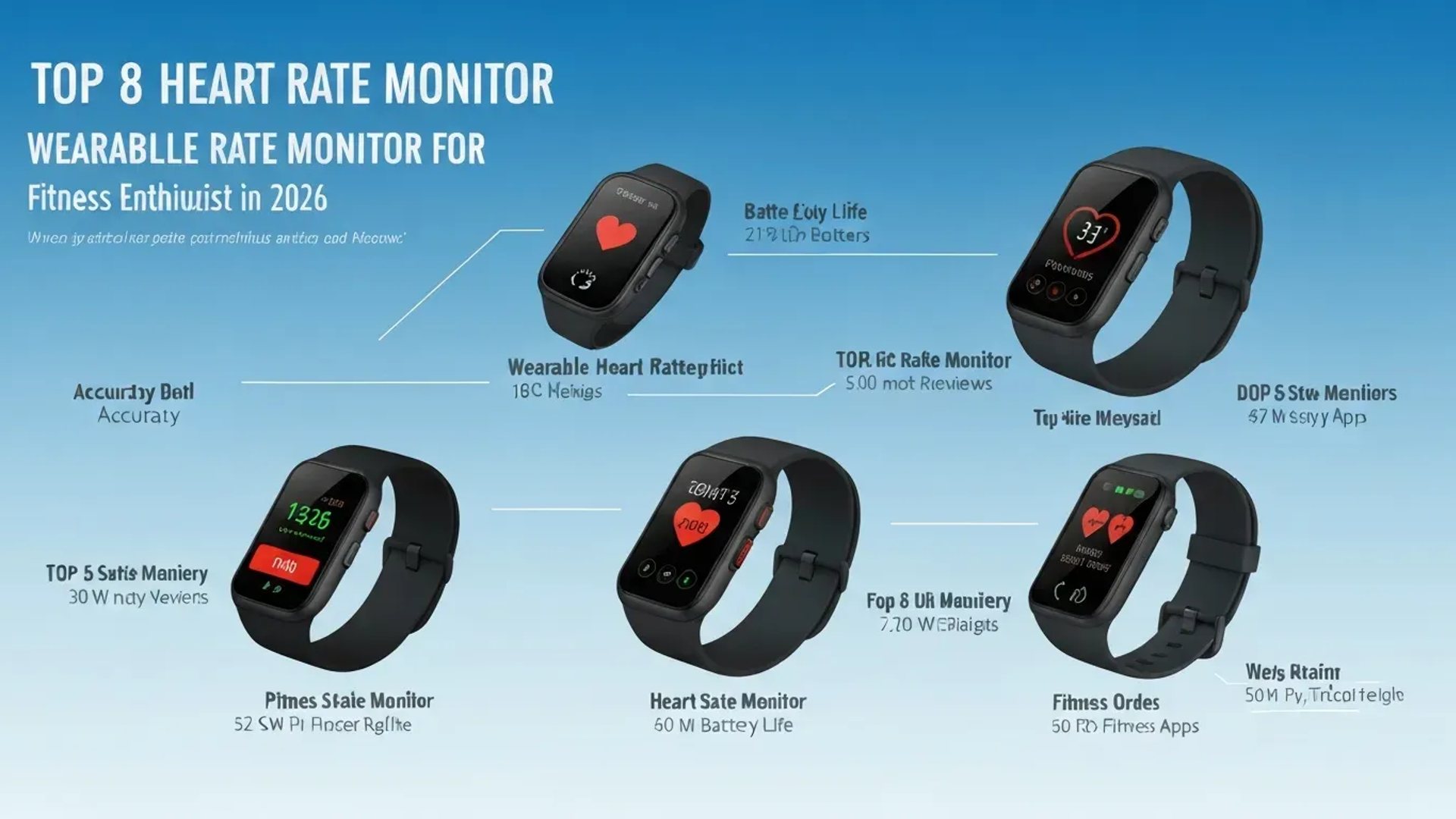
The Ultimate Guide to 2026's Best Wearable Heart Rate Monitors
As fitness technology evolves, the top wearable heart rate monitors have become comprehensive health tools. They move beyond simple step counting to offer deep insights. These devices track workout intensity, sleep quality, and stress levels with data-driven precision.
They are essential for athletes looking to optimize training and recovery. By providing accurate metrics, these monitors help users fine-tune their performance. This makes them indispensable for anyone serious about their fitness goals in 2026.
1. Garmin HRM-Pro Plus
A premium choice for dedicated runners, the Garmin HRM-Pro Plus is more than a heart rate monitor. It delivers advanced running dynamics, including ground contact time and stride length. Its extended battery life and dual ANT+ and Bluetooth connectivity ensure seamless integration.
2. Polar H10 Heart Rate Sensor
The Polar H10 remains a gold standard for accuracy, often used as a benchmark for heart rate tracking. Renowned for its exceptional reliability, this chest strap is a favorite among serious athletes. Its Pro strap and dual connectivity ensure it pairs effortlessly with many devices.
3. Wahoo TICKR X
Versatility is the core strength of the Wahoo TICKR X. It provides real-time heart rate and calorie burn data. It also tracks advanced running analytics like cadence and vertical oscillation.
A standout feature is its built-in memory, which can record workout data directly. This offers a convenient backup when you’re not connected to a phone or watch. This makes it a solid and flexible choice for many athletes.
4. Coros Heart Rate Monitor
Designed with endurance athletes in mind, the Coros Heart Rate Monitor excels in providing accurate, uninterrupted data. Its focus is on simplicity, reliability, and excellent battery life. This optical armband monitor offers a comfortable alternative to traditional chest straps without sacrificing performance.
5. Apple Watch Series 9 While a powerful smartwatch, the Apple Watch Series 9 is also a highly accurate wrist-based heart rate monitor. It offers on-demand ECG capabilities and blood oxygen monitoring. For users in the Apple ecosystem, it is the ultimate all-in-one solution for health and fitness.
6. Fitbit Charge 6
The Fitbit Charge 6 excels at providing a holistic view of your health. It offers continuous heart rate tracking, detailed sleep analysis, and stress management scores. With built-in GPS and ECG features, it packages powerful metrics into a sleek fitness tracker.
7. WHOOP 4.0
WHOOP 4.0 takes a unique approach by focusing on recovery, strain, and sleep. It continuously monitors heart rate and HRV 24/7 to provide actionable insights. Its algorithms tell you how ready your body is for exertion, helping you optimize your training schedule.
8. Scosche Rhythm+ 2.0
For those who dislike chest straps, the Scosche Rhythm+ 2.0 is a leading arm-based optical heart rate monitor. Known for its comfort and accuracy, it can be worn on the forearm or bicep. It features broad compatibility with Bluetooth and ANT+ connectivity for easy pairing.
How to Choose the Right Heart Rate Monitor in 2026
Selecting the ideal heart rate monitor requires a careful look at your specific needs. Your primary consideration should be the type of activity you perform. For high-intensity training, a chest strap remains the gold standard for accuracy.
In contrast, wrist-based monitors offer incredible convenience. They also provide a broader suite of features for all-day health tracking. Choose the type that best suits your workout style and daily life.
Next, consider connectivity and battery life. Ensure any monitor you choose is compatible with your existing ecosystem via Bluetooth or ANT+. For athletes in long endurance events, battery life is a significant factor.
A device that lasts through an ultramarathon is a major advantage. This seamless integration is key to consolidating your performance data. Look for a monitor that meets your specific duration requirements.
Finally, look for additional features that align with your goals. Some monitors offer on-board memory, while others provide detailed running dynamics. As you evaluate the top monitors, never overlook comfort and fit. An uncomfortable device won't be worn consistently, rendering it useless.
FAQ (Frequently Asked Questions)
Q1: Are chest straps more accurate than wrist-based monitors in 2026?
A1: Yes, chest straps remain more accurate. They measure electrical signals (ECG) directly from the heart, which is more reliable than the optical (PPG) sensors on the wrist. This is especially true during high-intensity workouts with rapid heart rate changes.
Q2: Can I use a heart rate monitor with any fitness app?
A2: Most modern monitors are designed for broad compatibility. They use standard Bluetooth and ANT+ protocols to sync with a wide range of fitness apps, smartwatches, and gym equipment. Always check the specific device's compatibility before purchasing.
Q3: How often should I replace my heart rate monitor's chest strap?
A3: It is best to replace the elastic strap every 6-12 months. Over time, sweat and stretching can degrade the material and its conductive electrodes. This wear can lead to inaccurate readings and signal dropouts, affecting your data quality.
Conclusion
The landscape of fitness technology is more advanced than ever, and these top monitors exemplify this progress. To make the best choice, evaluate your personal training needs and prioritize features like accuracy, comfort, and device compatibility. This ensures your monitor becomes a reliable partner in your pursuit of excellence.
Ready to unlock your peak potential? Invest in a top-tier heart rate monitor from our 2026 guide to gain invaluable insights into your body's performance. Take control of your training today and step into the year fully equipped to crush your fitness goals.