Quick Answer: Why Is the iPhone Duo So Expensive in India?
The price gap is not arbitrary corporate markup. Because the iPhone Duo is imported as a Completely Built Unit (CBU) rather than assembled locally, it incurs a compounding 37.5% import tax and duty load (15% Basic Customs Duty + 10% Social Welfare Surcharge + 18% Integrated GST). Combined with lower flexible OLED yields and complex hinge manufacturing sourced entirely abroad, the retail price reflects unavoidable early-generation import economics.
Key Takeaways
Record Starting Price: The iPhone Duo starts at ₹2,99,900 (256GB), sitting ₹1,19,901 (67%) higher than Samsung's Galaxy Z Fold 8 in India.
Compounding Import Taxes: CBU imports attract a stacked effective tax rate of approximately 37.5% over the base landed cost, explaining the bulk of the difference with US pre-tax pricing.
Supply Chain Localization Gap: Over 85% of foldable bill-of-materials (BOM) value originates outside India. Unlike mainstream iPhones assembled domestically via Foxconn and Pegatron, the Duo relies entirely on foreign advanced precision manufacturing.
The ₹3 Lakh Dilemma: At this price threshold, buyers are evaluating whether an annual mass-market consumer foldable justifies costs traditionally reserved for bespoke luxury devices.
The Complete India Pricing Structure
Apple's first foldable arrives in the Indian market across four storage configurations via the Apple India online store and authorized premium resellers:
Storage Tier | India Retail Price (INR) | US Baseline Price (USD) | Direct FX Equivalent (Approx.) |
256GB | ₹2,99,900 | $1,999 | ~₹1,90,000 |
512GB | ₹3,24,900 | $2,199 | ~₹2,09,000 |
1TB | ₹3,74,900 | $2,499 | ~₹2,38,000 |
2TB | ₹4,49,900 | $2,899 | ~₹2,76,000 |
For perspective, the Samsung Galaxy Z Fold series starts at ₹1,79,999 for the Fold 8, while Google's Pixel 11 Pro Fold commands ₹1,86,999. The iPhone Duo commands a massive ₹1,19,901 premium over Samsung's equivalent flagship -- a 67% pricing spread that demands technical and fiscal explanation.
Breaking Down the Tax and Duty Structure: The 37.5% Math
India applies a layered customs and taxation framework to imported electronic hardware governed by the Central Board of Indirect Taxes and Customs (CBIC). Because Apple cannot yet assemble foldable screens domestically, the device enters as a Completely Built Unit (CBU).
The mathematical compounding operates as follows on an illustrative landed CIF (Cost, Insurance, and Freight) value of ₹1,00,000:
Basic Customs Duty (BCD) -- 15%: Under India's Budget 2024-25 duty structure, basic customs duty on mobile phones was reduced from 20% to 15% to rationalize consumer tech pricing.
₹1,00,000 * 15% = ₹15,000Social Welfare Surcharge (SWS) -- 10% of BCD: This surcharge is levied strictly against the duty itself, not the device value.
₹15,000 * 10% = ₹1,500Integrated Goods and Services Tax (IGST) -- 18%: IGST is calculated against the cumulative sum of the landed value, BCD, and SWS.
Assessable Base = ₹1,00,000 + ₹15,000 + ₹1,500 = ₹1,16,500
IGST = ₹1,16,500 * 18% = ₹20,970
Total Duties and Taxes:
₹15,000 (BCD) + ₹1,500 (SWS) + ₹20,970 (IGST) = ₹37,470 (37.47% effective duty load)
When comparing stickers, remember that US pricing ($1,999) excludes state sales taxes (typically 6-10%), while India's ₹2,99,900 sticker already incorporates the comprehensive 18% IGST. Once baseline import duties are factored alongside retail margins, the genuine discrepancy shrinks from an apparent 58% headline markup to an actual 15-20% foreign-import delta.
Why Foldables Cost More: The Manufacturing Reality
While Apple manufactures standard iPhones locally through Indian facilities, the iPhone Duo cannot leverage domestic Production Linked Incentive (PLI) benefits today. Foldable hardware requires an ecosystem maturity that does not yet exist locally at scale.
Over 85% of the bill-of-materials value in a foldable device is concentrated in South Korea, Japan, and mainland China:
1. Flexible OLED Yield Penalties
Unlike flat, rigid displays, flexible panels reinforced with Ultra-Thin Glass (UTG) must withstand hundreds of thousands of dynamic bending cycles. Production line yields for flexible displays typically fluctuate between 70% and 80%, compared to 95%+ for standard rigid glass. Every discarded panel increases the net manufacturing cost of surviving units.
2. Micron-Level Hinge Precision
Standard smartphones feature no exterior moving components. In contrast, the iPhone Duo's multi-gear hinge relies on aerospace-grade titanium and specialized lubricants designed to maintain uniform screen tension across 200,000 to 300,000 folding cycles. Precision fabrication at this tolerance level is monopolized by a few specialized engineering partners in East Asia.
3. Extended Certification and Stress Testing
Dust ingress resistance, crease fatigue, drop dissipation, and dual-cell split battery safety necessitate extensive quality-assurance pipelines. These physical validation cycles significantly inflate per-unit development overhead compared to iterative slab flagships.
The Indian Foldable Competitive Landscape
The Indian ultra-premium smartphone segment presents three distinct philosophies:
Samsung Galaxy Z Fold 8 (₹1,79,999): Samsung benefits from five years of domestic assembly optimization at its Noida plant and integrated supply chains through Samsung Display. Its localized assembly shields buyers from excessive CBU duties.
Google Pixel 11 Pro Fold (₹1,86,999): While similarly imported, Google subsidizes retail hardware margins aggressively to capture premium enterprise share from Apple and Samsung.
Apple iPhone Duo (₹2,99,900): As a first-generation entrance with zero local manufacturing footprint and no amortized legacy tooling, Apple passes both development costs and full import tariffs directly to the consumer.
Crossing the Threshold: From Consumer Tech to True Luxury
When a consumer smartphone crosses the ₹3,00,000 threshold, the purchasing equation fundamentally changes. At this capital expenditure, buyers are no longer comparing raw gigahertz or camera megapixels; they are assessing permanence, exclusivity, and personal identity.
A ₹3 lakh mass-market foldable remains an industrialized consumer appliance that will face planned software obsolescence, battery degradation, and rapid secondary market depreciation within 24 to 36 months.
For individuals operating at this financial altitude - enterprise founders, global investors, and discerning executives - this price point naturally converges with the handcrafted luxury smartphone category.
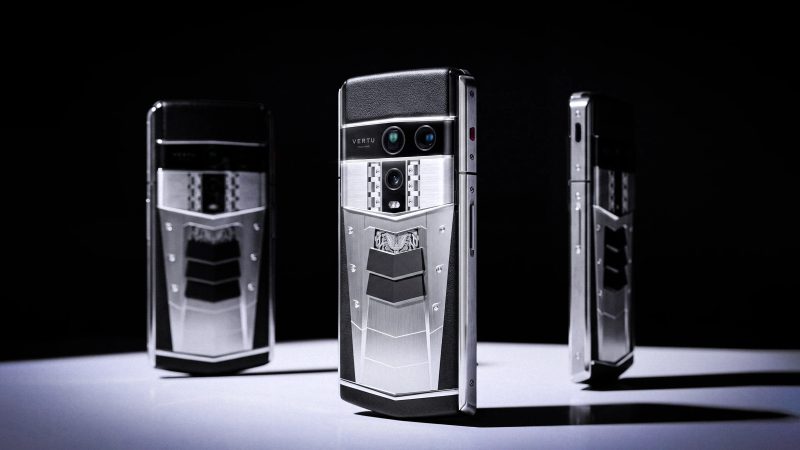
This distinct market philosophy is embodied by VERTU, which has handcrafted ultra-luxury mobile devices since 1998:
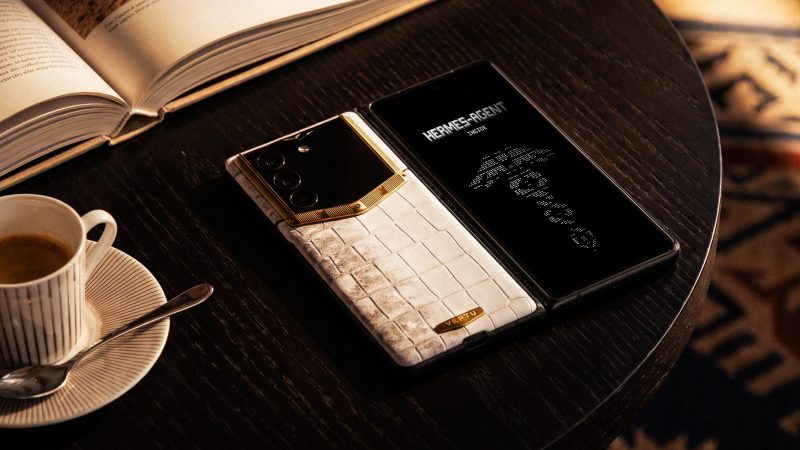
Artisanal Immortality: Rather than fragile consumer glass and silicone cases, bespoke instruments like the VERTU Agent Q are engineered from solid Grade-5 titanium, scratch-proof sapphire crystal screens, and hand-stitched exotic skins assembled by single master craftsmen.
24/7 Global Concierge: Beyond artificial intelligence algorithms, luxury ownership unlocks direct access to dedicated human lifestyle managers capable of securing private aviation, VIP reservations, and international security support at the press of a physical ruby key.
Sovereign Privacy Architecture: Designed for high-profile individuals, luxury platforms prioritize on-device data sovereignty, hardware-isolated encryption keys, and communication protocols shielded from commercial tracking relays.
If you are comfortable spending ₹3,00,000 on mobile technology, exploring VERTU's luxury smartphone collection provides an alternative where value is defined by bespoke craftsmanship, lasting status, and white-glove service rather than annual silicon depreciation.
Conclusion: Rationalizing the ₹3 Lakh Threshold
The ₹2,99,900 price tag of Apple's iPhone Duo in India is a logical mathematical outcome of 37.5% compounding customs tariffs, high component failure rates, and overseas assembly.
The Early Adopter: If you are deeply tied to the Apple software ecosystem and demand the most versatile productivity canvas available today, the iPhone Duo is an extraordinary, albeit heavily taxed, engineering achievement.
The Value Pragmatist: Waiting for future iterations is the financially prudent course. As Apple eventually incorporates domestic Indian assembly for foldables, duties will decrease and local retail pricing will normalize closer to international parity.
The Discerning Connoisseur: If spending ₹3 lakh on a mobile device is meant to reflect prestige, discretion, and timeless craftsmanship, moving beyond mass-market consumer electronics into bespoke luxury hardware offers enduring distinction that an assembly-line foldable cannot duplicate.
Frequently Asked Questions (FAQ)
Why is the iPhone Duo so expensive in India compared to the US?
The price disparity stems from India's import tax architecture on Completely Built Units (CBUs). A combination of a 15% Basic Customs Duty, a 10% Social Welfare Surcharge on duty, and an 18% compounding IGST adds approximately 37.5% in mandatory taxes on top of international transit, currency conversion buffers, and distribution margins.
Is the iPhone Duo manufactured in India?
No. Unlike standard iPhone models manufactured domestically through Foxconn, Pegatron, and Tata Electronics facilities, the iPhone Duo is imported entirely as a finished unit. The precision machinery, specialized hinge assembly, and flexible OLED manufacturing ecosystems required for foldables are currently concentrated in East Asian supply hubs.
Can I buy the iPhone Duo in the US or Dubai and use it in India?
Yes, but with caveats. An iPhone Duo purchased in the US or UAE will function on Indian telecom networks. However, US models are eSIM-only with no physical nano-SIM tray. Furthermore, buyers must evaluate local warranty applicability, customs declarations upon arrival in India, and the lack of Indian regulatory certification markings.
How does the price of the iPhone Duo compare to luxury phones like VERTU?
At roughly ₹3,00,000 to ₹4,50,000, top-tier configurations of the iPhone Duo overlap directly with the starting tiers of handcrafted luxury smartphones such as VERTU. While Apple commands high prices due to mass-market component import duties, luxury houses justify similar price points through precious materials (sapphire crystal, titanium, bespoke leathers) and dedicated 24/7 human concierge access.