Introduction
An “exquisite crypto gift” used to mean a private transfer with a story attached: a rare asset, a special date, a quiet gesture.
In today’s market, the more durable idea is different: treat the gift as an audited on-chain access key—a transferable entitlement with provenance, documentation, and clear control.
That shift matters because the luxury narrative is changing in parallel with crypto itself. Attention is moving from speculation to utility, from screenshots to evidence, and—from a US perspective—from informal transfers to US-compliant gifting flows and custody rigor.
This article sets expectations for device–chain synergy and offers a practical buyer’s lens: what makes a crypto gift defensible, transferable, and still worthy of the recipient.
Note: This is general information, not tax or legal advice. Consult qualified tax and legal advisors for guidance specific to your situation.
Utility Shift and Device–Chain Synergy
From speculation to utility
A gifted token becomes more meaningful when it does something beyond price exposure.
In practice, “utility” usually means one of three outcomes:
- Identityproof that a specific person (or entity) holds access.
- Entitlementtoken-gated entry to services or communities.
- Governancepolicy-enforced controls around transfers, approvals, and recovery.
For a buyer, the question is simple: if the market price becomes less interesting, does the gift still hold its value as an instrument—something the recipient can use, secure, and keep?
Key TakeawayThe most future-proof crypto gifts read like credentials with provenance—not like lottery tickets.
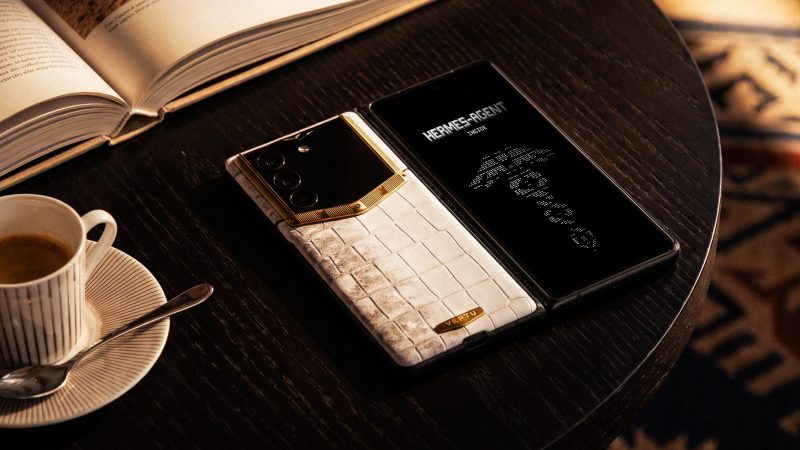
Secure identity on luxury devices
The device is not the asset. But it can become the most human part of the system: the interface where identity, approvals, and recovery choices actually happen.
For UHNW recipients, that matters because the real risk is rarely “I forgot my password.” It’s operational: device loss during travel, social engineering through staff, rushed approvals, or unclear ownership when multiple entities are involved.
A luxury device that is designed for privacy-minded use can serve as a disciplined control surface—especially when paired with policies that prevent one-tap transfers and require multi-party approval.
If you’re considering this route, keep the standard high: the device should make secure behavior easier (clear confirmations, controlled signing, auditable events), not merely make the experience feel exclusive.
Token-gated concierge utilities
Token-gating becomes credible when it behaves like membership: clear eligibility, predictable benefits, and a clean offboarding path if the token is transferred.
This is where device–chain synergy becomes concrete. A token can prove entitlement; the device can authenticate the person presenting it; and the service layer can enforce rules without improvisation.
VERTU COR Chain 可提供礼宾与会员通道入口。
US-Compliant Crypto Gifting
Gift-tax basics and basis
In the US, gifting crypto is generally treated as gifting property, which means the compliance burden is usually about gift-tax reporting and downstream cost basis, not immediate income tax on the recipient.
Two buyer-grade rules to keep straight:
- Annual exclusionThe IRS’s annual exclusion per donee is $18,000 (2024) and $19,000 (2025 and 2026), per the IRS gift tax FAQ table.IRS: Frequently asked questions on gift taxes
- Recipient basis mechanicsThe IRS explains that the basis of digital assets received as a gift depends on whether the recipient later has a gain or a loss, and it can require knowing the donor’s adjusted basis, the asset’s FMV at the time of the gift, and any gift tax paid.IRS: Frequently asked questions on digital asset transactions
Collector’s note: The “luxury” failure mode here is not tax; it’s sloppy records. A beautiful gift with an unprovable basis can become an annoying asset later.
Charitable gifting nuances
Charitable giving is different from personal gifting, and it’s easy to mix the two.
At a high level, donating appreciated crypto directly to a qualified charity can be treated as a noncash charitable contribution, with substantiation and valuation rules that may include qualified appraisal requirements in some cases.
If philanthropy is part of the plan, the practical takeaway is procedural: treat the donation like a transaction that will be reviewed. Retain acknowledgment letters, timing evidence, and valuation support, and coordinate early so the charity’s operational setup (wallets, receipts, processes) matches your substantiation needs.
Documentation and valuation
A defensible crypto gift is a packet, not a transfer.
At minimum, the file should allow an auditor—or your own advisors—to reconstruct:
What moved (asset and amount)
When it moved (date and time)
How it was valued (FMV evidence at transfer)
Who owned it before (donor basis and acquisition details)
How it was delivered (wallet addresses / transaction ID)
The IRS’s Form 709 instructions emphasize that adequate disclosure on the return can matter for limitations periods, which is a strong incentive to document cleanly when filing is required.IRS: Instructions for Form 709
For the recipient, the IRS’s general basis guidance reinforces that gifted-property basis calculations may require both FMV at the time of the gift and the donor’s adjusted basis.IRS Publication 551: Basis of Assets
How to verify: If you want the gift to be “transferable luxury” rather than “complicated crypto,” ensure the recipient receives a written basis/valuation memo alongside the on-chain transfer.
Institutional Custody Architecture
Qualified custodians and trusts
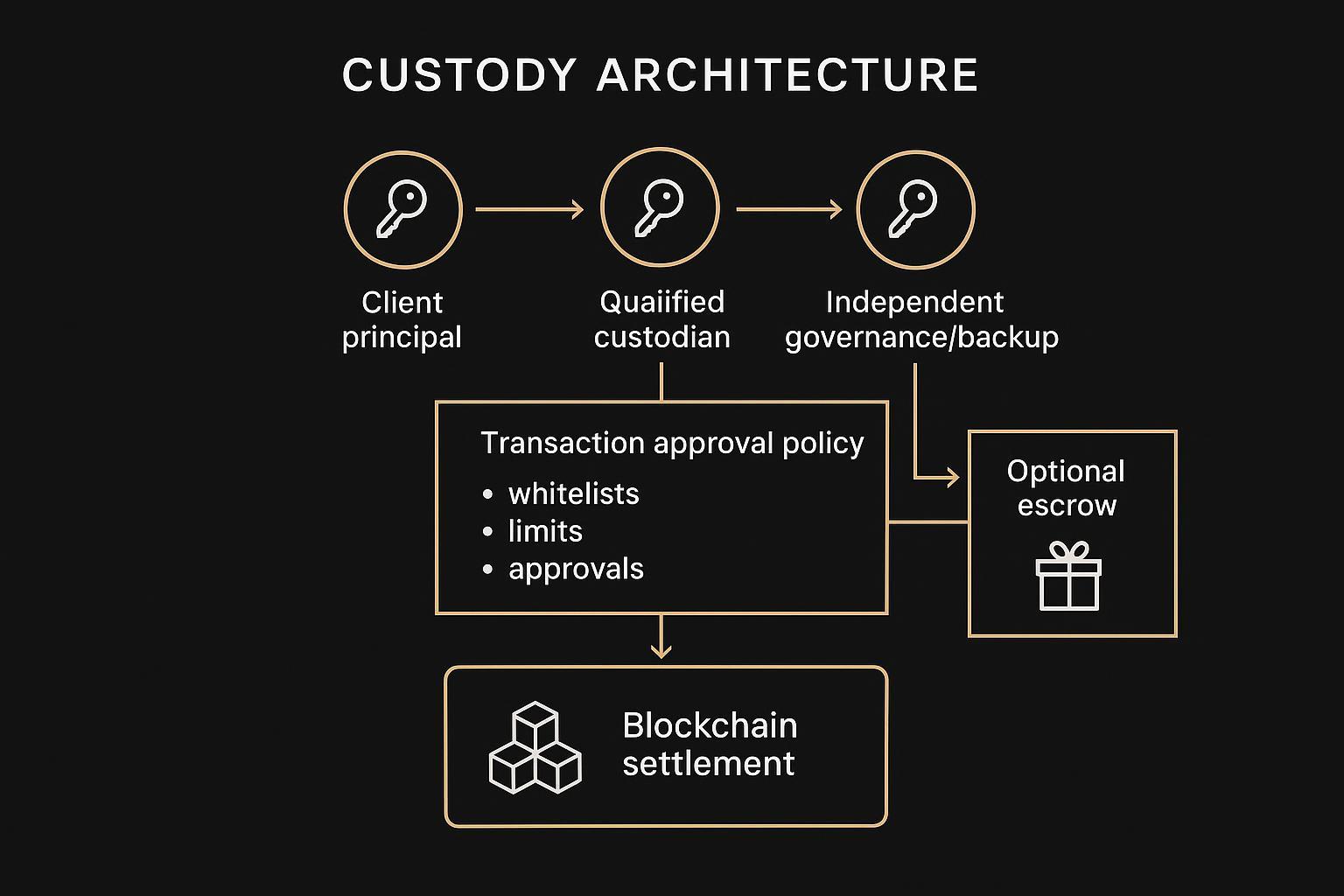
For UHNW recipients, the question isn’t whether self-custody is possible. It’s whether self-custody is an operational system you want to run.
A common institutional answer is to use a regulated custody provider (often via a trust company structure) so governance, segregation, and reporting are not improvised.
In US regulatory context, “qualified custodian” is a defined term in the SEC custody framework for safeguarding client assets, and the SEC has discussed its role as a protection when an adviser can access client funds.SEC: Office Hours with Gary Gensler—What is a Qualified Custodian
Even if the recipient is not an RIA client, the institutional logic is transferable: separate who can instruct from who can move, and ensure the record is independently generated.
MPC/multi-sig governance
Multi-party control is the difference between “one person can lose it” and “a system can recover it.”
In practice, you’ll see two governance patterns:
- Multi-signaturemultiple keys must sign a transaction.
- MPC (multi-party computation)signing authority is split across key shares so no single party holds the full signing capability.
For gifting flows, the governance question becomes buyer-relevant: can you enforce two approvals for transfers, restrict withdrawals to whitelisted addresses, and preserve an audit trail of who approved what?
This is also where “device–chain synergy” becomes practical. A secure device can be one of the approval surfaces, but it should never be the only control.
Insurance, SLAs, recordkeeping
If the gift is meant to endure, treat custody like infrastructure.
Ask for clarity on:
Insurance scope (what is covered, what is excluded, what triggers a claim)
SLAs and support (response times, incident process, recovery procedures)
Recordkeeping (statements, logs, approvals, and exportable evidence)
The goal is not maximal complexity. The goal is controlled simplicity: a structure that can survive staff turnover, travel, and time.
Conclusion
The strongest crypto gifts are not the loudest. They are the ones that remain clean years later—because compliance, custody, and utility were designed in from the start.
If you want the transfer to be durable, prioritize documented transfers and provenance over speculation. The story should be supported by evidence: valuation at transfer, clear basis records, and governance that prevents impulsive loss.
Coordinate early with tax, legal, and custody teams so the gift is not merely impressive on the day it’s given, but defensible in every later review.
Disclosure: This article references VERTU pages. Editorial judgment remains the priority.