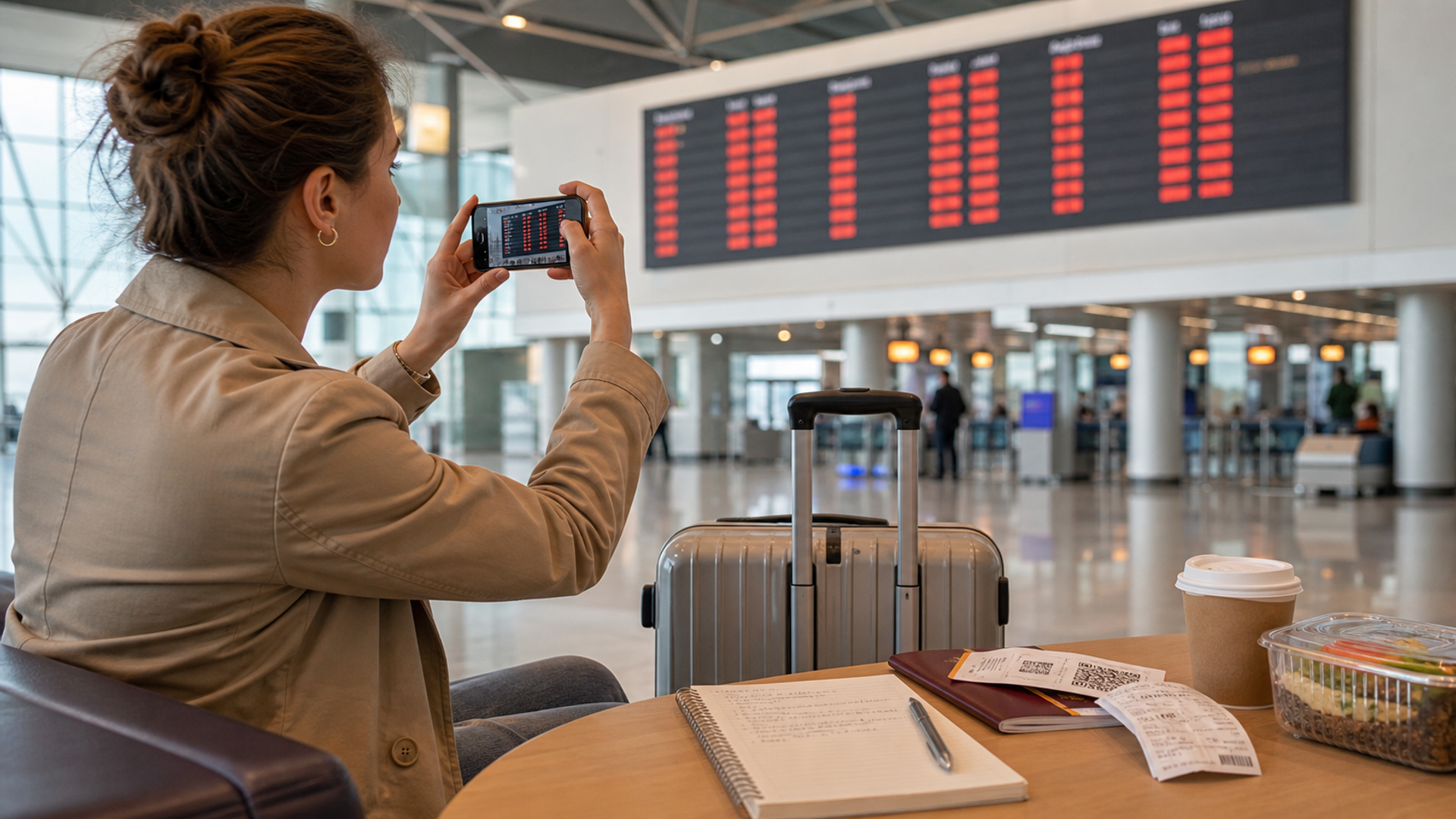
The Council of the European Union gave final clearance to stronger air passenger rights on 13 July 2026. The rules improve information, rerouting, assistance, compensation procedures and protection for passengers with specific needs. They do not apply immediately: the Council says the updated framework enters into force 12 months and 20 days after publication in the Official Journal.
For travellers, that timing is the first important fact. A newly approved right is not necessarily the rule governing a disruption tomorrow. Until the new framework takes effect, use the current EU passenger-rights guidance and keep evidence for the exact flight.
This article is practical information, not legal advice. Eligibility depends on route, operating airline, cause and the law in force on the travel date.
What the 2026 framework adds or clarifies
The final Council announcement highlights several changes:
stronger assistance, information and communication duties;
clearer rerouting and cancellation processes;
a clarified treatment of extraordinary circumstances;
protection against cancelling a return segment solely because the outbound flight was not taken;
fare displays that include a hand-baggage allowance before booking;
reinforced rights for passengers with disabilities or reduced mobility, children, unaccompanied minors and pregnant passengers.
The adopted legislative text controls the details. Headlines and booking-site summaries should not replace it when a claim is disputed.
Current rule, approved change and traveller action
| Situation | What to do under current disruption practice | Approved 2026 direction | Evidence to save |
|---|---|---|---|
| Long delay | Ask the operating airline for written status and assistance | Clearer information and assistance | Boarding pass, timestamps, receipts, messages |
| Cancellation | Request rerouting or refund options in writing | Stronger rerouting and communication | Offered routes, refusal, rebooking cost |
| Missed outbound segment | Confirm the return ticket remains active | No-show protection becomes explicit | Booking record and airline response |
| Hand-baggage comparison | Read fare conditions before paying | Allowance should appear in displayed fare | Screenshot of fare and allowance |
| Reduced mobility or specific need | Request assistance early and document it | Reinforced rights and protections | Assistance booking and incident details |
The table avoids quoting a universal compensation amount because entitlement can vary with distance, delay, route and circumstances. Use the European Commission's current tool or the competent national body for the flight date.
The 12-month gap changes how you should plan
During the transition, three documents may matter: the current regulation, the adopted amendment and the eventual Official Journal publication and application date. Do not assume a carrier's help page has been updated merely because political approval occurred.
Before travel:
identify the operating airline, not only the marketing carrier;
save the booking confirmation and fare conditions offline;
record any declared accessibility or assistance need;
keep the airline's disruption contact channel available without relying on airport Wi-Fi;
verify the current European Commission passenger-rights page.
After a schedule change, repeat the operating-airline check. A codeshare can change which desk controls the rebooking.
Build an evidence file while the disruption is happening
The best claim preparation begins before leaving the airport. Create one folder containing:
original itinerary and boarding passes;
screenshots of delay or cancellation notices;
the reason given by the airline, with time and channel;
photographs of departure boards where useful;
names or case numbers from support conversations;
receipts for reasonable meals, transport and accommodation;
alternative routes offered and their timings;
the actual arrival time at the final destination.
Keep original receipts, not only card notifications. If the airline directs you to purchase something yourself, ask for that instruction in writing.
Rerouting is a decision, not a race to the first option
When disruption is widespread, the fastest automated option may not be the best one. Compare arrival time, airport transfer, visa or transit requirements, baggage handling and the risk of a second tight connection.
An AI travel assistant can organise options, but it should not confirm a costly itinerary without approval. Our AI agent and human concierge disruption matrix separates tasks automation can prepare from exceptions that benefit from human judgement.
For eligible VERTU users, human concierge support may assist with travel planning and arrangements depending on service availability and the applicable membership terms. It does not replace the airline's legal obligations or determine compensation eligibility.
Five mistakes that weaken a passenger's position
Accepting a refund without understanding the consequence
A refund and rerouting can be alternatives. Read the airline's wording before selecting an option in the app.
Booking an expensive replacement without documenting the offer
When safe and practical, give the operating airline an opportunity to reroute and record what it offered. Necessity and reasonableness matter when seeking reimbursement.
Relying on verbal explanations
Ask for a written disruption reason. Staff may have incomplete information during a fast-moving event.
Losing the final-arrival timestamp
The arrival at the final destination can be more relevant than departure delay. Record when the aircraft door opened and when the journey actually concluded.
Using the new rules before they apply
The approval date, publication date, entry-into-force date and application date are not interchangeable. Check the law applicable to the travel date.
What to watch next
The next operational milestone is publication in the Official Journal. Airlines, intermediaries and national enforcement bodies will then prepare systems and guidance for the application date. Travellers should expect booking displays, complaint flows and no-show practices to change over the transition.
Save the Council announcement, but refresh the European Commission and national authority guidance before relying on a particular right.
A claim timeline that preserves options
Within the first 24 hours, collect the itinerary, actual timings, airline notices and receipts. Within the next few days, ask the operating airline for its written reason and submit through the official complaint channel. Keep the case number and a copy of every upload.
If the response is incomplete, check the European Commission's current guidance for the competent national enforcement body or approved dispute-resolution route. Avoid sending original documents when a copy is sufficient, and do not pay an intermediary before understanding its fee and authority to settle.
Create one chronology rather than several emotional narratives:
| Time | Event | Airline response | Evidence |
|---|---|---|---|
| Scheduled departure | Original plan | — | Booking confirmation |
| First disruption notice | Delay or cancellation announced | Reason provided or absent | App message or email |
| Assistance request | Meal, hotel or rerouting requested | Offered, refused or unavailable | Case number and receipts |
| Alternative journey | New route accepted or self-booked | Written instruction if any | New ticket and payment |
| Final arrival | Journey completed | — | Arrival record |
This format helps distinguish inconvenience from documented loss and makes later review faster.
The practical verdict
The 2026 reform is meaningful, especially for communication, rerouting, fare transparency, no-show protection and passengers with specific needs. It is not an instant switch. For disruption today, follow current rules, preserve evidence and verify the operating airline.
The most useful travel habit is simple: document first, decide second. A clear timeline of what happened, what was offered and what you spent is more valuable than an angry message written after the evidence has disappeared.