| Reading consideration | Foldable phone | Dedicated E Ink e-reader | Better fit when… |
|---|---|---|---|
| Display approach | General-purpose smartphone display for varied content and apps | Reflective E Ink display on dedicated models | You have a clear preference for one display type |
| Books and long sessions | Convenient for occasional or mixed reading | Designed around sustained reading sessions | Books account for a large share of your screen time |
| Other tasks | Combines reading with communication and apps | Usually keeps the reading device separate from your phone | You want one device, or deliberately want separate roles |
| Battery use | Also powers phone functions and connected apps | E Ink display uses power to update an image; whole-device use still varies | You value a device primarily dedicated to reading |
| PDFs and visual content | Larger inner screen may help with documents, depending on layout | Screen sizes and file handling vary; larger models may suit fixed-page layouts | You know the formats and page types you use |
| Carrying | No additional reading device if you already carry the phone | Adds a separate device, but keeps a dedicated reading surface available | Convenience or separation matters more to you |
Key Takeaways
- For frequent, extended book sessions, a dedicated E Ink e-reader is often the more natural fit; a foldable phone suits reading mixed with communication and other mobile tasks.
- E Ink screens use reflected ambient light, while phone displays are designed for a broader range of content and interaction.
- For PDFs and illustrated material, screen size, page layout and reading-app support can matter more than the device category.
- VERTU AlphaFold’s 8.05-inch inner display offers a larger canvas for documents, but that alone does not make it a dedicated e-reader.
Introduction
For long-form reading, choose a dedicated E Ink e-reader if books make up most of your reading and you value a reading-focused device. Choose a foldable phone if you want to move between books, work documents, browsing and communication on one connected device. The best choice depends on what you read, how long you read and which display you prefer.
This comparison uses “e-reader” to mean a dedicated device with an E Ink display, not a tablet or every device marketed for reading. If your question is primarily about reading business documents while travelling, that is a different decision from the one covered in VERTU’s foldable phone versus tablet guide for executive work.
What is the difference between a foldable phone and an E Ink e-reader?
A foldable phone is a smartphone that opens to provide a larger display while retaining its phone functions. A dedicated E Ink e-reader is designed around digital reading, typically using a reflective display that relies on ambient light. Some e-readers add a front light for dimmer settings, but features and reading formats vary by model.
The difference is not simply screen size. It is the balance between a multi-purpose connected device and a more reading-centred one. A phone can support books alongside messaging, web pages, documents and other apps. An e-reader generally makes the reading interface the primary experience, although some models offer additional apps or note-taking tools.
Foldable phone vs e-reader: which is better for reading?
When is an E Ink e-reader the better choice?
A dedicated E Ink reader is usually the stronger option when you read books for long stretches, want a reading-specific device or often read in bright surroundings. E Ink explains that its ePaper displays are reflective and use ambient light; some devices also use a front light to support reading when ambient light is limited. This is a difference in how the page is presented, not a guarantee that every reader will find it more comfortable.
A reader may also suit someone who wants to keep books separate from messages and work apps. That separation can make it easier to settle into a reading session, but it depends on the device, its settings and the reader’s habits. Some e-readers have browsers, apps or notification-like features too.
Battery use is another consideration. E Ink’s display technology requires power to update an image rather than maintain a static one. The complete device still uses power for features such as lighting and wireless connectivity, so actual battery life depends on the model and how it is used. Read more in E Ink’s explanation of reflective displays and front lighting.
When does a foldable phone make more sense?
A foldable phone makes more sense when reading is one part of a wider mobile routine. You might open a book during a commute, then switch to messages, web research or a work document without changing devices. That convenience is especially relevant if you read in short sessions throughout the day rather than setting aside longer periods for books.
The inner display can also give text and documents more room than a conventional phone screen. But a larger display does not turn a foldable into a dedicated reader: the experience still depends on the reading app, page layout, display settings and how you hold the device. A foldable is compelling when its wider functions matter to you, not simply because it opens.
Do PDFs and illustrated books change the decision?
Yes. A reflowable novel and a fixed-page PDF place different demands on a screen. With a reflowable book, the reading app can adapt text to the available viewport. With a PDF, the original page layout is preserved, so a small display may require more zooming or panning. Illustrated books, charts and documents with complex layouts create similar trade-offs.
Before choosing, consider your actual library. If you mainly read standard novels, both device types may work; font size, margins and app support become important. If you regularly read dense PDFs, academic papers or illustrated publications, compare the screen size and file-handling features of specific models. A large foldable display may help, while a larger-format e-reader may provide a more reading-focused surface. Neither category is a universal answer.
VERTU AlphaFold as a foldable-phone example
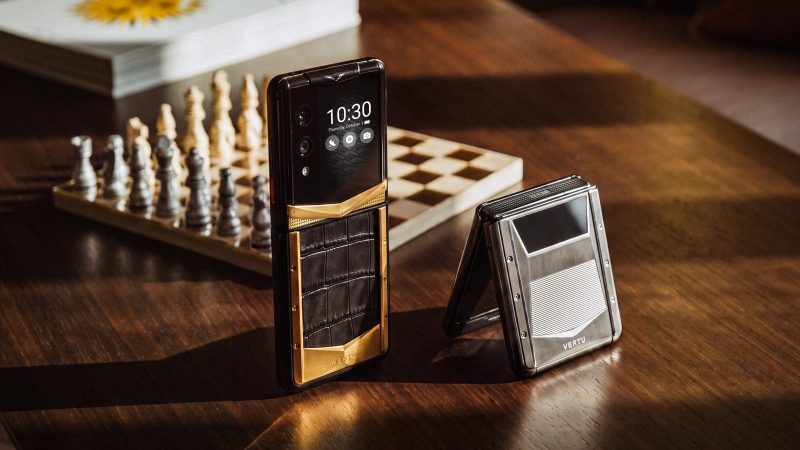
VERTU AlphaFold illustrates the larger-screen approach: its official product information lists a 6.53-inch outer display and an 8.05-inch inner display, with the larger screen positioned for documents, dashboards, meetings and multitasking. For someone who reads alongside those activities, the unfolded display provides more room than the outer screen.
That makes AlphaFold relevant as an example of a foldable phone’s role in mixed reading and work—not as a dedicated e-reader. Its display size does not establish E Ink characteristics, e-book-store compatibility or a reading-specific battery result. Buyers should assess the reading app and content formats they actually use, alongside the device’s broader functions. See the VERTU AlphaFold product page for its current product information.
Frequently Asked Questions
Is a foldable phone good for reading books?
Yes, a foldable phone can work well for reading books, particularly if you read in short sessions or want to switch between reading and other apps. For frequent, extended book sessions, a dedicated E Ink reader may suit you better if you prefer its reflective display and reading-focused design.
Is an E Ink e-reader better for long-form reading?
It can be, especially for readers who value a reflective display and a device centred on books. That does not mean every reader will prefer it: font rendering, lighting, device size, app support and personal preference all affect the experience.
Which is better for reading PDFs?
It depends on the PDF and the device. A fixed-page document may be easier to view on a larger screen, while a reading app’s zoom and navigation tools also matter. Compare the specific models using the documents you expect to read.
Can a foldable phone replace an e-reader?
It can replace a separate e-reader for some people, particularly if they read occasionally and prioritise carrying one device. It may not replace the reading experience or dedicated features that frequent book readers want.
Should I buy both?
Consider both if you regularly read for long sessions but also need a foldable phone for communication, apps and documents. They serve different roles; whether the second device is worthwhile depends on how often you would use its dedicated reading experience.
Conclusion
Choose the device around your reading pattern. A dedicated E Ink e-reader is often the clearer choice for book-centred sessions; a foldable phone is more versatile when reading shares space with other mobile tasks. For a foldable option within VERTU’s range, explore the official VERTU phone collection.
![Top 10 Smartwatches for On-Wrist Voice Notes for Men [New]](https://cdn.sanity.io/images/e0gp1l2g/production/e7630bbd3f3a13378c868abfa960bb193c73b8f1-3840x1860.webp?w=180&h=180&q=78&auto=format&fit=crop)
![Top 10 Smartwatches for On-Wrist Voice Notes for Men [New]](https://cdn.sanity.io/images/e0gp1l2g/production/e7630bbd3f3a13378c868abfa960bb193c73b8f1-3840x1860.webp?w=800&h=450&q=82&auto=format&fit=crop)