The best luxury train is not necessarily the most famous one. A traveller who wants Art Deco ceremony between European cities needs a different journey from someone who wants three nights of Andean landscape, a Scottish house-party atmosphere or a long expedition across Southern Africa. Route, season, cabin, off-train programme and the amount of actual night-time rail travel determine whether the experience feels transporting or restrictive.
This 2026 guide compares journey types using current operator information. Timetables, routes, cabin inventory, border requirements and fares are volatile, so verify the exact departure before booking. The aim is to choose by experience rather than rank unlike products on glamour alone.
The short answer
Choose the Venice Simplon-Orient-Express for concentrated European ceremony, historic-carriage atmosphere and a journey that is as much about dressing and dining as landscape. Choose the Royal Scotsman for an intimate country-house style trip with Highland excursions. Choose the Andean Explorer for altitude, open landscapes and a sleeper journey embedded in a wider Peru itinerary. Choose Rovos Rail for longer African routes where distance, off-train excursions and the changing continent are the centre of the trip.
If you dislike compact cabins, formal social rituals, scheduled excursions or nights in motion, a luxury rail journey may not be the right form of luxury. A suite in a stationary hotel can offer more space and privacy for the same dates.
Journey-style comparison matrix
| Journey | Best for | Typical rhythm | Cabin decision | Main trade-off |
|---|---|---|---|---|
| Venice Simplon-Orient-Express | European glamour, dining and historic design | Often short, intense and event-like; special routes vary | Historic cabin versus higher suite categories | Space and private facilities vary sharply by category |
| Royal Scotsman | Small-group Scotland with guided days | Excursions by day, sociable train by evening | Compact private cabin within an intimate train | Weather and group rhythm shape the trip |
| Andean Explorer | Landscape, altitude and Peru sequencing | Multi-day sleeper with high-altitude stops | Comfort, oxygen/altitude planning and route direction | Altitude affects travellers differently |
| Rovos Rail | Long-distance African immersion | Several days to extended expeditions | More time aboard; suite layout matters | Border, track and excursion timing can shift |
Venice Simplon-Orient-Express: choose it for theatre
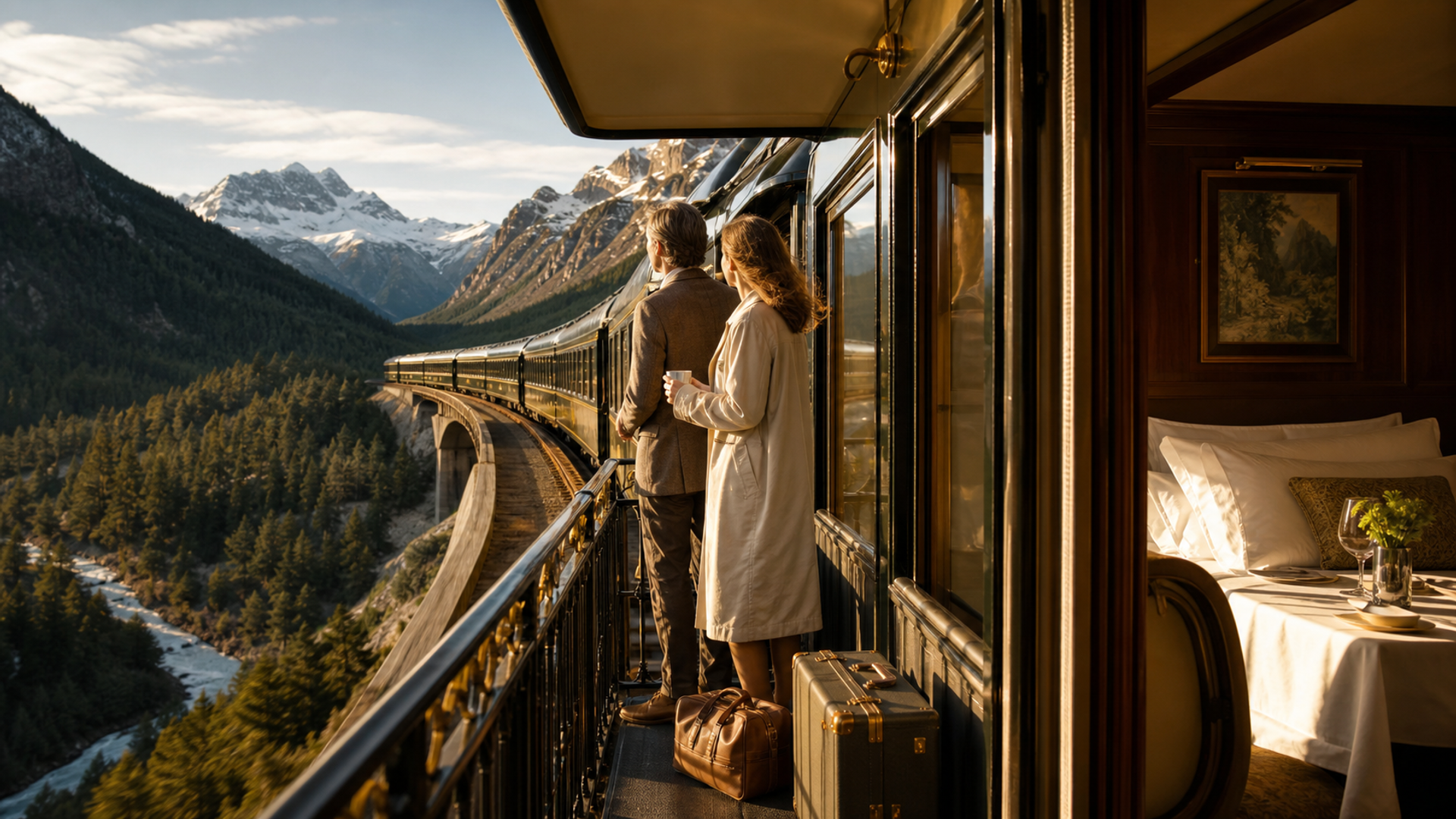
The Venice Simplon-Orient-Express is strongest when the traveller wants the train itself to be the destination. Restored historic carriages, formal dining, evening dress and the rhythm of moving between compartments create an event rather than merely premium transport. The classic Paris–Venice idea remains central, while special 2026 itineraries broaden the map. Belmond's official announcement describes Villeggiatura by Train routes, including combinations linked with Italian destinations and properties.
Cabin category is decisive. A historic cabin can be atmospheric and compact, with facilities and daytime-to-night conversion that differ from a modern hotel suite. Higher suite categories provide more private space and amenities, but at a materially different price. Ask for an exact floor plan, bed dimensions, bathroom arrangement and daytime seating for the booked carriage.
This train suits travellers who enjoy dressing for dinner and sharing a social environment. It is less suitable for someone who expects anonymity, extensive private living space or a flexible personal schedule. Pack a small accessible overnight bag; larger luggage may be stored separately according to operator instructions.
Royal Scotsman: choose it for intimate Scotland
The Royal Scotsman is closer to a moving country house than a large resort. Its appeal lies in a small guest complement, Highland scenery, dining and off-train activities. A journey may include estates, walking, distilleries or cultural visits, with the exact programme determined by the itinerary.
The experience depends on group chemistry and willingness to follow a shared rhythm. It can feel warm and personal when travellers enjoy conversation and hosted activity. Someone seeking long private days may find the compact train and excursion structure limiting.
Scottish weather is part of the landscape. Pack waterproof outerwear and shoes suitable for the listed activities, even if the train itself is formal. Ask which excursions require uneven ground, how alternatives work, and whether a mobility requirement can be accommodated. The most expensive cabin cannot correct a mismatch between the programme and the traveller's physical comfort.
Andean Explorer: choose it for scale and altitude
The Andean Explorer crosses high-altitude Peruvian landscapes and connects naturally with a wider Cusco, Lake Titicaca and Arequipa itinerary. Its strongest asset is the view: open plains, mountain light and the sensation of moving slowly through a geography that is difficult to absorb from a flight.
Altitude is the non-negotiable planning issue. Arrival sequencing, hydration, rest and medical advice matter. Travellers with health conditions should consult an appropriate clinician before booking. Do not plan a demanding excursion immediately after arriving from sea level merely because the train is luxurious.
Direction changes the trip. Starting after acclimatisation in Cusco may feel different from using the train earlier in the itinerary. Review the exact stop programme and which experiences occur at altitude. Cabin layout, shower arrangement, bed type and temperature control should be confirmed for the booked category.
The journey suits travellers who value landscape and cultural context more than formal spectacle. It is also visually compelling, but the practical success comes from thoughtful Peru sequencing rather than treating the train as an isolated two-night purchase.
Rovos Rail: choose it for distance
Rovos Rail offers routes ranging from relatively short journeys to extended expeditions across Southern Africa. This is the option for travellers who want to understand distance: dry plains, changing vegetation, border crossings and off-train excursions that gradually build a regional narrative.
Longer time aboard increases the importance of suite comfort, movement tolerance and personal routine. Ask how many nights are spent moving, what portion of each day is on the train, and how delays affect excursions. Rail operations across long routes can be influenced by infrastructure, weather and border processes. Flexibility is part of the product.
Review visa and health requirements for every country, even when the operator assists with information. Passport validity, blank pages and insurance remain the traveller's responsibility. Pack for different temperatures and for excursions that may be less formal than the dining car.
Rovos suits someone who sees time on the train as meaningful rather than dead time. It is less suitable if the priority is to reach several cities quickly or to control every day's timetable.
Cabin categories: compare private reality, not marketing names
Luxury train cabin names are not standardised. “Suite” on one train may provide less floor area or different bathroom facilities from a lower category on another. Request the current plan and these measurements:
bed length, width and orientation;
whether the bed remains deployed during the day;
shower and toilet privacy;
luggage storage dimensions;
window position from the seat and bed;
air conditioning or heating control;
number and type of power outlets;
Wi-Fi or mobile coverage expectations;
distance to dining, lounge and observation cars.
If one traveller wakes at night or needs workspace, a twin layout or larger suite may be more valuable than decorative finishes. Train movement and track noise also differ by carriage position. Ask rather than assuming the most expensive named category solves every issue.
Dining, dress and social energy
Dining is central to most luxury trains, but service style differs. Some journeys encourage formal evening dress; others lean into regional ingredients and relaxed expedition clothing. Dietary needs must be disclosed early and reconfirmed. Complex medical requirements should receive a written response rather than an assumption that “luxury” guarantees accommodation.
Communal dining can be one of the pleasures: travellers share stories while the scenery moves. It can also drain someone who needs solitude. Ask whether private dining is possible and whether seating is assigned. A train with a lounge and observation car gives more options to regulate social energy.
Alcohol is often part of the ceremony. At altitude or before active excursions, moderation matters. Confirm inclusions because premium bottles, off-train meals and special requests may be extra.
Route and season matter more than a global ranking
European spring offers long light and fresh landscapes but can bring cool rain. Scottish weather is changeable in any season. Peru has altitude and regional wet/dry patterns. Southern African routes cross climates and wildlife seasons. There is no single best month across these journeys.
Choose the landscape event you want: snow-dusted passes, green Highlands, clear Andean views or dry-season wildlife. Then check whether the chosen departure actually uses the desired route. Special itineraries may be one-off and can include hotel segments; a famous train name does not guarantee the classic route on every date.
Build at least one buffer night before an important departure. A train is less able to wait for a delayed inbound flight than a hotel. Add another buffer after long or cross-border journeys before a non-refundable connection.
Total trip cost and what is really included
Compare total cost, not headline fare. Add positioning flights, pre- and post-train hotels, transfers, visas, insurance, tips, premium drinks, optional excursions, formal clothing and luggage handling. A rail package tied to a hotel may include elements that make a higher fare rational; another may leave them separate.
Read cancellation and change terms. Unique departures can be difficult to replace. Insurance should cover the actual value and stated risks, including medical evacuation where relevant. Do not assume a credit-card policy covers every age, destination or pre-existing condition.
Avoid treating scarcity as a reason to skip diligence. Inventory can be limited, but the wrong itinerary remains wrong when sold out.
Accessibility and health questions
Historic carriages can have narrow corridors, steps and compact bathrooms. Ask for measured doorway widths and the exact boarding procedure. Confirm whether wheelchairs, mobility aids, refrigerated medication or continuous power can be accommodated. “Assistance available” is not enough without a practical plan.
Motion sensitivity, sleep quality and altitude should be considered. Travellers who have never slept on a train might test an ordinary overnight service before committing to a long expedition. The luxury layer improves comfort; it does not remove movement.
A booking brief that prevents disappointment
Before paying, document:
Exact train, date, direction, route and hotel segments.
Cabin number or category, plan, bed and private facilities.
Included meals, drinks, excursions, transfers and gratuities.
Dress guidance and luggage rules.
Visa, health, altitude and insurance responsibilities.
Mobility, dietary and medical requirements with written acknowledgement.
Cancellation, operator-change and delay terms.
Arrival buffers and a recovery plan.
Eligible VERTU clients may access human Concierge support for coordination where available and subject to service terms, user authorisation and actual supplier availability. Concierge cannot guarantee train inventory, border clearance, weather, upgrades or operational outcomes. The luxury travel concierge guide explains where coordination adds value.
How to choose in ten minutes
Choose a landscape first, then decide how much ceremony, social interaction and scheduled activity you want. Eliminate any journey whose cabin or health demands fail a hard requirement. Compare two exact departures with a total-trip budget and buffers. Finally, ask whether you would still choose the train if no photograph could be posted. If the answer is yes, the experience itself is carrying the decision.
The best luxury hotel brands guide can help pair rail nights with stationary stays that provide space and recovery.
Final verdict
The Venice Simplon-Orient-Express is the strongest theatre-led choice; the Royal Scotsman is the intimate hosted choice; the Andean Explorer is the high-landscape choice; and Rovos Rail is the long-distance expedition choice. None is universally best.
The right luxury train aligns route, cabin, health, social rhythm and season. Verify the live departure and build buffers. When the form matches the traveller, rail turns time between places into the main experience rather than a cost to be minimised.