| Device / Tech | Primary Sensor Tech | Key Health Metric | Unique Capability |
|---|---|---|---|
| Alva Health | AI-driven Advanced Sensors | Stroke Detection | Immediate SOS Alerts |
| Huawei Watch D2 | Miniaturized Airbag & Pump | Blood Pressure | 24h Ambulatory Monitoring |
| Garmin | Multi-wavelength Spectroscopy | Hydration & Hematocrit | Real-time Biometric Analysis |
| CardiacSense | Motion-corrected ECG/PPG | Vital Signs (ECG, BP) | Hospital-Grade Accuracy |
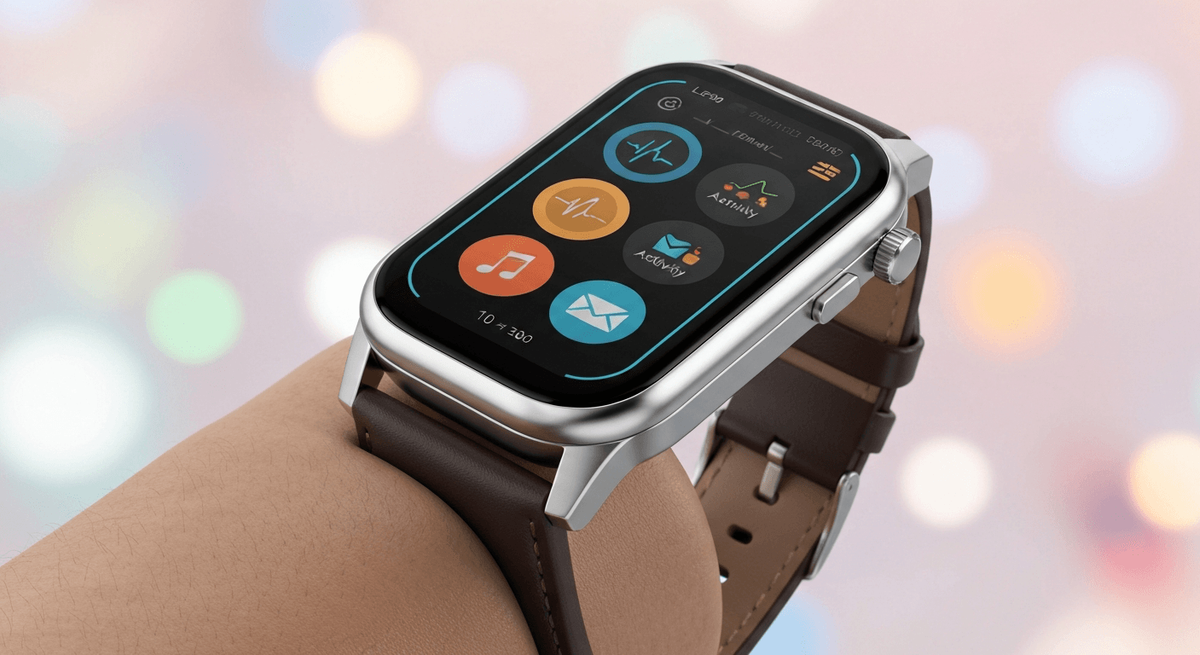
Remember when wearables were simply digital accessories for counting steps? Those days are rapidly fading as technology evolves at an unprecedented pace. Today, we stand on the brink of a new era where wrist-worn devices become indispensable life companions .
As 2026 approaches, the industry is poised to introduce groundbreaking features that were once considered science fiction. If you are curious about what to expect for your next smartwatch , the answer lies in a fascinating fusion of advanced biometrics and intuitive artificial intelligence.
The future of wearables goes far beyond basic fitness tracking. We are moving toward devices capable of non-invasive health monitoring , holographic interfaces, and hyper-personalized AI assistance that anticipates your needs before you do.
This article explores the eight most game-changing innovations currently in development, highlighting the cutting-edge technology redefining the market. Read on to discover the transformative trends and upcoming capabilities that will not only shape the next generation of devices but also fundamentally change how you manage your health and daily connectivity.
Top 8 Smartwatch Innovations for 2026
The landscape of wearable technology is shifting from simple fitness tracking to medical-grade diagnostics and autonomous interaction. As we approach 2026, the focus is on proactive health monitoring , sustainability, and seamless neural interfaces.
If you are wondering what to expect for your next smartwatch , the following innovations represent the cutting edge of hardware and software evolution. They promise to redefine how we manage our health and interact with the digital world.
1. Alva Health Stroke Watch: AI-Powered Stroke Detection
The Alva Health Stroke Watch pioneers AI-driven stroke detection , representing a critical advancement in wearable safety. By utilizing advanced sensors, the device continuously monitors the user for physiological signs associated with the onset of a stroke. This proactive approach aims to bridge the critical gap between symptom onset and medical intervention.
"The device offers immediate SOS alerts for critical health events, potentially saving lives through early detection."
Alva Health is currently aiming for FDA clearance in 2026. This regulatory milestone would validate the device as a serious medical tool rather than a casual accessory. It showcases significant smartwatch innovation in health monitoring, moving wearables into the realm of essential life-saving equipment.
2. Huawei Watch D2: Continuous Blood Pressure Monitoring
Huawei's Watch D2 addresses one of the most difficult challenges in wearables: accurate blood pressure tracking. The device integrates a miniaturized airbag and pump mechanism directly into the strap. This hardware innovation allows for continuous, medical-grade 24-hour ambulatory blood pressure monitoring.
This mechanical approach is a major leap in future smartwatches' health tracking capabilities. Unlike optical sensors that estimate pressure, the Watch D2 uses physical inflation to ensure clinical accuracy. It provides users with reliable data throughout the day and night, which is vital for managing hypertension effectively.
3. Mudra Band: Touchless Control and Gesture Recognition
The Mudra Band introduces a revolutionary way to interact with technology through touchless controls . It employs EMG (electromyography) sensors combined with onboard AI to detect the electrical activity of your nerves. This allows the band to interpret neural signals sent from your brain to your fingers.
This setup enables precise gesture recognition for hands-free operation of smart devices. It sets new standards for smartwatch interaction, allowing users to navigate menus or answer calls without ever touching a screen. This is particularly useful in scenarios where physical touch is inconvenient or impossible.
4. Garmin Pulse Spectroscopy: Enhanced Biometric Analysis
Garmin's Pulse Spectroscopy utilizes multi-wavelength technology to dive deeper into human physiology. By transmitting various light wavelengths through the skin, it performs a comprehensive biometric analysis that exceeds standard heart rate monitoring. This advanced wearable technology can assess complex metrics such as hydration levels and hematocrit.
The system features real-time adjustments for diverse user conditions, ensuring accuracy across different skin types and environments. This capability highlights the move toward lab-quality diagnostics on the wrist , providing athletes and health-conscious users with granular data regarding their physical state.
Comparison of Key Health Innovations
5. UNA Watch: Modular and Repairable Design
The UNA Watch leads in sustainability with its innovative modular, repairable design . In an industry often criticized for planned obsolescence, UNA allows users to replace components without specialized equipment. The design facilitates tool-free component replacement, making repairs accessible to everyone.
This approach extends the device lifespan significantly, reducing electronic waste. It represents a key aspect of responsible smartwatch development, proving that high-tech devices can be eco-friendly. Users can upgrade or fix specific parts, ensuring the watch remains functional for years.
6. Apple Watch Series 10: Sleep Apnea Detection
The Apple Watch Series 10 features FDA-cleared sleep apnea detection powered by advanced AI. The device passively monitors breathing irregularities during sleep, analyzing patterns that indicate interruptions in respiration. This feature operates in the background, requiring no active input from the user.
It integrates seamlessly with the Apple Health app for enhanced health insights. By identifying potential sleep apnea, the watch can prompt users to seek professional medical advice. This democratization of sleep diagnostics helps uncover conditions that often go undiagnosed for years.
7. Exynos W1000: Next-Generation Processing Power
Samsung's Exynos W1000 is built on a cutting-edge 3nm process , setting a new benchmark for silicon in wearables. This architecture promises smartphone-grade performance within the compact form factor of a watch. The chip is designed to handle increasingly complex tasks with ease.
Crucially, it delivers improved power efficiency for next-generation smartwatches. This efficiency enables more complex AI in smartwatches and faster processing without sacrificing battery life. It is the engine that makes advanced features, like real-time AI analysis, possible on the wrist.
8. CardiacSense CSF-3 Medical Watch: Medical-Grade Monitoring
The CardiacSense CSF-3 Medical Watch offers continuous, motion-corrected ECG and PPG readings . Unlike standard trackers that struggle with movement, this device maintains hospital-grade accuracy even during activity. It is engineered to meet rigorous medical standards for vital sign monitoring.
It tracks critical metrics like respiration and cuffless blood pressure with clinical precision. By pushing the boundaries of smartwatch capabilities, CardiacSense positions its device as a legitimate medical monitor suitable for patients requiring constant observation outside of a hospital setting.
Understanding 2026 Smartwatch Trends
As we look toward 2026, the wearable landscape is shifting from passive tracking to proactive assistance. The primary trend driving this evolution is the deep integration of AI across all functions. This shift ensures that what to expect for your next smartwatch goes beyond simple notifications, offering a device that learns from your habits to deliver highly personalized user experiences.
Expect a significant focus on advanced health monitoring as a core area for upcoming devices. Future smartwatches will move past basic metrics to offer continuous, medical-grade diagnostics. The development of more sophisticated AI enables real-time analysis for complex conditions, including non-invasive blood pressure monitoring and sleep apnea detection, directly from the wrist.
Sustainability and repairability are emerging as key considerations in smartwatch planning. Manufacturers are moving away from sealed, disposable designs. Innovative devices like the UNA Watch are paving the way for longer-lasting, user-serviceable wearables. This modular approach allows users to repair specific parts, significantly extending the product's lifecycle and reducing electronic waste.
Enhanced user interaction will define the feel of future technology. Touchless controls and advanced gesture recognition will make future smartwatches more intuitive and accessible, reducing reliance on tiny touchscreens. Furthermore, processing power and battery efficiency will continue to be optimized, enabling these complex applications while ensuring longer usage times between smartwatch updates.
| Feature Category | Current Standard | 2026 Expectation |
|---|---|---|
| Health Monitoring | Heart rate & SpO2 | Medical-grade diagnostics (Blood Pressure, Apnea) |
| AI Capabilities | Basic voice commands | Predictive alerts & personalized coaching |
| Repairability | Sealed units | User-serviceable & modular (e.g., UNA Watch) |
| Interaction | Touchscreen reliance | Advanced gesture recognition & touchless control |
| Battery Efficiency | Daily charging common | Optimized for complex apps & longer duration |
Your 2026 Smartwatch Buying Guide
Navigating the wearable landscape requires a clear understanding of what to expect for your next smartwatch in 2026. As technology evolves from simple notifications to comprehensive health assistants, your purchasing criteria must shift significantly. The market now offers devices that are not just accessories, but critical tools for wellness and connectivity.
When selecting a device, prioritize health features that align with your personal needs. Look beyond basic tracking for advanced heart monitoring, continuous blood pressure tracking, and granular sleep analysis. These metrics are vital for preventative care and understanding your body's recovery rhythms.
Buying Tip: Always check if the health sensors are FDA-cleared or clinically validated to ensure the data you receive is actionable and accurate rather than just estimation.
Consider the processing power and AI capabilities carefully. If you plan to use your smartwatch for demanding applications or expect seamless integration with other smart devices, high-performance silicon is non-negotiable. On-device AI allows for faster voice processing and proactive suggestions without draining the battery.
Look for innovative interaction methods like gesture control if you value hands-free operation and cutting-edge smartwatch technology. Whether it is a pinch, a wave, or neural wrist input, these interfaces define the modern user experience, removing the reliance on tiny touchscreens.
Evaluate the sustainability and repairability of the device before buying. A modular design can offer long-term value and reduce electronic waste, allowing you to swap batteries or sensors rather than replacing the entire unit.
| Feature Category | Traditional Smartwatch | 2026 Priority Feature |
|---|---|---|
| Health Tech | Heart Rate & Steps | Blood Pressure & Predictive AI |
| Interaction | Touchscreen Only | Gesture & Neural Control |
| Build Quality | Sealed/Disposable | Modular & Repairable |
| Processing | Cloud-Dependent | On-Device AI Edge Computing |
Finally, stay informed about upcoming smartwatch launches and planned features to make the most informed purchase decision. By balancing advanced specs with environmental responsibility, you ensure your investment remains relevant for years to come. The right choice will seamlessly blend into your life, acting as a guardian of your health and a hub for your digital world.
FAQ (Frequently Asked Questions)
Q1: What are the most significant changes regarding what to expect for your next smartwatch in 2026?
A1: The most significant changes include the integration of medical-grade health sensors (such as stroke detection and cuffless blood pressure monitoring), the use of advanced AI for proactive health alerts, and the introduction of touchless neural gesture controls.
Q2: Will the new health monitoring features be as accurate as hospital equipment?
A2: Many upcoming devices, such as the Huawei Watch D2 and CardiacSense CSF-3, are striving for FDA clearance and medical-grade certification. While they are closing the gap significantly, they are intended to complement, not entirely replace, professional hospital equipment for critical diagnoses.
Q3: How will AI improve battery life if the features are more complex?
A3: New processor architectures, such as the 3nm process used in the Exynos W1000, are designed to be highly power-efficient. Additionally, on-device AI can optimize power consumption in real-time by managing background processes more effectively than previous generations.
Q4: Are modular smartwatches really a viable option for consumers?
A4: Yes, innovations like the UNA Watch are proving that modularity is viable. These designs allow users to replace batteries, screens, and sensors without tools, which not only extends the life of the watch but also reduces electronic waste, making them a sustainable choice.
Conclusion
As we look toward the horizon of wearable technology, it is undeniably clear that the smartwatch market is poised for a truly transformative leap in 2026. We have explored eight game-changing innovations—ranging from revolutionary non-invasive health monitoring and hyper-intelligent AI integration to completely redefined user interactions—that prove these devices are becoming indispensable life companions .
These advancements are not merely incremental updates; they represent a fundamental shift in how we approach personal wellness, connectivity, and daily efficiency. Understanding what to expect for your next smartwatch is essential as we transition into this new era. Rather than simply buying the newest model, use this knowledge to critically assess your specific requirements, whether that is advanced biometric tracking, raw processing power, or sustainable design.
Ready to upgrade your digital life? Subscribe to our tech newsletter today to stay ahead of the curve. Get exclusive updates on these emerging trends and be the first to know when these next-generation devices become available for purchase.