| Feature/Capability | Traditional DSP Filters | Modern AI Audio Enhancer |
|---|---|---|
| Analysis Method | Static frequency cuts | Dynamic neural analysis |
| Context Awareness | None (Blind processing) | High (Distinguishes speech/noise) |
| Artifacts | Phase issues, thin sound | Digital "warbling" or hallucination |
| Restoration | Cannot restore missing data | Can reconstruct lost frequencies |
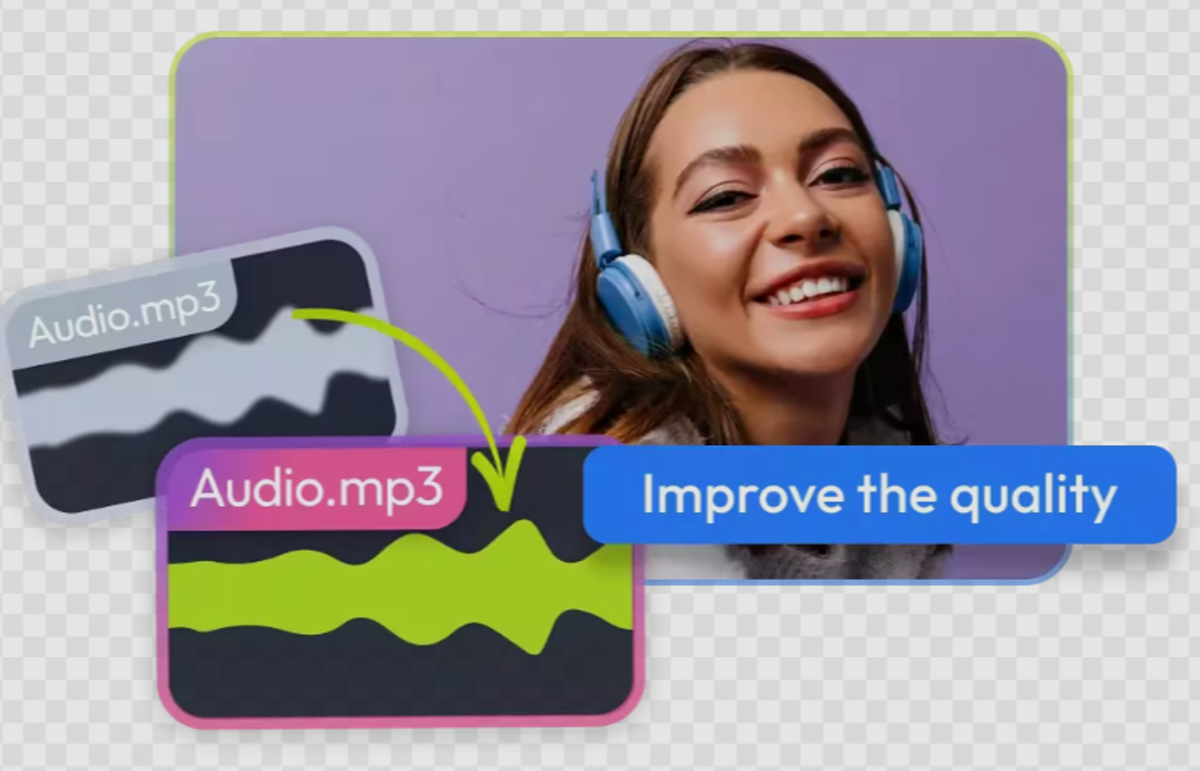
Imagine spending hours recording the perfect take, only to have your post-processing tool turn a warm, expressive voice into a metallic, robotic mess. This scenario is a frustrating reality for many content creators in 2025 who rely on automated tools to clean up their tracks. While a powerful AI audio enhancer promises studio-quality sound with a single click, the results often suffer from unnatural timbres, spectral swirling, and jarring digital artifacts that completely ruin the listener's immersion.
Instead of pristine clarity, you are frequently left with audio that feels sterile, over-compressed, and distinctly artificial. Fortunately, you do not have to settle for these robotic vocals. This comprehensive guide dives deep into the core reasons why these distortions occur, ranging from overly aggressive noise reduction algorithms to overlooked input issues like clipping and poor microphone technique.
We will walk you through practical, hands-on steps to fine-tune your enhancement process, fix specific artifacts, and restore the natural authenticity of your recordings. Whether you are podcasting, streaming, or producing video content, read on to discover the best strategies to ensure your AI audio enhancer delivers sound that is professional, clear, and unmistakably human.
Understanding the Core of AI Audio Enhancement in 2025
In the rapidly evolving landscape of digital media, the AI audio enhancer has become a pivotal tool for content creators and sound engineers. Unlike traditional signal processors that rely on fixed mathematical rules and static filters, these advanced systems utilize deep learning to fundamentally understand and reconstruct sound, aiming for pristine clarity and sophisticated noise reduction.
What is an AI Audio Enhancer?
At its core, an AI audio enhancer is software driven by machine learning algorithms designed to analyze audio data at a granular, spectral level. Rather than simply cutting specific frequency bands (like a standard EQ), these tools distinguish between valuable signals (like human speech or distinct instrumentation) and unwanted noise profiles.
The technology leverages vast datasets to identify sonic patterns, allowing it to remove background hiss, keyboard clicks, and room reverb while attempting to retain the integrity of the primary audio source.
How AI Learns to 'Hear' and Enhance Audio
AI models are trained by comparing millions of hours of noisy audio against clean reference tracks. This process teaches the neural networks to process complex audio characteristics and predict missing information. However, this prediction process is where unnatural timbres often originate.
The Promise and Pitfalls of AI in Sound
While the capabilities of AI in 2025 are impressive, they come with distinct challenges. Algorithms can sometimes misinterpret nuances; for instance, the natural breath in a vocal track or the trailing decay of a cymbal might be flagged as noise and aggressively gated, leading to a choppy, unnatural timbre.
"The goal is to leverage an AI audio enhancer for clarity without sacrificing the natural character and emotional resonance of the original sound."
Understanding these underlying AI technologies helps users recognize why certain artifacts or distortions occur. By balancing automated cleaning with critical listening, users can avoid the "over-processed" feel that plagues aggressive restoration.
Common Culprits Behind Unnatural Timbres
While an AI audio enhancer is a powerful tool for restoring clarity, improper usage can lead to uncanny, synthetic results. Understanding the mechanics behind these tools is essential to preventing the degradation of natural sound quality.
The Problem of Over-Processing and Artifacts
The most frequent cause of unnatural audio is simply asking the software to do too much. Over-processing by AI can strip away essential sonic details , such as the natural "air" or room tone that gives a recording life.
When an algorithm aggressively targets background interference, it often misinterprets human breath, sibilance, or subtle vocal inflections as noise. This results in a 'robotic' or artificial sound . Furthermore, inconsistent processing across different parts of an audio file can contribute to an unnatural feel. If the AI engages heavily during pauses but relaxes during speech, the background noise floor pumps up and down, creating a disorienting listening experience known as "gating artifacts."
When Noise Reduction Goes Wrong: 'Musical Noise'
Aggressive AI noise reduction can sometimes remove desired frequencies or introduce specific spectral artifacts known as 'musical noise' . These appear as random, tonal bursts that sound like chirping birds, metallic ringing, or underwater bubbling. This occurs when the subtractive process leaves behind isolated frequency peaks in the spectrum.
Note: Preserving the natural timbre of a voice often requires accepting a small amount of background noise rather than aiming for absolute silence.
Below is a comparison of processing impacts on audio integrity:
| Processing Approach | Impact on Timbre | Common Artifacts | Resulting Feel |
|---|---|---|---|
| Balanced Enhancement | Retains vocal warmth and breath | Minimal; natural decay | Professional & Authentic |
| Aggressive Reduction | Thin, metallic, or muffled | Musical noise, spectral gating | Artificial & "Vacuum-Sealed" |
| Inconsistent Gating | Unstable volume levels | Pumping background noise | Disjointed & Distracting |
Fixing Distortion and Clipping Issues
Finally, loudness management is critical. Clipping, where audio signals exceed the system's capacity , causes harsh distortion and can be worsened by AI enhancers that automatically boost gain.
If a file is already near 0dB, an AI audio enhancer attempting to boost volume will drive the peaks into a square wave, destroying the dynamic range. To avoid this, always ensure proper headroom (around -6dB to -3dB) before applying enhancement effects.
2025 Product Deep Dive: Top AI Audio Enhancers and Plugins
In the evolving landscape of sound engineering, the AI audio enhancer has transitioned from a novelty to a studio essential. As we analyze the top tools available in 2025, it becomes clear that while automation offers speed, the producer's ear remains critical.
The integration of artificial intelligence into Digital Audio Workstations (DAWs) has streamlined workflows, yet it introduces new challenges regarding audio fidelity and character.
AI Vocal Plugins: Precision vs. Naturalness
AI vocal plugins now offer advanced voice manipulation capabilities, allowing for pitch correction and timbre shifting with unprecedented speed. However, these powerful algorithms are not foolproof. Experts note that these plugins require careful tuning to avoid unnatural timbres.
If the "wet" signal (the processed audio) is too dominant, the vocal track can suffer from digital artifacts, losing the organic warmth of the original performance. To achieve a professional sound, users must balance the AI's precision with the natural dynamics of the human voice.
| Feature | Conservative Tuning | Aggressive Tuning | Resulting Audio Character |
|---|---|---|---|
| Timbre Preservation | High | Low | Conservative retains warmth; Aggressive sounds robotic. |
| Artifacts | Minimal | High | Aggressive tuning often introduces phase issues. |
| Dynamic Range | Natural | Compressed | Heavy processing flattens emotional nuance. |
AI Audio Enhancement Features: Real-time Solutions
For live broadcasting and quick content creation, real-time AI audio enhancer features provide de-noising that is often indistinguishable from magic. However, a common pitfall is the intensity of the effect.
These tools can flatten timbre if noise suppression is set too high. When the algorithm aggressively targets background hiss, it may inadvertently strip away high-frequency content essential for speech intelligibility, leading to a muffled or "underwater" sound.
Technical Insight: Real-time processors prioritize low latency over spectral accuracy. Always monitor the dry/wet mix to ensure the speaker's unique vocal footprint isn't erased by the noise gate.
Specialized Plugins for Audio Repair
When precision is paramount, offline processing reigns supreme. Plugins like those found in professional suites (e.g., iZotope RX or Adobe Audition) are indispensable for fixing distortions and spectral anomalies. Unlike real-time tools, these allow for granular control, though parameter tuning is crucial to avoid degrading the signal.
Newer web-based tools focus specifically on speech clarity. While they can salvage poor recordings, they risk over-processing, occasionally replacing the original room tone with a synthetic, studio-like silence that feels disjointed. Consequently, traditional dynamic processors remain vital. Compressors and limiters are essential for preventing clipping and ensuring consistent levels, effectively aiding your AI audio enhancer by feeding it a controlled, stable signal.
Strategies for Achieving Natural AI Audio Enhancement
As content creation standards rise in 2025, audiences demand broadcast-quality sound across all platforms. While a modern AI audio enhancer is a powerful asset, utilizing it effectively requires a nuanced strategy. Simply maximizing settings often results in robotic, unnatural output.
To maintain authenticity, creators must view AI as a collaborative tool rather than a complete replacement for good recording practices.
The Importance of Input Audio Quality
The quality of your original recording is paramount. Despite rapid advancements in machine learning, AI tools work best on good source material. They rely on existing data to separate the desired signal from noise; if the original file is severely distorted, clipped, or low-bitrate, the AI lacks the necessary reference points for accurate restoration.
Source Fidelity: An AI audio enhancer acts as a polisher, not a magician. It cannot naturally reconstruct frequencies that were never captured.
Recording Environment: Prioritize microphone placement and acoustic treatment. A cleaner raw file allows the AI to focus on subtle enhancement rather than aggressive repair, reducing digital artifacts.
Mastering AI Parameters for Optimal Results
To avoid the dreaded "underwater" phasing effect or metallic voices, experimentation with AI enhancer settings is key. A common mistake is applying "Auto" presets without refinement.
Pro Tip: Start subtly and adjust gradually. Begin with the enhancement intensity at 0% and slowly increase it. Stop the moment the distracting background noise disappears, even if the silence isn't "perfectly" black.
Always compare the AI-processed audio with the original to ensure naturalness is preserved. If the speaker's breath or unique vocal timbre starts to vanish, you have over-processed the file.
When to Rely on AI and When to Use Traditional Tools
Understand the limitations of AI tools; they are not a magic bullet for severely degraded audio. For the most professional and balanced results, you must combine AI enhancements with traditional audio processing techniques like EQ and compression.
| Processing Goal | AI Audio Enhancer Role | Traditional Tools (EQ/Comp) Role |
|---|---|---|
| Noise Removal | Excellent for complex, changing noises (wind, traffic) | Limited to static hiss (noise gates) |
| Tonal Balance | Can sometimes strip "warmth" while cleaning | Essential for restoring bass and presence |
| Dynamics | Often flattens volume variations | Best for leveling peaks and adding punch |
| Reverb Control | Highly effective at de-reverberation | Ineffective at removing room echo |
By using AI to clean the signal and traditional tools to shape the tone, you achieve a sound that is both clear and organically human.
FAQ (Frequently Asked Questions)
Q1: Why does my voice sound robotic after using an AI audio enhancer?
A1: A robotic or metallic sound usually occurs when the AI settings are too aggressive. The algorithm may be stripping away natural harmonics and breath sounds along with the background noise. To fix this, lower the noise reduction intensity and mix a small amount of the original "dry" signal back in to restore natural texture.
Q2: Can an AI audio enhancer fix audio that is heavily clipped or distorted?
A2: AI tools have improved significantly at "de-clipping," but they have limits. They attempt to reconstruct the waveform peaks that were cut off, but if the distortion is severe, the result may still sound synthetic. It is always better to prevent clipping during the recording stage by lowering your gain.
Q3: Is it better to use an online AI enhancer or a dedicated plugin?
A3: It depends on your needs. Online tools are generally faster and easier for beginners but often lack fine controls, leading to "all-or-nothing" processing. Dedicated plugins (VST/AU) run inside a DAW and offer granular control over parameters, making them better for professional results where preserving natural timbre is critical.
Q4: What is "musical noise" and how do I get rid of it?
A4: Musical noise refers to the random, chirping, or watery artifacts left behind by spectral subtraction. It happens when an AI enhancer removes noise imperfectly. To eliminate it, reduce the amount of noise reduction, or use a "spectral repair" tool to manually target those specific frequencies rather than applying a blanket filter.
Q5: Should I apply EQ before or after using an AI audio enhancer?
A5: Generally, it is best to use an AI audio enhancer (specifically for noise reduction) first in your signal chain. If you EQ first, you might boost the noise frequencies, making it harder for the AI to identify and remove them. However, you should apply creative EQ after the AI process to restore warmth and presence to the voice.
Conclusion
As we navigate the evolving soundscape of 2025, achieving pristine, natural-sounding results with an AI audio enhancer is no longer just about pressing a single button; it requires a sophisticated blend of technological power and critical human listening. Throughout this article, we have explored why robotic artifacts occur and established that understanding the inherent limitations of these tools is the first step toward sonic excellence.
By prioritizing high-quality input sources and strictly avoiding the common pitfalls of over-processing and heavy-handed compression, you can effectively eliminate unwanted distortion while preserving the authentic character and warmth of your original recordings. Remember that the most effective workflow combines the surgical cleaning power of AI with the musical shaping capabilities of traditional EQ and compression.
Ready to take your audio quality to the next level? Don't let unnatural artifacts or digital grit hold your production back any longer. Start refining your process today by downloading a trial of a professional-grade AI enhancer and applying the "less is more" strategies outlined in this guide. Subscribe to our newsletter for more expert audio tips and exclusive preset packs designed to give you that perfect broadcast sound!