| Feature | Claid.AI | LetsEnhance | Luminar Neo |
|---|---|---|---|
| Primary Function | E-commerce Optimization | Resolution Upscaling | Detail Sharpening |
| Target Output | Product Catalogs | Large Print/Web | Creative Photography |
| Key Capability | Background Standardization | 400% Upscale | Motion Blur Fix |

Have you ever captured the perfect moment, only to realize later that the lighting was off or the focus was slightly blurry? It is a frustrating scenario that can ruin an otherwise great shot, leaving you with unusable visuals for your creative projects. Fortunately, modern technology has made fixing these common imperfections easier and faster than ever before.
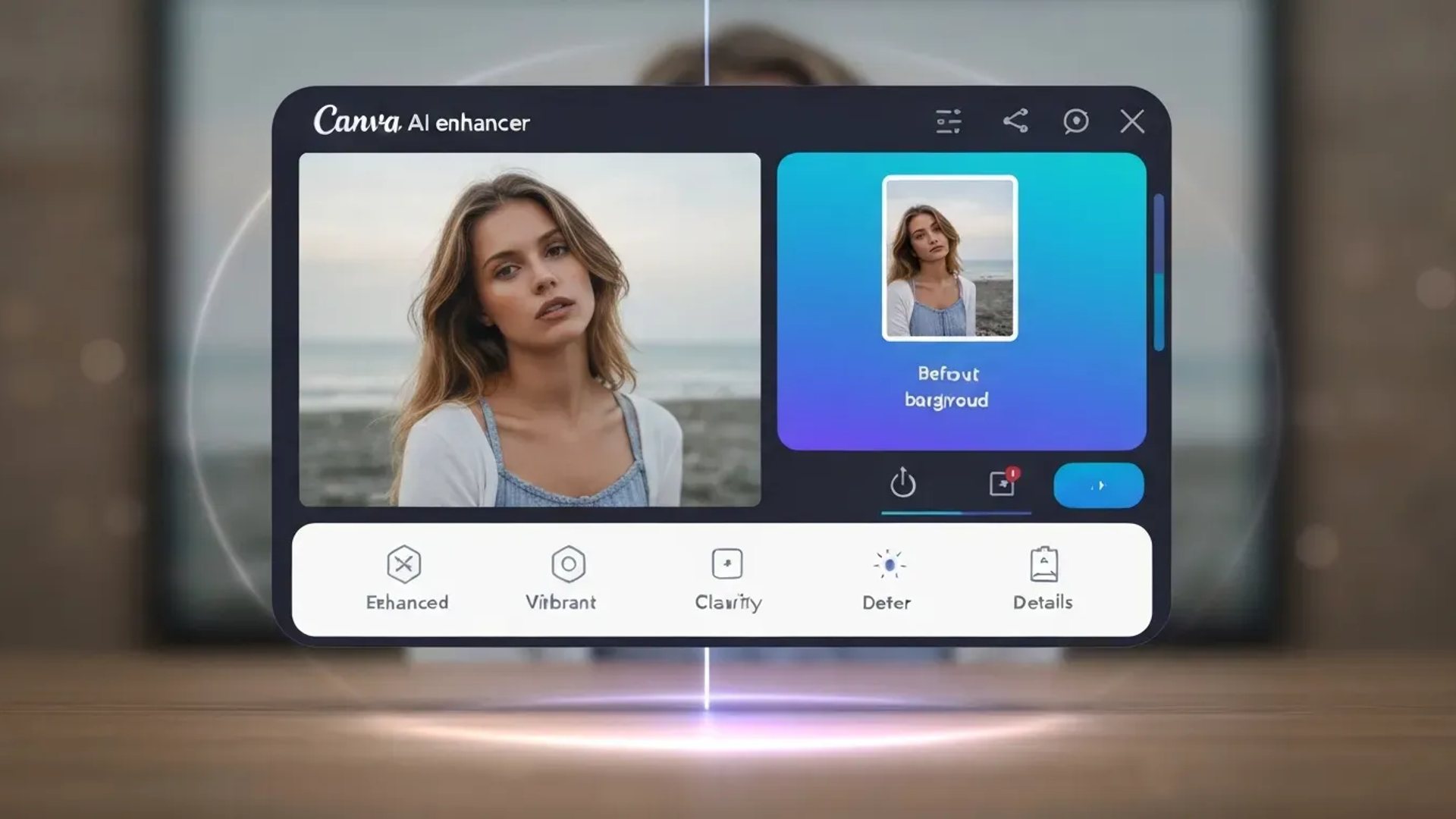
Enter the Canva AI photo enhancer , a powerful tool designed to revolutionize how you approach graphic design in 2026. Whether you need to upscale images or reduce noise in grainy low-light shots, this feature simplifies complex editing tasks into just a few clicks. It is the ultimate asset for elevating your photo editing software experience without requiring advanced skills.
In this guide, we will walk you through the top 10 essential settings tailored for various image types to help you maximize your results. You will discover how to sharpen images, improve photo quality, and transform dull pictures into professional masterpieces. Get ready to unlock the full potential of your visual content with these indispensable Canva features.
Top 10 Canva AI Photo Enhancer Settings for 2026
Designers in 2026 demand speed and precision. The Canva AI photo enhancer ecosystem now extends beyond native tools, integrating specialized third-party applications directly into the workflow. This list details the essential settings and tools to optimize digital assets, ranging from restoration to commercial upscaling.
1. General Image Enhancement with FotorPea
FotorPea provides a streamlined interface for rapid adjustments. Users select the "One-Tap Enhance" setting to correct exposure and contrast simultaneously. The tool processes JPEG and PNG files instantly, balancing highlights and shadows. This eliminates the need for manual slider adjustments on standard photography.
2. Upscaling Images with LetsEnhance
LetsEnhance focuses on increasing resolution for print and digital media. Designers select the "Smart Resize" mode to upscale images by 200% or 400%. This process maintains edge sharpness and prevents pixelation, ensuring 300 DPI quality for large-format posters and banners.
3. Reducing Noise in Low Light Photos with VideoProc Converter AI
VideoProc Converter AI utilizes specific algorithms for ISO noise reduction. The "Denoise" module targets grain in photos taken under 100 lux lighting. The software identifies noise patterns and smooths them while preserving structural edges, effectively salvaging underexposed raw files.
4. Sharpening Images with Luminar Neo
Luminar Neo applies AI structure filters to soft images. The "Supersharp AI" extension analyzes blur patterns caused by motion or focus errors. It restores definition to subjects without introducing digital artifacts. This setting brings necessary clarity to photographs lacking depth.
5. Enhancing Product Photos with Claid.AI
Claid.AI offers dedicated features for e-commerce visuals. Merchants use the "Product Color Correction" setting to standardize lighting across inventory. The tool automates background removal, outputting uniform white backgrounds to ensure consistency for online store catalogs.
6. Optimizing Social Media Images with AdCreative.AI
AdCreative.AI analyzes engagement data to adjust image composition. The platform suggests cropping ratios specifically for Instagram and LinkedIn. Marketers use this to align visuals with high-conversion patterns. The tool prioritizes focal points that statistically drive higher click-through rates.
7. Restoring Old Photos with VideoProc Converter AI
VideoProc Converter AI includes a "Restoration" mode for vintage media. It repairs scratches and tears found in scanned prints. The AI utilizes historical data to colorize black and white images accurately. This process restores facial details in damaged physical photographs.
8. Fixing Blurry Photos with HitPaw FotorPea
HitPaw FotorPea targets motion blur and camera shake. The "General Model" recalculates pixel data to sharpen outlines. It transforms out-of-focus shots into clear assets suitable for presentation. This function works specifically well on action shots or handheld photography.
9. Enhancing Portraits with HitPaw FotorPea
HitPaw FotorPea offers a "Face Model" specifically for portraits. It detects facial landmarks to smooth skin texture while retaining pore detail. The tool enhances eye clarity and whitens teeth naturally. Photographers use this for professional headshots and profile pictures.
10. Advanced Editing with Affinity by Canva (Version 3.0)
Affinity by Canva (Version 3.0) integrates comprehensive editing suites. It supports non-destructive layer editing alongside AI tools. Designers use the "Live Filters" to apply complex composites and precise masking. It bridges the gap between quick AI fixes and professional graphic design.
Note: Selecting the right tool depends on the source material. Use upscale tools for low-res inputs and restoration tools for physical scans.
By leveraging these specific Canva AI photo enhancer integrations, designers ensure high-quality outputs. These tools reduce manual editing time and improve visual consistency across projects in 2026.
Understanding AI Photo Enhancers in 2026
To make the most of your design workflow, it is crucial to understand the technology behind the tools. Here are the key insights and actionable guidance for the current market.
What are AI Photo Enhancers?
AI photo enhancers use machine learning algorithms to automatically improve image quality. These tools adjust resolution, clarity, color balance, and detail without human intervention. The software analyzes pixel data to reconstruct missing information and sharpen edges. This technology powers tools like the Canva AI photo enhancer , allowing users to fix blur or lighting issues instantly.
Why Use AI Tools for Image Enhancement?
In 2026, speed drives content creation. AI tools cut editing time from 20 minutes to under 10 seconds per image. Designers achieve professional results without manual pixel manipulation. These tools support high-volume graphic design tasks efficiently, saving hours on bulk edits.
| Metric | Manual Editing | AI Enhancement |
|---|---|---|
| Time Per Image | 15-30 Minutes | < 10 Seconds |
| Learning Curve | 3-6 Months | Immediate |
| Batch Processing | Manual/Slow | Automated |
Key Features to Look For in 2026
Select software with specific technical capabilities. Prioritize upscaling tools that increase resolution by 400% without quality loss. Look for noise reduction algorithms that remove high-ISO grain from low-light photos. Precise sharpening tools must restore edge definition clearly. Intuitive controls ensure the Canva AI photo enhancer integrates smoothly into daily workflows.
Choosing the Right AI Photo Enhancer Settings for Your Needs in 2026
In 2026, photo editing software processes images in seconds. However, default presets often miss specific requirements. You must configure parameters based on the input file to ensure high fidelity. Selecting the correct mode prevents artifacts and maintains the original image structure.
Matching Settings to Image Type
Different inputs require specific configurations. Low-light photos need noise reduction algorithms to smooth grain without losing detail. Blurry action shots benefit from sharpening filters targeting edge contrast. Product photography demands accurate background removal and white balance correction for catalog consistency.
| Image Scenario | AI Tool Setting | Manual Refinement |
|---|---|---|
| Low Light | High Noise Reduction | Shadow Exposure |
| Motion Blur | Edge Sharpening | Contrast |
| Product Photo | Background Removal | Color Correction |
Balancing Automation and Control
AI tools provide speed, but manual oversight ensures accuracy. Use automation for complex tasks like object erasure or upscaling resolution to 4K. Switch to manual sliders for fine-tuning saturation or tint. This hybrid approach prevents over-processing errors common in fully automated outputs.
Canva's AI Features for Graphic Design
The Canva AI photo enhancer streamlines this process within a single platform. Features like Magic Edit allow text-to-image modifications on specific areas. Designers access these tools directly on the canvas, eliminating the need for external software exports. This integration supports consistent branding across all graphic design projects.
FAQ (Frequently Asked Questions)
Q1: Can Canva's AI photo enhancer fix completely blurry photos?
A1: The Canva AI photo enhancer sharpens soft details effectively. It clarifies edges within the image structure. However, extreme blur remains a limitation; it cannot reconstruct missing data from unrecognizable sources.
Q2: What is the best AI tool for upscaling images in 2026?
A2: LetsEnhance and VideoProc Converter AI are top choices for upscaling in 2026. They increase resolution by adding calculated pixels based on surrounding data, preventing blocky appearances.
Q3: How do I reduce noise effectively in low light photos using AI?
A3: Use software with specific noise reduction algorithms, like VideoProc Converter AI or Luminar Neo. These tools target grain patterns in high-ISO images, smoothing artifacts while keeping textures intact.
Q4: Is there a free AI photo editor with advanced features?
A4: Dezgo offers free AI enhancement capabilities. Affinity by Canva (Version 3.0) also provides powerful editing software with optional AI features accessible without a paid subscription.
Q5: What are the key differences between various AI image enhancers?
A5: Different tools specialize in specific problems. Some focus on upscaling, others on noise reduction, or design integration.
| Tool | Specialization | Key Feature |
|---|---|---|
| Canva | Design Integration | Broad Graphic Tools |
| VideoProc Converter AI | Upscaling | Resolution Increase |
| Luminar Neo | Noise Reduction | Grain Removal |
| Dezgo | Basic Enhancement | Free Access |
Conclusion
As we navigate the visual landscape of 2026, mastering the Canva AI photo enhancer is essential for transforming ordinary snapshots into professional-grade masterpieces. Whether you are correcting low-light issues or sharpening blurry pictures, this technology offers unparalleled precision for every type of creator. Embracing these advanced capabilities ensures that your graphic design projects consistently stand out with exceptional clarity and impact.
To achieve the best results, start experimenting with the ten specific settings outlined to see how they transform different image types. You should actively explore various AI tools and apply natural LSI terms to establish a seamless and efficient editing workflow. Testing these configurations will empower you to find the perfect adjustments that align with your unique artistic requirements.
Don't forget to leverage the full range of Canva’s extensive features to support all your future photo editing and design endeavors. Dive into the platform today to experience how the Canva AI photo enhancer can instantly revolutionize your creative output. Start enhancing your photos now to bring your visions to life and capture your audience's attention like never before.