| Metric | Human Writing Characteristics | AI Generation Characteristics |
|---|---|---|
| Burstiness | High variation in sentence length | Low, uniform structure |
| Perplexity | Unpredictable word choices | High probability word choices |
| Syntax | Complex, irregular structures | Standard, repetitive patterns |
| Predictability | Low (surprising elements) | High (follows training data) |
Can you truly tell if a sonnet was crafted by a soulful poet or generated by a sophisticated algorithm? In the technological landscape of 2026, distinguishing between raw human emotion and machine learning has become an incredibly complex challenge. As the lines blur, the nuances of creative writing are no longer exclusive to the human mind.
To combat this uncertainty, many publishers and educators are now turning to specialized software for verification. This reliance has popularized the AI poem detector , a digital solution designed to flag synthetic verses with algorithmic precision. Yet, you might wonder if these tools are actually effective enough to replace the subtle instincts of a human reader.
This article delves deep into the reliability of automated text classifiers compared to your own intuition. We will explore the technical limitations of current detection systems and their profound impact on writers. Read on to determine whether code or consciousness is the superior judge of poetic art.
AI Poem Detectors: The Algorithmic Approach
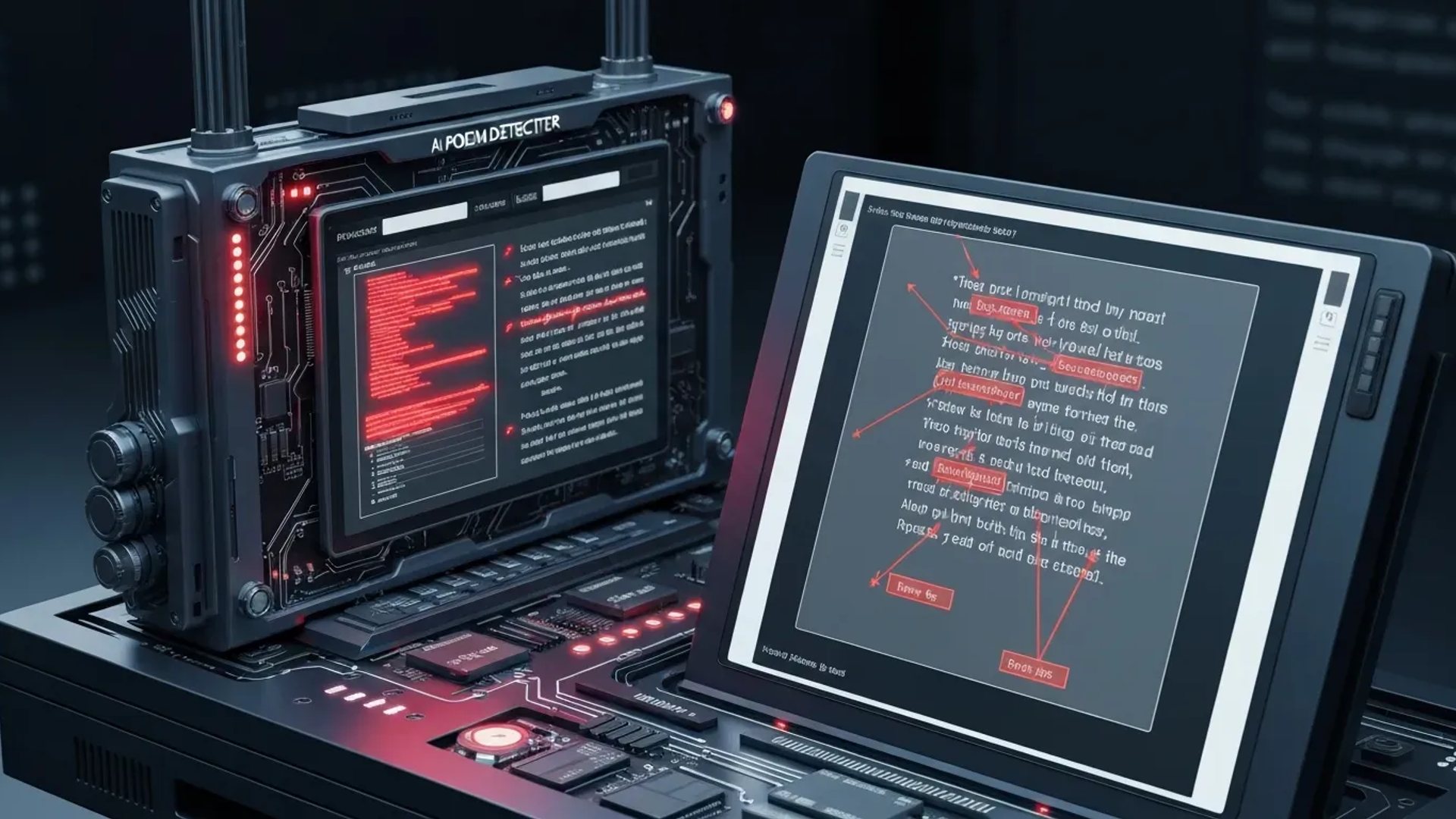
An AI poem detector functions as a specialized analysis tool. It uses natural language processing (NLP) to scan text for specific patterns. These systems evaluate syntax and sentence structures to predict authorship.
The primary goal involves distinguishing between human creativity and machine-generated outputs. Many platforms now integrate these classifiers to attempt to verify content authenticity.
Understanding How Detection Works
These systems typically examine metrics like perplexity and burstiness . Perplexity measures how predictable the text appears to a language model. Burstiness analyzes the variation in sentence structure and length.
High burstiness often signals human writing, while AI models usually produce uniform patterns.
Accuracy Concerns in AI-Generated Text Detection
Current tools face significant challenges regarding precision. Heavy editing or sophisticated prompting often helps AI content bypass detection. Conversely, false positives occur when software incorrectly flags human poetry as AI-written.
This unreliability raises questions about the effectiveness of these tools in definitively labeling a poem.
The Impact of AI Writing Detection on Creators
The presence of detection tools creates anxiety for writers. Authors fear false accusations regarding their original work. This scrutiny impacts the creative process, potentially forcing writers to alter their natural style.
In poetry, where personal expression is key, algorithmic judgment risks misinterpreting unique artistic choices. It may view them as artificial generation.
Human Intuition in Poetry Analysis
Human intuition in poetry analysis stems from years of literary exposure. Readers connect with artistic intent through cultural context and experience. This process requires recognizing literary devices, rhythm, and stylistic nuances.
Humans process text through lived reality rather than just data training.
The Nuances of Poetry Analysis by Humans
Readers identify subtext and emotional depth. While an AI poem detector scans for syntax patterns or perplexity scores, humans look for personal vulnerability. This "human touch" differentiates biological creativity from generated text.
Current software struggles to replicate this specific interpretation of vulnerability.
| Feature | Human Analysis | AI Poem Detector |
|---|---|---|
| Method | Lived experience & intuition | Statistical pattern matching |
| Focus | Emotional resonance | Syntax & probability |
| Context | Cultural & historical | Training data limits |
| Subtext | Interprets hidden meaning | Flags complexity |
Subjectivity and Emotional Resonance in Poetry
Reading involves subjective interpretation. A specific phrase triggers distinct memories in a reader. Algorithms calculate word probability, while humans assess aesthetic qualities.
Personal vulnerability in a poem creates a bond between writer and reader. This emotional connection defines the reading experience. Intuition allows for an appreciation of these subjective elements often missing in synthetic text.
Contextual Understanding of AI-Generated Poetry
Contextual understanding extends beyond the text itself. It includes historical background and cultural references. This knowledge distinguishes human work from machine output.
Grasping the full meaning requires this background. It offers text discrimination based on meaning rather than simple pattern matching. This holistic view remains a distinct advantage of human analysis.
The 2026 Landscape: AI vs. Human Reliability
By 2026, the capabilities of an AI poem detector have expanded significantly. These tools analyze syntax probability and token distribution to identify machine-generated text. However, software lacks the capacity for emotional resonance.
While code identifies statistical anomalies, it often misses the artistic intent. It cannot fully grasp a deliberate line break or an experimental metaphor.
Comparing Algorithmic Judgment and Human Intuition
Algorithms process data at high speeds but struggle with subtext. A machine identifies word patterns; a human reader connects metaphors to shared experiences. Current models often flag complex or experimental syntax as artificial.
True analysis requires understanding the human condition , a metric no database currently holds.
| Analysis Metric | AI Algorithms | Human Intuition |
|---|---|---|
| Subtext Understanding | Low (Pattern-based) | High (Context-based) |
| Emotional Depth | None | High |
| Processing Speed | Milliseconds | Variable |
| False Positive Risk | Moderate to High | Low |
The Future of AI Authorship and Content Authenticity
Generative tools now challenge traditional authorship definitions. As models evolve, they mimic human styles with higher accuracy. Detection tools improve alongside them, yet the qualitative gap remains.
Authenticity now relies on the origin of the work rather than just the text itself. Readers and critics value the human experience behind the words. They prioritize this over the structural perfection of the stanza.
Navigating AI Poem Detectors in 2026
Publishers and writers must use these detectors with specific limitations in mind. Blind reliance on text classifiers hinders creativity. Platforms should prioritize human critical assessment over automated flags.
The goal involves supporting genuine expression, not restricting it through rigid algorithmic filters. Users must treat detection scores as data points , not verdicts.
FAQ (Frequently Asked Questions)
Q1: Can AI truly understand poetry?
A1: Current AI models process syntax and rhyme based on training data, not consciousness. They identify statistical patterns but fail to grasp the human experience. Consequently, AI mimics style without comprehending the underlying sentiment or emotional weight.
Q2: How accurate are AI poem detectors in 2026?
A2: Detectors have improved but accuracy fluctuates with creative or edited text. An AI poem detector often misinterprets unconventional human syntax as artificial. Nuanced judgment still requires human analysis to distinguish avant-garde style from machine output.
Q3: What is the best way to ensure content authenticity?
A3: Implement a multi-layered verification strategy combining manual oversight with ethical policies. Use detection tools only while understanding their technical limitations. A combination of author verification and technical analysis provides the most secure method.
Q4: Will AI replace human poets?
A4: Total replacement is unlikely as AI serves primarily as a tool for inspiration. Human creativity and emotional expression define the art form. The poet controls the narrative, using technology to augment rather than replace the creative spark.
Q5: Where can I find reliable AI writing detection tools?
A5: Check reputable tech review websites for updated accuracy rankings and benchmarks. Read academic research for data-driven assessments of text classifiers. Always verify tool updates to ensure they match current AI generation capabilities.
Conclusion
As we navigate the literary landscape of 2026, the distinction between algorithmic analysis and human empathy remains crucial. While a sophisticated AI poem detector provides essential analytical capabilities, it cannot replicate profound emotional depth. These tools function best as supportive guardians rather than absolute replacements.
Writers and digital platforms must leverage these technologies responsibly to preserve content authenticity. We recommend critically evaluating results from any detector. Always prioritize the nuanced voice of the author over rigid algorithmic judgments to ensure the spirit of storytelling remains genuine.
Embrace the synergy between human creativity and advanced technology today. Start using these tools to verify originality while championing the emotional resonance only people create. Ensure the timeless art of poetry flourishes with both innovation and unparalleled human heart.