| Feature | AI Music Generators | Assistive AI Tools | Traditional DAWs |
|---|---|---|---|
| Core Function | Create full songs from text | Refine and fix audio | Recording and mastering |
| Primary Input | Text Prompts / Data | Existing Audio Files | Human Performance |
| 2026 Role | Rapid Ideation & Creation | Workflow Optimization | Production Backbone |
| Example | Stable Audio, Suno | Pitch Correction | Pro Tools, Logic Pro |
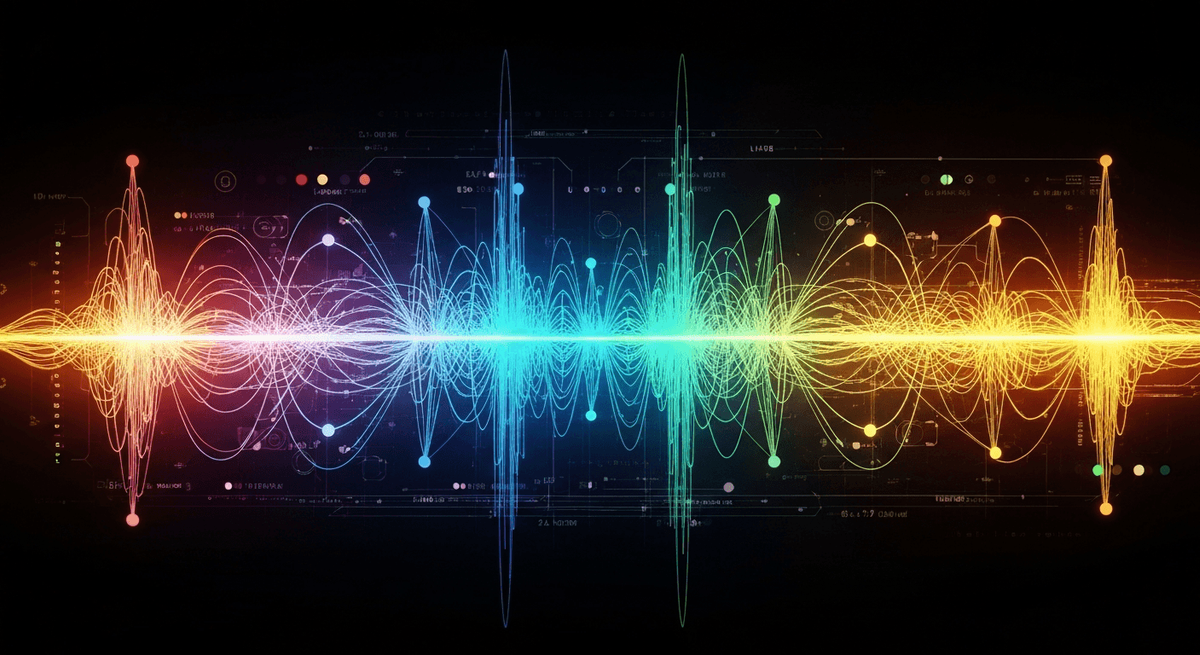
The music industry of 2026 has transformed dramatically, blurring the lines between studio perfection and raw live energy. As a musician, you're likely overwhelmed by the sheer volume of new technologies claiming to revolutionize your unique sound. Choosing between cutting-edge innovation and reliable classics has never been more challenging or important.
While traditional digital audio workstations (DAWs) remain powerful foundations, the rapid rise of the AI live music enhancer has completely changed the modern performance landscape. These intelligent tools offer real-time adaptations and dynamic creative possibilities that were simply impossible just a few years ago. Understanding how this specific technology fits into your workflow is now crucial for staying relevant.
In this comprehensive guide, we will break down the essential differences between these modern AI solutions and established production software. We will explore their unique capabilities to help you confidently decide which tool best suits your specific creative goals this year. Let's discover the perfect technical setup to elevate your music career in 2026.
Product Core or Contextual Expansion
The music production landscape of 2026 is defined by a sophisticated synergy between human creativity and machine intelligence. While traditional methods remain vital, new technologies, including the AI live music enhancer , are reshaping how sound is processed, composed, and experienced in real-time.
AI Music Generators
AI Music Generators have evolved into powerful tools that leverage large language models and vast datasets. By analyzing complex musical patterns, these platforms predict elements to produce full, original songs from simple text prompts.
This capability offers a novel approach to composition in 2026. It allows users to generate high-fidelity tracks instantly, democratizing music creation for those without formal training while providing professionals with rapid ideation tools.
Assistive AI Tools (Pitch Correction, Audio Isolation)
Unlike generative models, Assistive AI Tools are non-generative applications designed to aid musicians in specific production tasks. These tools focus on refining existing audio, such as correcting pitch or separating individual audio tracks from a mixed file.
These tools significantly enhance the production workflow in 2026. They ensure cleaner mixes and more precise audio manipulation, acting as a digital assistant that handles technical corrections so artists can focus on creativity.
Stable Audio
Stable Audio is a premier AI music and sound generator developed by Stability AI. It falls under the category of generative AI tools, capable of creating intricate musical pieces and immersive soundscapes.
In 2026, it is widely used for various applications, ranging from commercial sound design to artistic experimentation, offering high-quality output that rivals human-composed scores.
Adobe's Project Music GenAI Control
This tool is specifically designed for the rapid and cost-effective creation of background music. It targets content creators like podcasters and YouTubers who require quick, royalty-free musical scores to enhance their digital media.
Suno
Suno represents a specific application of AI in education and creative content production in 2026. It has been reported for its effective use in generating musical teaching aids, helping educators create engaging learning materials through AI-generated audio.
Amper Music
Amper Music is an AI-powered software recognized for its robust ability to generate music. It was famously demonstrated by creating a viral song using AI versions of popular artists, showcasing the high-level mimicry and composition capabilities of AI in 2026.
Traditional Music Production Software (e.g., DAWs)
Traditional music production software, known as Digital Audio Workstations (DAWs), forms the backbone of music creation for many artists and producers in 2026. These platforms offer a comprehensive suite of tools for recording, editing, mixing, and mastering audio.
Despite the rise of AI, DAWs rely on human expertise and creative input, serving as the central hub where AI-generated elements and human performance converge.
1. AI Music Generators
Practical Implications: AI Music Generators in 2026 offer unprecedented speed and accessibility for song creation. They can serve as powerful brainstorming partners, quickly generating diverse musical ideas based on textual descriptions. This democratizes music production, enabling individuals without extensive musical training to bring their sonic visions to life. For professionals, they accelerate the ideation phase, allowing for rapid prototyping of song concepts.
Actionable Tips:
- Experiment with diverse prompts: Don't limit yourself to simple descriptions. Use evocative language, specify genres, moods, and even instrumentation to guide the AI towards your desired output.
- Use as a starting point, not an endpoint: Treat AI-generated tracks as foundational elements. Refine them with your own creative input, add unique performances, and integrate them into your existing production workflow for a truly original sound.
2. Assistive AI Tools (Pitch Correction, Audio Isolation)
Practical Implications: Assistive AI Tools in 2026 are invaluable for refining existing audio. They streamline tedious tasks like pitch correction, ensuring vocal performances are in tune, and audio isolation, allowing for the separation of instruments from a mixed track. This significantly improves the quality of recordings and simplifies complex mixing processes, freeing up artists to focus on creative aspects rather than technical minutiae.
Actionable Tips:
- Apply judiciously: While powerful, overusing pitch correction can lead to an unnatural, robotic sound. Use it to subtly enhance performances rather than drastically alter them.
- Leverage for remixing and sampling: Audio isolation tools are game-changers for remix artists and producers who want to extract specific elements from existing tracks for creative reuse.
3. Stable Audio
Practical Implications: Stable Audio, as a leading AI music and sound generator in 2026, provides high-quality, intricate musical pieces and soundscapes. Its applications are broad, from commercial sound design for films and games to experimental artistic projects. It offers a reliable source of professional-sounding audio content that can rival human compositions, making it a versatile tool for a wide range of creative endeavors.
Actionable Tips:
- Explore its sound design capabilities: Beyond music, experiment with Stable Audio for creating unique sound effects and ambient textures for multimedia projects.
- Integrate into your scoring workflow: For content creators needing background music, Stable Audio can quickly generate fitting scores, saving time and resources.
4. Adobe's Project Music GenAI Control
Practical Implications: Adobe's Project Music GenAI Control is optimized for the rapid, cost-effective creation of background music, particularly for content creators. This means podcasters, YouTubers, and other digital media producers can quickly generate royalty-free scores that perfectly match the tone and pacing of their content, enhancing viewer engagement without the hassle of licensing or complex composition.
Actionable Tips:
- Match music to content pacing: Use the tool to generate music that dynamically adjusts to the narrative flow of your videos or podcasts.
- Experiment with different moods: Quickly generate variations of background music to find the perfect fit for various segments of your content.
5. Suno
Practical Implications: Suno's application in 2026, particularly in education and creative content, highlights its ability to generate engaging musical teaching aids. This empowers educators to create dynamic learning materials that incorporate music, making lessons more interactive and memorable. For creative professionals, it offers a novel way to produce educational audio content.
Actionable Tips:
- Develop interactive learning modules: Use Suno to create songs that explain complex concepts or reinforce learning objectives in an engaging way.
- Personalize educational audio: Generate custom musical elements for your specific teaching needs or for individual student engagement.
6. Amper Music
Practical Implications: Amper Music's demonstrated ability in 2026 to generate music, including mimicking popular artists, showcases the sophisticated composition and mimicry capabilities of AI. This is highly relevant for artists and producers looking to explore new sonic territories or create music that evokes specific styles. It also raises interesting possibilities for personalized music experiences and adaptive soundtracks.
Actionable Tips:
- Analyze and emulate styles: Use Amper Music to study and replicate the characteristics of genres or artists you admire, then build upon those foundations.
- Explore AI-powered collaborations: Consider how AI-generated elements, inspired by existing styles, can be integrated into your original compositions.
7. Traditional Music Production Software (e.g., DAWs)
Practical Implications: Traditional DAWs in 2026 remain the cornerstone of professional music production, offering unparalleled control and precision. They are essential for detailed editing, complex mixing, and mastering, ensuring the highest fidelity audio. Their established workflows and vast plugin ecosystems provide a stable and reliable environment for artists who prioritize meticulous sound design and artistic intent.
Actionable Tips:
- Master your DAW's advanced features: Dive deep into the editing, mixing, and mastering capabilities of your chosen DAW to unlock its full potential for precision.
- Build a curated plugin library: Invest in high-quality third-party plugins that complement your DAW and enhance your specific production style.
AI Live Music Enhancers: Redefining Performance in 2026
By 2026, the AI live music enhancer has evolved from a studio novelty into a critical stage tool. These cutting-edge systems are designed to augment live performances in real-time, analyzing incoming audio to apply sophisticated enhancement techniques. This ensures a polished and professional output for audiences, bridging the gap between studio perfection and live energy.
Real-time Sound Enhancement
Modern enhancers dynamically adjust effects and mix levels based on the live input. Instead of relying on static presets, the AI continuously monitors the acoustic environment to deliver consistent, high-fidelity sound.
This technology actively eliminates common live audio issues, ensuring clarity and depth in every performance. The result is a seamless audio experience that adapts instantaneously to the venue's specific acoustics.
AI-Assisted Improvisation and Dynamic Accompaniment
Beyond basic audio processing, these systems assist musicians by generating backing tracks on the fly. An AI live music enhancer can suggest improvisational elements, fostering new avenues for music creativity. It can even generate complex harmonies or rhythmic patterns that respond instantly to the artist's playing style.
| Feature | Traditional Setup | AI Enhanced Setup (2026) |
|---|---|---|
| Audio Analysis | Static/Manual EQ | Real-time Adaptive |
| Accompaniment | Pre-recorded Tracks | Generative & Responsive |
| Harmonies | Fixed Pitch Pedals | Dynamic AI Generation |
| Interaction | Unidirectional | Bi-directional/Interactive |
Impact on Live Music Creativity
The integration of AI allows solo artists to build fuller soundscapes and bands to experiment with novel sonic textures. By pushing the boundaries of music technology, these tools create a more interactive and responsive music experience.
"In 2026, the AI acts not just as a processing tool, but as a responsive collaborator, redefining the limits of live performance."
This technological shift empowers artists to focus purely on expression, knowing the AI will handle the sonic complexities.
Dynamic Accompaniment Generation
Practical Implications: Dynamic accompaniment generation by AI live music enhancers in 2026 revolutionizes live performance for solo artists and small ensembles. It allows for the creation of rich, responsive backing tracks that adapt in real-time to the musician's playing, offering a fuller sound without needing a full band. This fosters greater improvisational freedom and opens up new creative possibilities on stage.
Actionable Tips:
- Practice with AI accompaniment: Integrate AI-generated backing tracks into your rehearsal routine to develop your improvisational skills and learn how to interact with responsive musical elements.
- Customize AI accompaniment: Explore the settings to tailor the generated accompaniment to your specific genre, tempo, and desired complexity, ensuring it complements your performance rather than overpowering it.
Traditional Software: The Enduring Foundation of Music Production in 2026
In 2026, despite the surge of automation technologies, Digital Audio Workstations (DAWs) remain the unshakeable bedrock of the music industry. They serve as the primary hub where raw audio is transformed into polished art, providing the stable infrastructure necessary for high-fidelity professional production.
Comprehensive Control and Precision
Musicians and producers rely on these tools to meticulously craft every sound. From the initial recording phase through complex editing, to the final stages of mixing and mastering, DAWs offer unparalleled control over the audio signal.
"In the studio, precision is paramount. DAWs allow creators to manipulate frequencies, dynamics, and spatial placement with exactitude, ensuring the final master aligns perfectly with the artist's vision."
Established Workflows and Ecosystem
These platforms benefit from a long-standing presence in the music industry. They are bolstered by vast libraries of third-party plugins, virtual instruments, and hardware integrations that professionals have mastered over decades.
Additionally, extensive community support and well-defined workflows ensure stability. This mature ecosystem allows for seamless collaboration between different studios and engineers, a feature that nascent technologies often struggle to match in terms of reliability and universal compatibility.
Human Creativity at the Core
Ultimately, the creative input and artistic decisions of the human producer remain central to traditional music production. Software serves as a transparent medium for nuanced expression, ensuring that unique sonic signatures are preserved rather than homogenized by predictive algorithms.
Limitations in Real-Time Enhancement
While powerful for static studio work, traditional software often lacks the real-time, adaptive capabilities required for dynamic environments. This is where an AI live music enhancer becomes distinct from a standard DAW. Traditional systems rely on pre-set automation, whereas AI solutions react instantaneously to performance variables.
| Feature | Traditional DAW Software | AI Live Music Enhancer |
|---|---|---|
| Primary Environment | Studio / Controlled Recording | Dynamic Live Performance |
| Adaptability | Static / Pre-programmed Automation | Real-time / Reactive to Audio |
| User Focus | Manual Parameter Control | Outcome-based Enhancement |
| Latency Management | Buffer Dependent | Ultra-low Latency Optimization |
Choosing the Right Tools for Your Music Journey in 2026
Navigating the musical landscape of 2026 requires aligning your technology stack with your creative goals. Whether you are performing on stage or engineering in the studio, selecting the right tools is critical for success.
For Live Performers
If your primary focus is live performance, an AI live music enhancer is indispensable. These advanced tools offer real-time sound improvement and creative augmentation, making your performances more dynamic and engaging. By reacting instantly to audio inputs, they ensure every show feels unique and professionally polished.
For Studio Producers
For those dedicated to studio-based music production, traditional Digital Audio Workstations (DAWs) remain the standard. They provide the necessary depth, control, and precision required for intricate audio engineering and sound design. While AI assists, the manual control of a DAW ensures high-fidelity results.
For Hybrid Approaches
Many artists in 2026 are adopting a hybrid approach. This method uses traditional software for rigorous production while incorporating AI tools to generate initial ideas or enhance live sets, blending the best of both worlds.
| Feature | Live Setup | Studio Setup | Hybrid Setup |
|---|---|---|---|
| Core Tool | AI live music enhancer | Traditional DAW | DAW + AI Plugins |
| Primary Goal | Real-time engagement | Precision & Fidelity | Versatility & Flow |
| Best For | Touring Artists | Audio Engineers | Modern Creators |
The Future of AI in Music 2026
The intersection of AI and music technology is continuously expanding. By late 2026, expect even more sophisticated AI tools that will further empower musicians, democratize music creation, and push the boundaries of what is possible in the music industry.
FAQ (Frequently Asked Questions)
Q1: What is an AI live music enhancer?
A1: It's a technology that uses artificial intelligence to improve live audio in real-time, adapting effects and mix levels to the performance and venue acoustics.
Q2: Can AI music generators replace human composers?
A2: No, AI music generators are best used as creative tools for ideation and rapid content creation, not as replacements for human artistic vision and emotion.
Q3: Are traditional DAWs still relevant in 2026?
A3: Yes, DAWs remain essential for precise studio production, offering unparalleled control for recording, editing, mixing, and mastering audio.
Q4: What are the benefits of using an AI live music enhancer for performance?
A4: Benefits include real-time sound refinement, dynamic accompaniment generation, and enhanced improvisation capabilities, leading to more engaging and polished live shows.
Q5: Is a hybrid approach to music production recommended in 2026?
A5: Absolutely, combining traditional DAWs for production with AI tools for ideation or live enhancement offers versatility and leverages the strengths of both technologies.
Conclusion
In the rapidly evolving musical landscape of 2026, choosing between a powerful AI live music enhancer and traditional software depends entirely on your specific artistic goals. While standard DAWs offer granular precision for detailed studio work, AI tools provide unmatched adaptability and responsiveness for dynamic stage performances. Embracing these technological innovations ensures you stay ahead in an increasingly competitive and exciting industry.
To make the absolute best choice, carefully evaluate your current workflow and determine if you prioritize real-time improvisation or intricate, detailed editing. We strongly recommend experimenting with hybrid setups that combine the structural reliability of traditional software with the fluid spontaneity of new AI tools. Testing these distinct platforms will clearly reveal which method best amplifies your unique creative voice and style.
Don't hesitate to explore the cutting-edge music technology available in 2026 to push your creative boundaries further than ever before. Start integrating these powerful solutions today to elevate your music production and performance to completely new heights. The future of sound is waiting in your hands, so seize the opportunity right now to create something truly extraordinary!