| AI Detector | Claimed Accuracy / User Feedback Summary |
|---|---|
| GPTZero | Up to 99% accuracy on fully AI-generated text ; about 96% for mixed texts. |
| Copyleaks | Over 99% accuracy with under 0.2% false positives; independent tests confirm ~99% for GPT-4; accuracy drops to ~50% after paraphrasing. |
| Winston AI | Claims 99.98% accuracy; independent tests range from 86% to 99%. |
| Sapling | Over 97% accuracy with fewer than 3% false positives; performs better on longer texts, struggles with short/simple writing. |
| QuillBot | Performs well on fully AI-written text; accuracy drops with edits; some users report false positives on human writing. |
| Originality.ai | Over 99% accuracy; under 1% false positives on Lite mode, under 3% on Turbo; struggles with paraphrased or highly edited text. |
| Smodin | Around 91% accuracy detecting AI text; 99% accuracy on human writing; easier to trick when content is lightly paraphrased. |
| Monica | Claims over 99% accuracy; paraphrased or heavily edited AI text may evade detection. |
| EssayPro AI Detector | Described as ‘ultra-accurate' with minimal false positives; effective on content from ChatGPT, Gemini, Claude, and mixed texts. |
| ZeroGPT | Claims 98-99% accuracy in detecting AI-generated text. |
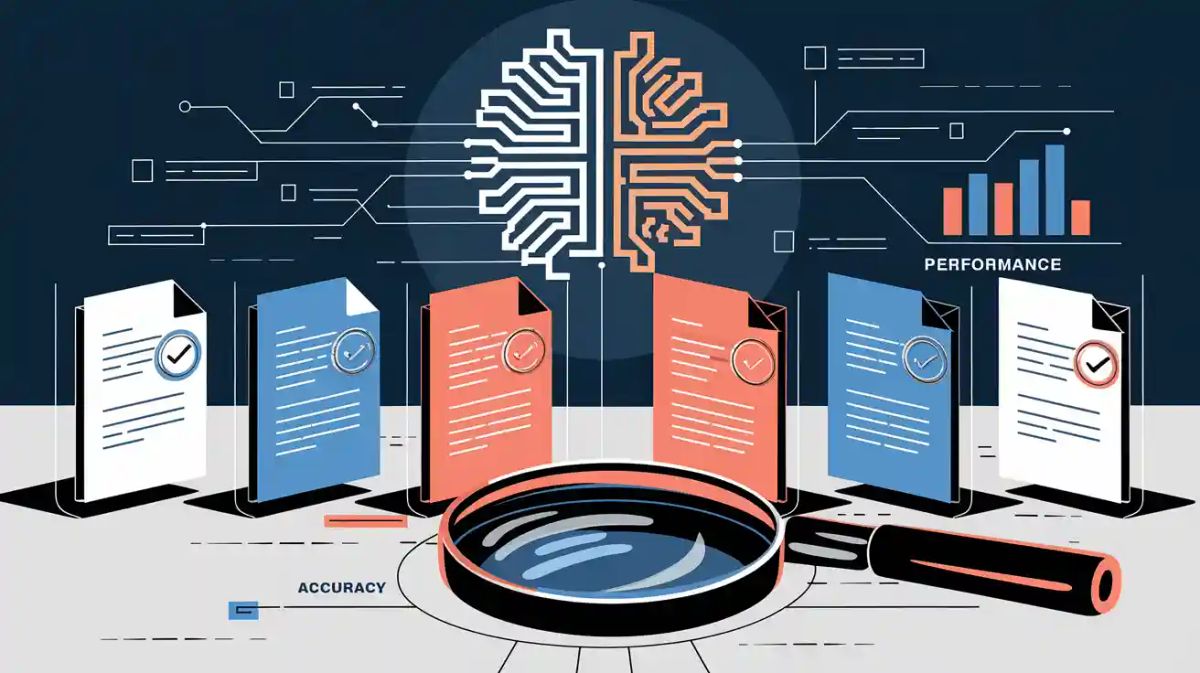
Winston AI is the most accurate ai document detector in 2025. Originality AI, GPTZero, Copyleaks, QuillBot, Ahrefs, and Sapling come next. Many schools, businesses, and publishers use ai content detectors. They want to keep documents original and trustworthy. Users want accuracy, reliability, and helpful features in ai detection tools. There is more ai-generated content online now. So, more people want ai content detectors. People need tools that give clear and honest results.
Key Takeaways
- Winston AI, Copyleaks, and Originality AI are the best at finding AI-made text in 2025. They are very accurate and reliable. - Pick AI detectors that fit what you need. Schools do well with GPTZero and Sapling. Businesses should use Winston AI. Content creators can use JustDone AI. - Many tools let you use them for free but only for a few words. You can try them before you pay for more features or more words. - AI detectors help keep writing honest. But they can make mistakes. Always check flagged results again to be sure. - Features like support for many languages, scanning many files at once, and detailed reports make AI detectors helpful for many jobs and people.
Quick Comparison
Key Metrics Table
Picking the best AI document detector depends on how well it works, how much you can trust it, and how much it costs. The table below shows how top tools did in 2025. This is based on what users said and on tests done by others.
Many people care about price and free word limits too. The chart below shows how many words you can check for free with each tool in 2025.
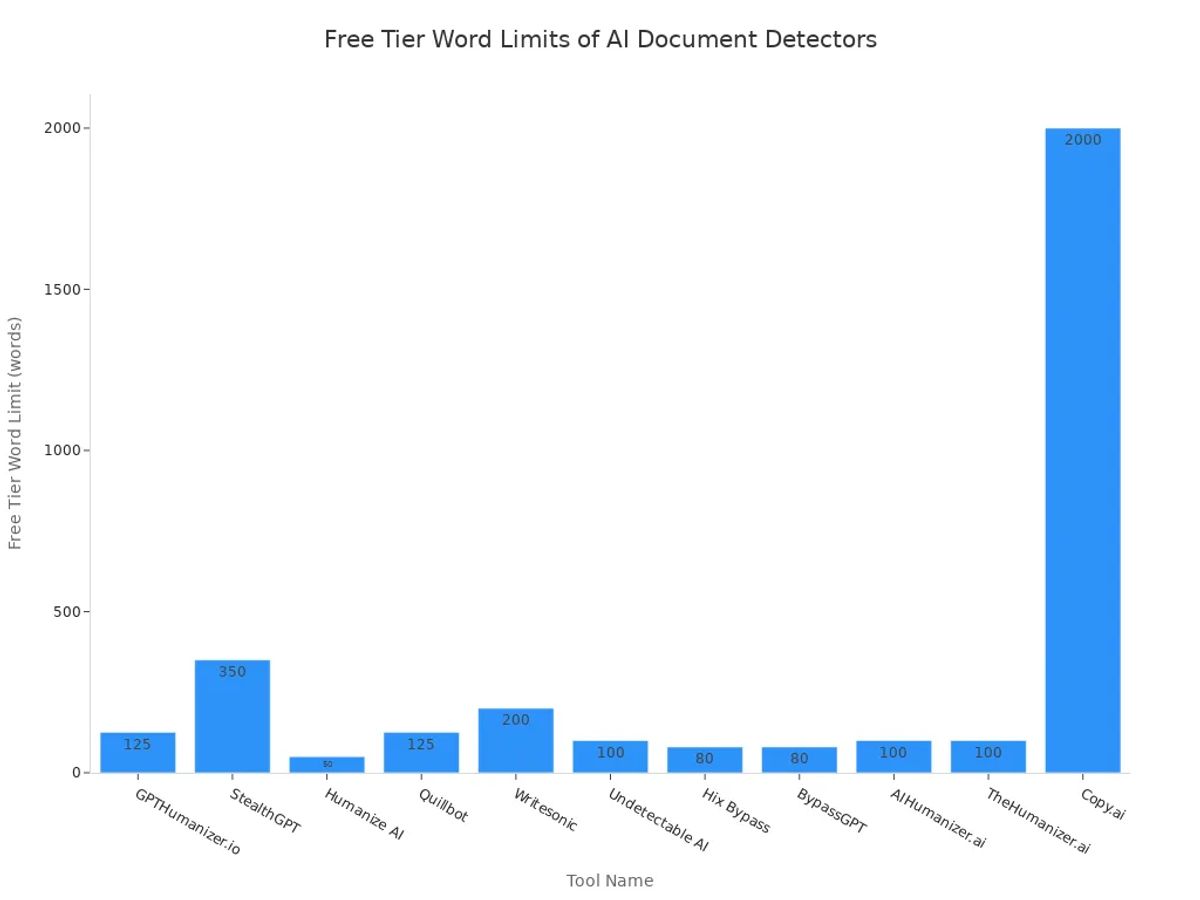
Note: Most tools let you use a free tier, but you can only check a certain number of words. If you pay, you can check more words or even unlimited words. Prices usually go from $8 to $30 each month.
Top Performers Overview
Some AI document detectors do better than others. Copyleaks gets the best scores in tests for being steady and trustworthy. Schools and research groups say Copyleaks works well, even with new AI models and mixed writing. Winston AI and Originality.ai also say they are very accurate, but they may not do as well if the text is changed or rewritten.
- Copyleaks : Most steady and trustworthy, keeps up with new AI models.
- Winston AI : Says it is very accurate, does well in normal tests.
- Originality.ai : Very accurate, few mistakes, best for text that is not changed.
When picking a tool, think about both how well it works and how many words you can check for free. If you want the most trustworthy tool, Copyleaks is the best. Winston AI and Originality.ai are also good choices for most people.
Comparison Criteria
Accuracy and Reliability
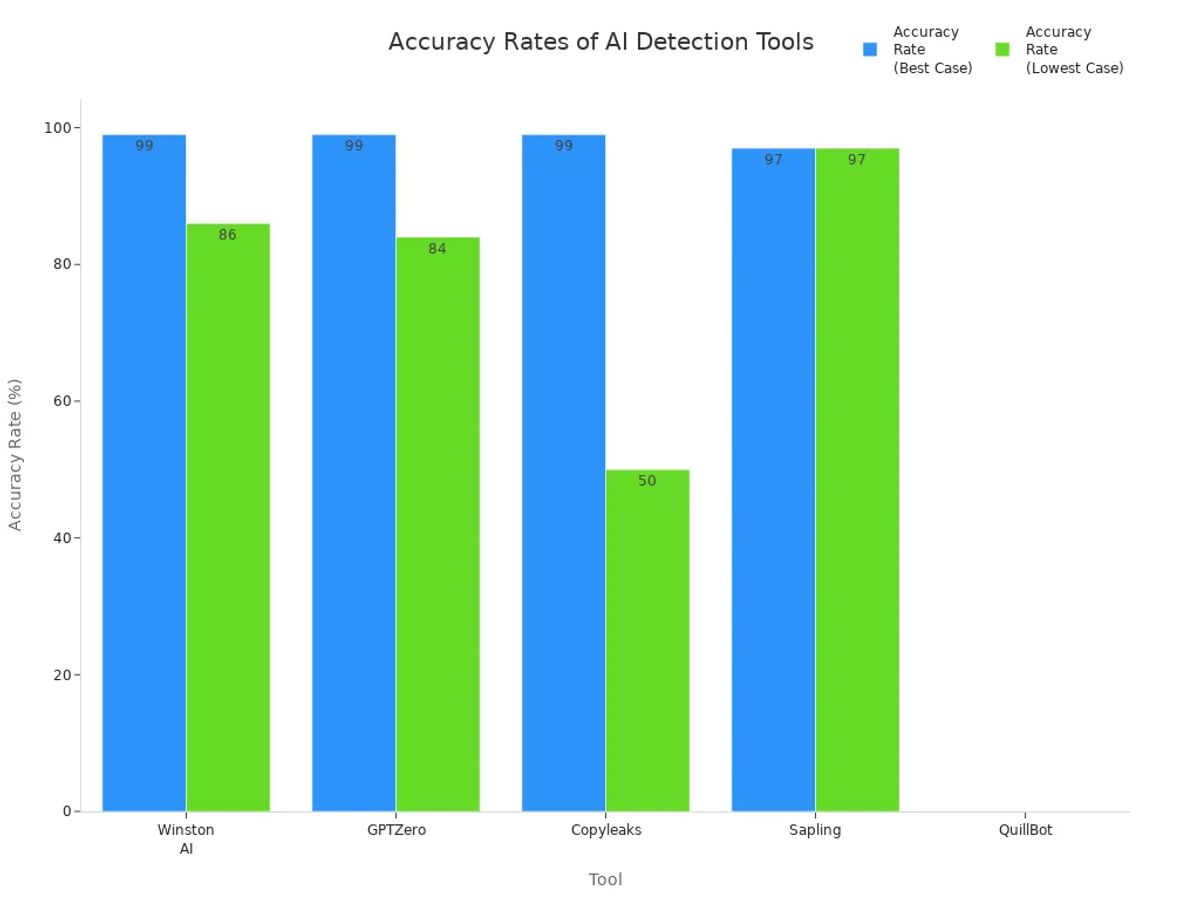
Accuracy and reliability are very important when picking an ai document detector. People want tools that can find ai-generated writing and not mix it up with human writing. Winston AI is very accurate and says it can reach 99.98% . Tests by others show its accuracy is between 86% and 99%. GPTZero does well with ai text that has not been changed, with 98-99% accuracy. But it is not as good with mixed articles. Copyleaks also does a great job, with over 99% accuracy and not many mistakes. But it does not do as well after someone changes the words. Sapling keeps its accuracy above 97% and makes less than 3% mistakes. QuillBot works best with only ai text but sometimes says human changes are ai.
Features and Integrations
Features and integrations help people get more from ai content detectors. Many tools now work well with other software. This makes work easier and saves time. For example:
- Sentence-level detection shows which lines might be ai.
- Bulk scanning lets you check many files at once.
- Built-in humanizer rewrites flagged parts to sound more real.
- Exportable reports and email summaries make sharing results easy.
- Security features watch who opens documents and stop misuse.
- Adaptive learning helps the system get better over time.
Winston AI can check many languages and finds changed words. GPTZero uses colors and checks each sentence closely. Copyleaks can check over 30 languages and even looks at code for ai use. These features make each ai document detector good for different jobs.
Free Tier and Pricing
Free tiers and clear prices help people try tools before paying. Most tools use subscriptions or charge by how much you use them. Free tiers let people test the tool’s value without paying first. Some tools let you check a certain number of words for free each month. This helps more people try and use ai document detectors. But people should look out for extra costs, like paying more for extra scans or special features.
User Experience
User experience is about how easy and nice it is to use an ai document detector. Tools with simple designs, fast checks, and clear reports get better reviews. If a tool works with other platforms, like Google Docs, it makes people happier. Features like seeing results easily and making work faster help users do better.
False Positives
Low false positives help people trust the tool. A false positive is when a tool says human writing is ai. Turnitin’s AI detector has about 4% false positives for sentences, even though it says less than 1% for big documents with lots of ai. Other tools often have more mistakes, especially with changed or mixed writing. No public ai document detector has reached the perfect rate of 0.01%. People should be careful and check flagged results again.
Testing Methodology
Evaluation Process
Testing AI document detectors needs a fair plan. Reviewers pick many types of documents to test each tool. They use both human and AI writing. These texts come from news, essays, reports, and stories. Reviewers also use mixed and changed samples to see what each detector can do. Each tool gets a score for accuracy, speed, and tough cases. Reviewers check for mistakes like false positives and negatives. They use a scoring system that gives points for right answers and takes away points for errors. Reviewers also see if the tool is easy to use and if it explains results well. Good AI testing checks more than just tech stuff. Reviewers look for bias, fairness, and safety. They make sure tools do not pick favorites or leak private info. Reviewers also check if tools follow rules like the EU AI Act, which wants fairness and clear results.
Note: Testing teams write down every step they take. This helps others repeat the tests and trust the results.
| Testing Methodology Area | Purpose and Focus | Examples / Tools / Notes |
|---|---|---|
| Data Quality Validation | Makes sure data is correct and fair | Checks for missing info, odd data, and balance |
| Model Validation Testing | Checks if results are right and work for new data | Looks at accuracy, precision, and recall |
| Bias and Fairness Testing | Finds unwanted bias | Tests for equal chances for all groups |
| Security Testing | Looks for attacks and leaks | Uses special tests for safety |
| Functional Testing | Checks if the system works with other tools | Tests APIs and full system |
| Performance Testing | Checks speed and how much power is used | Uses load tests |
| Ethical and Regulatory Testing | Makes sure rules are followed and results are clear | Uses audits and tools for fairness |
| Continuous Monitoring | Watches how tools work over time | Checks output and speed often |
| Documentation and Reproducibility | Keeps good records so others can check the work | Saves data, settings, and results |
Data Sources
Reviewers use many sample documents to test each AI detector . They use the 'Human vs. LLM Text Corpus' with both human and AI writing. This set covers lots of topics and styles. Reviewers also add documents in many languages and from science, business, and stories. The samples have different lengths, word choices, and punctuation. These things help testers see if the tool can find AI writing. Reviewers also use tricky samples, like changed or mixed texts, to see if detectors can handle real-world tricks.
| Evidence Aspect | Description |
|---|---|
| Benchmark Dataset | ‘Human vs. LLM Text Corpus' has both human and AI texts for strong tests |
| Dataset Diversity | Many genres and topics test if the model works everywhere |
| Text Attributes | Length, word choice, and punctuation help with detection |
| Statistical Significance | Length and word choice are most important for good results |
| Ethical and Robustness | Tricky and many-language samples help tools work better in real life |
| Genre and Register | Different genres change how well detectors work |
Reviewers pick these sources to make tests fair and strong. This helps users trust the results and choose the best AI document detector for them.
Top AI Document Detectors
Winston AI
Winston AI is a top tool for people in marketing and publishing. It finds AI writing with very high accuracy , up to 99.98%. Winston AI looks at language patterns and context to spot even changed AI text. You can check documents in 11 languages, and it stays accurate. The tool updates often to keep up with new AI writing tools.
| Feature Category | Winston AI Details |
|---|---|
| Positioning | Premium solution for marketing and publishing |
| Detection Accuracy | 99.98% accuracy, excels with edited AI content |
| Detection Approach | Deep linguistic and contextual analysis |
| Language Support | 11 languages, minimal accuracy loss |
| Model Updates | Frequent updates |
| Content Analysis | Readability, engagement, SEO, plagiarism, keyword density, uniqueness |
| Pricing Model | Subscription: $12/month (essential), $19-$32/month (mid-tier), enterprise options |
| API Access | Available at higher tiers |
| Comparison to GPTZero | More expensive, more features for professionals |
Winston AI gives extra details like how easy the text is to read and if it is good for SEO. It is best for publishers, marketers, and businesses who want the best AI paragraph detector. The main downside is that it costs more than other tools. But its many features and high accuracy make it a great pick for people who need strong analysis.
Originality AI
Originality AI is a trusted tool for checking if writing is by a human or AI. It is over 94% accurate and reliable, so it is one of the best AI paragraph detectors for businesses and publishers. This tool helps people check work from freelancers and keep content original. Originality AI is reliable, but sometimes it says human writing is AI. Users should always double-check flagged results before deciding. There is no free version, so you have to pay to use it. Originality AI is best for editors, publishers, and anyone who needs to make sure content is real.
GPTZero
GPTZero is easy to use and very accurate, especially for finding text from popular AI models. It uses a neural network trained on lots of data, so it can spot AI text in many types of writing.
| Feature Aspect | Details |
|---|---|
| Accuracy Rate | High accuracy, especially with GPT-generated content |
| Detection Method | Neural network-based, trained on human and AI text |
| Content Types Supported | Short posts to long essays |
| User Interface | Simple, intuitive, ideal for educators and students |
| False Positives | Possible with formal or technical writing |
| Speed | Fast analysis, results in seconds |
| Suitable User Groups | Educators, students, small content creators, reviewers |
GPTZero has a free version, so students and teachers can use it easily. It gives fast results and shows a score for each document. Some people say it sometimes marks formal or technical writing as AI. GPTZero is best for classrooms, small businesses, and anyone who needs quick, simple checks.
Copyleaks
Copyleaks is a flexible AI document detector with features for developers. It checks for AI-powered plagiarism in many file types and languages. Users get detailed reports and tips to make their writing better.
| Tool | Accuracy / Detection Strength | Key Features & User Experience Highlights |
|---|---|---|
| Copyleaks | No explicit accuracy metric provided | – Plagiarism detection in multiple formats and languages – Detailed reports – API for integration – Popular with companies |
| Winston AI | 99.98% accuracy | – Detects AI from many models – AI prediction map – Multi-format/language support – Chrome extension/API – Weekly updates |
| Originality | No explicit accuracy metric provided | – Machine learning-based plagiarism detection – In-depth reports – Optimization features – User-friendly interface |
| AI Detector Pro | No explicit accuracy metric provided | – Updated algorithms – Detailed reports – Easy input – Project management |
Copyleaks does not share an exact accuracy number, but many companies use it for checking content. The API lets developers add it to their own systems. Copyleaks is best for businesses that need to check many languages and want detailed reports.
QuillBot
QuillBot is a fast way to check for AI writing. It works in English, Dutch, German, Portuguese, French, and Spanish. The results are clear and easy to understand.
- QuillBot works in many languages, so it helps people around the world.
- The tool gives simple results that are easy to read.
- The AI Humanizer changes flagged text to sound more human, which saves time.
- Users get quick feedback, so they feel more sure about their writing.
- The free version lets you check up to 1200 words at once. The paid plan lets you check about 25,000 words each month.
QuillBot is good for students, writers, and anyone who needs to check writing fast. The main problem is that it is less accurate if the text is changed or rewritten. Still, it is a good choice for people who want to make sure their work is original.
Ahrefs
Ahrefs has AI detection as part of its bigger set of SEO and content tools. It helps users make their writing better for search engines and checks for AI text. Ahrefs does not give an exact accuracy number, but it works with keyword research, backlink checks, and site audits. Users like having all these tools in one place. Ahrefs is best for digital marketers, SEO experts, and agencies who want AI detection with other features. The main downside is that AI detection is not its main job, so it may not be as accurate as special tools.
Sapling
Sapling is a free AI document detector that is easy to use. It is about 68% accurate, which is lower than other tools. Sapling is best for quick checks and for people who want a simple, free tool. It does basic detection and works with messaging and CRM platforms. Sapling is good for small businesses, customer support teams, and people who need a light tool. The main problem is its lower accuracy, so do not use it for very important checks.
AI Document Detector Use Cases

Education
Schools and colleges use AI document detectors to keep things fair. Teachers want to see if students wrote their own work. These tools help find ai-generated writing and copied work. They check essays against big databases and look for writing styles. Many teachers use Turnitin, GPTZero, and Winston AI . Some schools also check college essays to make sure students are honest. AI detectors do not always get it right, so teachers still use their own judgment. The main goal is to stop cheating and teach students how to use AI the right way .
Note: AI detectors help keep schoolwork honest, but they work best when teachers also review the work.
Business
Companies use AI document detectors to keep their work safe and follow rules. These tools check documents like bank statements, IDs, and tax forms . They look for signs of fraud, like strange fonts or layouts. AI systems can find problems that people might not see. Businesses use these tools to check documents in many languages and countries. In banks and other places with rules, AI detectors help meet legal standards and keep data safe. Companies also teach workers to use these tools and check flagged documents. This helps stop fraud and keeps the company’s good name.
- AI detectors help find fake or changed documents.
- They make it easier to follow laws and keep records safe.
- Workers use both AI and their own checks for the best results.
Publishing
Writers and editors use AI document detectors to make sure articles and books are original. Publishers want to stop copying and keep readers’ trust. These tools scan stories, news, and research papers for copied or ai-generated writing. Editors use the results to decide if a piece needs more review. Many publishers use these tools before printing or posting online. This helps keep the quality of published work high.
Individual Users
Many people use AI document detectors for their own writing. Students check their homework before turning it in. Freelancers and bloggers want to make sure their work is unique. Some people use these tools to see if others copy their writing. Free and easy-to-use detectors help everyone check their work quickly. This gives users more confidence in their writing.
Summary and Recommendations
Key Takeaways
AI document detectors help keep writing honest in 2025. Many people use these tools at school, work, and for publishing. Each tool has special things it does best. Some are better for certain jobs than others. The table below shows what makes each tool different. It also lists their main good and bad points.
| Tool | Unique Features | Pros | Cons |
|---|---|---|---|
| GPTZero | Deep analysis of AI writing patterns | High accuracy; detailed reports | Less effective on rare AI models; varies by text |
| JustDone AI | AI detection plus content improvement and plagiarism checker | Good for content creators and marketers | Complex interface; struggles with advanced AI text |
| Sapling | Real-time feedback in Google Docs and MS Word | Instant feedback; easy to use | Free version limited; paid plan can be costly |
| Winston AI | Batch processing; advanced reporting | Saves time on large jobs; gives deep insights | Hard for beginners; high price for big features |
| ZeroGPT | Fast, simple detection with confidence score | Easy and quick to use | Less detail; higher chance of false positives |
AI-made writing is everywhere now. People need tools to check for fake or copied work. Good AI document detectors help teachers, writers, and companies stay honest.
Best Choices by Need
- For Schools and Teachers : GPTZero gives clear reports and works well for essays. Sapling helps with real-time feedback in Google Docs.
- For Businesses : Winston AI checks many files at once and gives deep reports. It is good for companies with lots of documents.
- For Content Creators and Marketers : JustDone AI finds AI writing and gives tips to improve. It helps writers keep their work new and original.
- For Quick Checks : ZeroGPT is fast and simple. It is best for people who want quick answers without lots of details.
- For Writers on a Budget : Sapling’s free version gives basic checks and is easy to use.
Tip: Pick a tool that fits your job and how much detail you want. Some tools are better for big projects. Others are best for quick checks. Always look at flagged results to make sure they are right.
Winston AI, Copyleaks, and Originality AI are the most accurate and reliable in 2025. Different people use these tools for their own needs.
- Content creators want their blog posts to be original . They also want to avoid problems with search engines.
- Academics and students check if research papers are real.
- Business leaders make sure documents are correct before sharing them.
- People with lots of files use bulk upload to save time.
- Writers use detection and Paraphraser to make their work better.
AI document detection is still changing and getting better. Readers can talk about their own experiences or ask questions in the comments.
FAQ
What is an AI document detector?
An AI document detector checks if writing is by a person or AI. It looks for clues and patterns in the words. Schools and businesses use these tools to keep work honest.
How accurate are AI document detectors?
Most top AI document detectors are over 90% accurate. Winston AI, Copyleaks, and Originality AI are the best at this. If someone changes the text, accuracy can go down.
Can AI detectors make mistakes?
AI detectors can make mistakes sometimes. They might say a person’s writing is AI or miss AI writing. Users should always check flagged results again.
Tip: Always double-check important documents for the best results.
Are there free AI document detectors?
Many AI document detectors have free versions. Free plans usually have word limits or fewer features.
| Tool | Free Tier Available? |
|---|---|
| GPTZero | Yes |
| Sapling | Yes |
| Winston AI | Yes |