
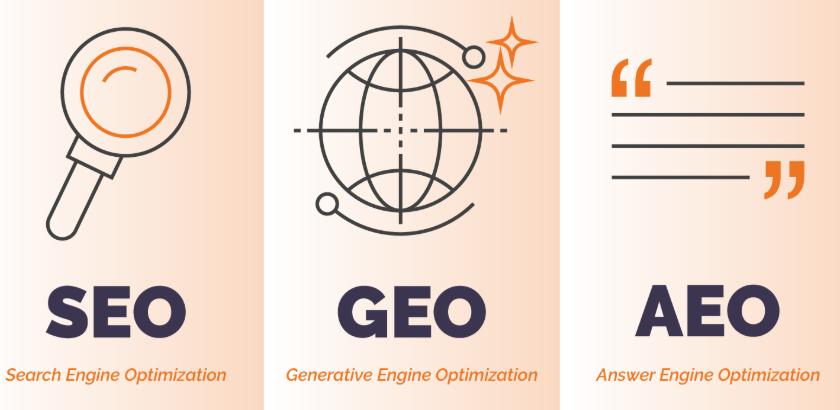
Is your brand visible where it matters most in the dynamic digital landscape of 2025? Relying on yesterday's tactics won't cut it anymore. As artificial intelligence fundamentally reshapes how users discover information, understanding the complex relationship of AEO vs SEO vs GEO has become the defining factor for online success. It's no longer sufficient to merely rank for keywords; you must now optimize for direct answers and generative AI outputs to capture modern traffic.
Navigating the specific differences between Search Engine Optimization (SEO), Answer Engine Optimization (AEO), and Generative Engine Optimization (GEO) is essential for maintaining a competitive edge. This comprehensive guide equips you with the knowledge to differentiate and integrate these powerful methodologies. We'll break down each strategy's unique role, highlight their powerful synergies, and offer actionable steps to unify your approach. Get ready to transform your digital marketing strategy and achieve sustainable growth by mastering visibility across every search front.
The Evolving Search Landscape: Understanding SEO, AEO, and GEO in 2025
The digital marketing landscape is rapidly evolving, with AI playing an increasingly significant role in how users find information. As we move deeper into 2025, relying solely on traditional optimization techniques is no longer viable. To maintain visibility, businesses must master a multi-faceted optimization approach that distinguishes between the nuances of AEO vs SEO vs GEO.
The Shifting Sands of Search: Why Old Strategies Aren't Enough
AI platforms are transforming search, shifting user behavior from simple query inputs to conversational interactions. The era of “10 blue links” is being overshadowed by AI-generated summaries and direct answers.
Insight: Users today expect immediate gratification. If your content cannot be parsed by an AI to provide a direct answer, you risk becoming invisible in the modern search ecosystem.
SEO: The Unshakeable Foundation of Organic Visibility
Despite the rise of AI, Search Engine Optimization (SEO) remains fundamental for website authority and organic traffic. It focuses on ranking in traditional search results by building a technically sound infrastructure and deep, valuable content. Without the authority established by SEO, advanced strategies like AEO cannot function effectively.
- Core Focus: Long-form content, backlinks, and technical health.
- Goal: Driving click-throughs to deep-dive resources.
AEO: Capturing the Moment with Direct Answers
Answer Engine Optimization (AEO) is critical for capturing zero-click searches. This strategy involves optimizing content specifically for featured snippets, knowledge graphs, and voice assistants (like Siri or Alexa). AEO structures data so that AI models can easily extract facts to answer user questions immediately without requiring a click.
GEO: Connecting Locally in an AI-Driven World
For brick-and-mortar enterprises, Geographic Targeting (GEO) is vital for local businesses to connect with nearby customers. This goes beyond simple keywords; it requires location-specific strategies and rigorous Google Business Profile optimization to appear in “Near Me” searches and AI-recommended local packs.
Comparative Strategy Overview
To visualize how these strategies differ yet complement one another, consider the following breakdown:
| Feature | SEO (Search Engine Optimization) | AEO (Answer Engine Optimization) | GEO (Geographic Targeting) |
|---|---|---|---|
| Primary Goal | Build authority & drive site traffic | Provide immediate, direct answers | Drive local foot traffic & calls |
| Target Result | Page 1 Organic Ranking | Featured Snippet / Voice Answer | Local Pack / Map Listing |
| Content Style | Comprehensive, long-form guides | Concise, Q&A format, Structured Data | Location-specific pages & Reviews |
| Key Metric | Click-Through Rate (CTR) | Zero-Click Impressions | Store Visits & Route Requests |
2025: A Deep Dive into SEO, AEO, and GEO Strategies
As the digital landscape evolves in 2025, visibility requires more than just ranking for a single keyword. It demands a holistic understanding of how users interact with information across different platforms. The distinction between AEO vs SEO vs GEO defines the modern marketing funnel, where traditional search, voice assistance, and location-based intent converge. Success now depends on mastering the unique mechanics of each discipline while ensuring they operate in unison.
Mastering SEO: Core Elements for 2025 Success
Search Engine Optimization (SEO) remains the bedrock of digital authority. In 2025, SEO involves rigorous keyword research to understand the evolving language of your audience. On-page optimization has shifted focus toward deep content quality and precise meta tags that improve click-through rates.
“Without a technical foundation, content cannot perform. Site speed and mobile-friendliness are not just features; they are prerequisites for ranking.”
Off-page SEO continues to rely on high-quality backlinks to establish trust. However, technical SEO is the critical enabler; ensuring site speed and mobile-friendliness is non-negotiable for retaining users and satisfying Core Web Vitals.
Leveraging AEO: Optimizing for Instant Answers and Voice
Answer Engine Optimization (AEO) addresses the “zero-click” generation. AEO focuses on structured data and clear Q&A formatting to help AI algorithms parse information instantly. This strategy is essential for optimizing for featured snippets and voice search, where the goal is to be the single, authoritative answer read aloud by a device.
To succeed here, content strategies must pivot toward conversational keywords. Instead of fragmented search terms, AEO targets complete sentences and natural language questions, ensuring your content provides the direct, concise response that AI assistants prioritize.
The Power of GEO: Winning Local Search in 2025
For businesses with a physical presence, GEO utilizes local SEO tactics to capture high-intent traffic. This strategy centers on rigorous Google Business Profile (GBP) optimization to ensure accurate maps visibility.
Effective GEO goes beyond basic listings; it requires the creation of location-specific landing pages that resonate with regional nuances. Furthermore, deploying geo-targeted ads ensures that your brand appears exactly when a user signals local intent, effectively bridging the gap between online search and offline foot traffic.
Synergies: How SEO, AEO, and GEO Work Together
Integrating these strategies is key to comprehensive coverage. SEO builds overall authority and long-term organic growth, AEO captures quick answers for users in a hurry, and GEO ensures local relevance for immediate needs. Understanding user intent across different search types is crucial for effective optimization in 2025.
Comparison of Optimization Strategies:
| Feature/Metric | SEO (Search Engine Optimization) | AEO (Answer Engine Optimization) | GEO (Geo-Targeted Optimization) |
|---|---|---|---|
| Primary Goal | Drive traffic to deep content | Provide immediate, direct answers | Drive local foot traffic & calls |
| Key Tactic | Keywords, Backlinks, Content | Structured Data, Q&A Format | Google Business Profile, Local Pages |
| User Interface | Desktop/Mobile SERP Lists | Voice Assistants, Featured Snippets | Maps, Local Packs, “Near Me” |
| Content Style | Comprehensive, Long-form | Concise, Conversational, Direct | Localized, Address-focused |
By leveraging the strengths of each approach, businesses can ensure they are visible whether a user is researching a topic, asking a voice assistant a question, or looking for a store nearby.
2025: Comprehensive Review of Leading Optimization Approaches
As we navigate the digital landscape of 2025, the days of relying solely on traditional search rankings are over. A holistic digital strategy now requires a nuanced understanding of how information is retrieved, processed, and presented by machines. Success today depends on mastering the triad of visibility: the foundation of search, the precision of answers, and the authority of generative AI.
Search Engine Optimization (SEO): The Foundational Pillar
Search Engine Optimization (SEO) remains the foundational practice for website visibility in organic search results. While new technologies emerge, the traditional index is still the primary database for the internet. SEO ensures that search crawlers can access, understand, and rank your digital assets.
In 2025, effective SEO involves a rigorous focus on keyword optimization, ensuring that the language on a page matches user intent. It also encompasses:
- On-page SEO: Optimizing content quality and relevance.
- Off-page SEO: Building authority through backlinks.
- Technical SEO: Improving site speed, mobile usability, and crawlability.
“Without strong technical SEO, even the best content remains invisible to the algorithms that power the web.”
Answer Engine Optimization (AEO): The Quick Answer Specialist
Answer Engine Optimization (AEO) optimizes content for direct answers in zero-click searches and voice assistants. As users increasingly demand immediate gratification via smart speakers or “featured snippets,” AEO ensures your brand provides the definitive solution.
Key features of AEO strategies include the heavy use of structured data (Schema markup) to help machines parse facts, and Q&A formatting that mimics natural conversation. By leveraging semantic SEO, creators can structure content to answer specific queries concisely, securing the coveted “position zero.”
Generative Engine Optimization (GEO): Navigating the AI Frontier
Generative Engine Optimization (GEO) is the newest discipline, designed to optimize content for AI-powered generative search engines (like ChatGPT Search or Google's AI Overviews). Unlike AEO, which seeks a snippet, GEO focuses on influencing the synthesis of information.
GEO prioritizes authoritative, long-form content and natural language patterns that Large Language Models (LLMs) find easy to ingest and cite. It relies heavily on credibility signals—such as expert authorship and statistical depth—to ensure the AI cites your brand as a primary source.
Strategic Comparison: AEO vs SEO vs GEO
| Feature | SEO (Search) | AEO (Answer) | GEO (Generative) |
|---|---|---|---|
| Primary Goal | Ranking in blue links | Direct, zero-click answers | AI citations & synthesis |
| Target Mechanism | Search Spiders/Crawlers | Voice Assistants & Snippets | Large Language Models (LLMs) |
| Content Focus | Keywords & User Intent | Facts & Q&A Format | Authority & Context |
| Success Metric | Click-Through Rate (CTR) | Voice Readout / Position 0 | Brand Mention / Citation |
Future-Proofing Your Digital Strategy for 2025 and Beyond
As we approach 2025, the digital landscape is shifting rapidly from static index retrieval to dynamic, intent-based discovery. To maintain a competitive edge, businesses must evolve their digital presence from a single-channel focus to a multi-dimensional ecosystem that anticipates user needs before they are explicitly typed.
The Growing Impact of Artificial Intelligence on Search
AI's increasing sophistication in search algorithms demands more nuanced content and a deeper understanding of user intent. It is no longer sufficient to simply match keywords; brands must provide contextually rich answers that satisfy complex queries. Search engines have transitioned into “answer engines,” prioritizing content that demonstrates high levels of E-E-A-T (Experience, Expertise, Authoritativeness, Trustworthiness).
Strategic Insight: E-E-A-T principles are vital for both SEO and GEO in AI-driven environments. Without clear signals of expertise and trust, AI models will exclude your content from generative snapshots, regardless of your traditional keyword density.
Integrating AEO, SEO, and GEO for Holistic Growth
A unified strategy integrating SEO, AEO, and GEO is essential to cover all user touchpoints and maximize visibility. Understanding the interplay of AEO vs SEO vs GEO is critical for modern optimization. While SEO targets the traditional list of links, AEO (Answer Engine Optimization) focuses on being the single “correct” answer for voice assistants, and GEO (Generative Engine Optimization) aims to influence the AI-generated summaries that now top search results.
To visualize how these distinct strategies function within a unified campaign, consider the following comparison:
| Feature | SEO (Search Engine Optimization) | AEO (Answer Engine Optimization) | GEO (Generative Engine Optimization) |
|---|---|---|---|
| Primary Goal | Rank high on SERP links | Provide direct, spoken answers | Influence AI-generated summaries |
| Target Audience | Web browsers & readers | Voice search & mobile users | AI Chatbot & SGE users |
| Content Structure | Comprehensive, long-form | Conversational, Q&A format | Fact-based, authoritative citations |
| Success Metric | Click-Through Rate (CTR) | Position Zero / Snippets | Brand mention in AI output |
Common Pitfalls to Avoid in 2025 Optimization
Neglecting any one of these optimization pillars can lead to missed opportunities and reduced overall effectiveness. A frequent error is viewing these disciplines in isolation. For instance, failing to claim a Google Business Profile hurts both local SEO and your eligibility for GEO citations.
To avoid fragmentation, utilize specialized tools to streamline management and provide valuable insights. Platforms like SEMrush and Ahrefs remain indispensable for SEO data, while AppTweak can offer unique insights for AEO within app ecosystems. By leveraging these tools to build a cohesive data layer, brands can ensure they remain visible whether a user types a query, asks a smart speaker, or prompts an AI chatbot.
FAQ (Frequently Asked Questions)
Q1: How has AI changed the importance of traditional SEO?
A1: AI has not diminished the importance of traditional SEO; rather, it has elevated it. Strong SEO forms the foundational authority and technical infrastructure that AI systems rely on to identify credible and relevant information. While SEO's primary goal remains driving traffic, its role is now to feed the systems that power AEO and GEO.
Q2: What is the key difference between AEO and GEO?
A2: The key difference lies in their primary objective. AEO focuses on providing a single, direct answer to a specific question, often for voice search or featured snippets. GEO, on the other hand, aims to influence how AI synthesizes information from multiple sources to create comprehensive summaries or answers, prioritizing authority and context.
Q3: Can a business focus on just one of these strategies (SEO, AEO, or GEO) for 2025 growth?
A3: Focusing on just one strategy is highly risky for comprehensive digital growth in 2025. While a strong SEO foundation is crucial, neglecting AEO means missing out on zero-click opportunities and voice search traffic. Similarly, ignoring GEO means losing out on local customers and AI's evolving generative search capabilities. An integrated approach is essential.
Q4: How can I ensure my content is optimized for both AEO and GEO?
A4: To optimize for both, ensure your content is structured with clear Q&A formats and uses schema markup for AEO. Simultaneously, focus on building authority through in-depth, well-researched content, expert authorship, and strong citation signals for GEO. The goal is to be both easily digestible for direct answers and authoritative enough for AI synthesis.
خاتمة
As we look toward the horizon of 2025, achieving sustainable digital success demands a sophisticated understanding of the evolving search landscape. Mastering the nuances of AEO vs SEO vs GEO is no longer optional; it is the cornerstone of modern digital growth. We have established that while traditional SEO provides the necessary foundational authority and technical structure, Answer Engine Optimization (AEO) is essential for capturing the immediate, direct answers sought by voice search and chatbots. Simultaneously, Generative Engine Optimization (GEO) serves as the critical link to maintaining local relevance and visibility amidst the rapid rise of AI-driven search experiences.
To turn these insights into tangible results, immediate action is required. Begin by conducting a comprehensive audit of your current digital marketing ecosystem to identify specific gaps in your SEO, AEO, and GEO performance. Move beyond siloed tactics by developing a cohesive, integrated plan that prioritizes user intent above all else. Your content strategy must evolve to be authoritative, answer-centric, and hyper-locally relevant to satisfy the algorithms of tomorrow. By embracing these AI advancements now, you ensure your brand remains resilient and discoverable across all platforms.
The future represents a massive opportunity for those prepared to adapt. Ready to elevate your 2025 digital growth? Share this guide with your team to foster collaboration and start building your integrated optimization strategy today! Don't forget to subscribe for more cutting-edge insights on navigating the future of search.