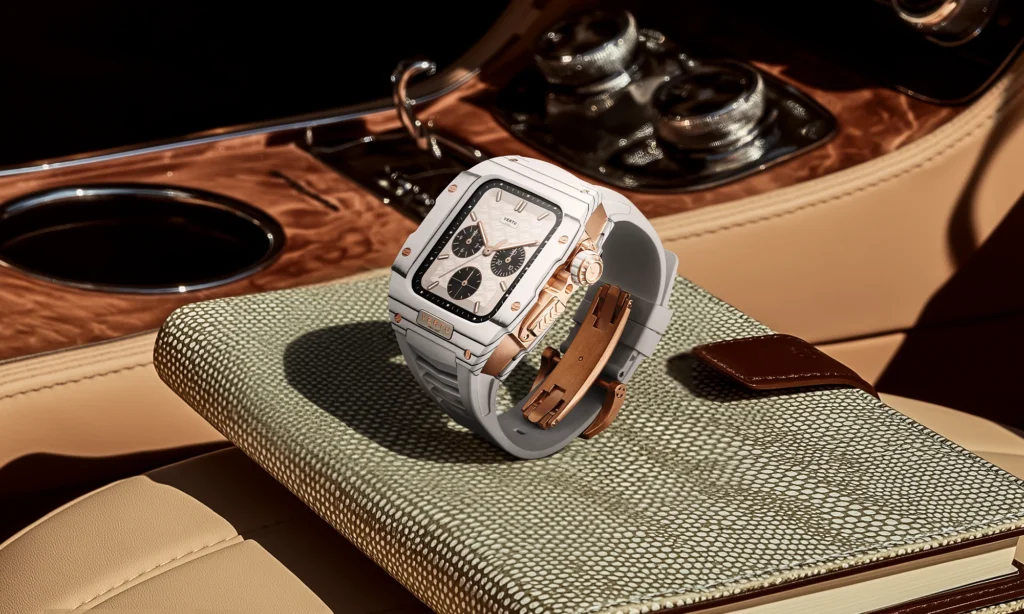
In the world of high-end horology, owning a beautiful timepiece is merely the starting line; possessing something truly unique is the ultimate victory. As we move into 2025, the definition of prestige has shifted from simple brand recognition to absolute scarcity. For the modern enthusiast, understanding the nuance of exclusivity is essential for building a portfolio that stands the test of time.
This is where knowing the specific luxury watch brand ranks for rarity becomes your most valuable asset. It is no longer just about wearing a famous logo, but about securing a piece of history that few others can claim.
In this comprehensive guide, we will explore the elite manufacturers that prioritize limited production and artisanal craftsmanship over mass appeal. We will delve into the specific criteria that define true scarcity and reveal the top brands you need to watch this year. Whether you are a seasoned investor or starting your journey, this analysis will help you navigate the US market and identify the coveted treasures that define the pinnacle of collecting.
Understanding Rarity: Why Price Does Not Equal Scarcity
In the sophisticated realm of haute horlogerie, a common misconception persists: that the most expensive watches are inherently the rarest. However, true connoisseurs understand that price is often a reflection of materials—such as diamond settings or platinum cases—rather than genuine scarcity. Rarity is an experience of exclusivity, defined not by the sticker price, but by the difficulty of acquisition and the uniqueness of the engineering.
Defining True Rarity in Luxury Timepieces
To truly understand where a specific luxury watch brand ranks for rarity, one must look past marketing hype. Rarity isn't just about high price; it is about limited production numbers and exclusivity. A modern gold timepiece might cost upwards of $50,000, yet if the manufacturer produces 10,000 units annually, it is merely expensive, not rare.
Conversely, a stainless steel vintage chronograph produced in limited quantities during the 1950s may have commanded a lower retail price originally but holds immense rarity value today due to survival rates and historical context.
“True rarity is not manufactured by a waitlist; it is forged by history, limited production, and the impossibility of replication.”
Key Factors That Drive Watch Scarcity
Several distinct elements elevate a timepiece from a luxury commodity to a rare collectible. Factors like discontinued models, unique complications, and historical provenance significantly impact scarcity. A watch that was once a commercial failure and subsequently discontinued can ironically become a “grail” item decades later due to low production numbers.
Furthermore, mechanical complexity plays a pivotal role. High-complication watches, such as minute repeaters or perpetual calendars, require hundreds of hours of hand-finishing. This labor-intensive process naturally limits the number that can be created in a single year, ensuring exclusivity.
Comparison: Manufactured Scarcity vs. Genuine Rarity
| Feature | Manufactured Scarcity (Hype) | Genuine Rarity (Collectible) |
|---|---|---|
| Production Volume | High volume, but supply is artificially throttled. | Low volume due to complexity or limited run. |
| Primary Value Driver | Current market trend and brand marketing. | Historical significance, provenance, or mechanics. |
| Availability | Available if you wait long enough or pay a premium. | Often only available via auction or private sale. |
| Long-term Outlook | Value may fluctuate as hype dies down. | Value tends to remain stable or appreciate. |
Rarity vs. Desirability: The Collector’s Sweet Spot
Possessing a rare watch is meaningless if the market lacks interest. The most valuable timepieces often sit at the intersection of rarity and strong market demand. A prototype watch from a defunct brand might be “one-of-a-kind,” but without historical importance or aesthetic appeal, it remains a curiosity rather than an asset.
Collectors must learn to distinguish between ‘hard to find'—often a result of supply chain constraints on popular modern models—and genuinely rare pieces that boast unique dials, specific serial number ranges, or documented ownership by historical figures. It is this sweet spot, where scarcity meets storytelling, that defines the pinnacle of watch collecting.
The Elite List: Top Luxury Watch Brands Where Rarity Reigns Supreme
In the sophisticated landscape of 2025 horology, the definition of luxury has transcended price tags to focus almost exclusively on accessibility—or the lack thereof. For the discerning collector, the thrill lies in the chase for the unattainable.
As the market matures, understanding how a luxury watch brand ranks for rarity becomes the primary metric for investment and prestige. It is an arena where history, artistry, and controlled supply converge to create assets that are as elusive as they are beautiful.
Masters of Allocation: Patek Philippe and Audemars Piguet
Patek Philippe and Audemars Piguet remain the titans of the industry, mastering the delicate balance between high demand and restricted supply. These heritage brands do not merely manufacture timepieces; they curate scarcity. Brands like Patek Philippe and Audemars Piguet consistently produce highly sought-after, limited-run models that define the market standard for exclusivity.
For Patek Philippe, rarity is often a matter of allocation rather than just production numbers. Grand Complications are produced in such limited quantities that potential buyers must often pass an application process to prove their worthiness as custodians.
Similarly, Audemars Piguet utilizes limited editions of the Royal Oak Offshore and concept pieces to maintain a feverish demand. The experience of owning one of these pieces is akin to membership in a secret society; it is a testament to patience and status.
Independent Innovators: F.P. Journe and Grönefeld
While the giants rely on allocation, independent manufacturers often prioritize rarity through low production numbers and unique craftsmanship. For innovators like F.P. Journe and the Grönefeld brothers, rarity is a physical constraint of their artisanal process.
These “Indies” operate ateliers rather than factories. F.P. Journe, for instance, produces fewer watches in a year than major brands produce in a week. The “Horological Brothers” Tim and Bart Grönefeld create movements with specific stainless steel bridges and intricate finishing that simply cannot be mass-produced. The value here is derived from the human hand; every bevel and polish represents hours of a master watchmaker's life, ensuring that no two pieces are ever truly identical in spirit.
| Rarity Factor | Heritage Giants (Patek, AP) | Independent Innovators (FPJ, Grönefeld) | Vintage Icons (Rolex, Omega) |
|---|---|---|---|
| Source of Scarcity | Strategic allocation & waiting lists | Physical production limits (Artisanal) | Discontinuation & finite supply |
| Market Driver | Brand prestige & global recognition | Technical mastery & artistic expression | Nostalgia, provenance, & condition |
| Acquisition Style | Relationship-building with ADs | Direct waitlists or auctions | Auctions & specialized dealers |
Vintage Icons: Discontinued Rolex and Omega Gems
Rarity is not always about what is being made today, but what can never be made again. Vintage pieces from brands like Rolex and Omega, especially discontinued models, represent significant rarity and investment potential.
In 2025, the hunt for “neo-vintage” and true vintage pieces has intensified. A discontinued Rolex Submariner with a specific dial variation or an Omega Speedmaster with a rare caliber carries a historical weight that modern equivalents cannot replicate. These watches offer a tactile connection to the past—faded bezels and patinated dials tell a story of eras gone by. They are finite treasures; once they disappear into private collections, they may not resurface for decades.
The ‘Grail Watch' Phenomenon: Scarcity Meets Demand
Ultimately, scarcity alone does not create a “Grail Watch.” Understanding market demand is crucial; a rare watch is only truly valuable if collectors desire it. A limited run of 50 watches is meaningless if there are no buyers, but when that scarcity meets the voracious appetite of the global collecting community, magic happens.
“True rarity is the intersection of low supply and high emotional resonance. It is not just about being hard to find; it is about being impossible to forget.”
The allure of the grail lies in this tension. Whether it is a unique piece from an independent master or a discontinued reference from a major house, the value is sustained by the collective desire of the market. In 2025, the most successful collectors are those who can identify where genuine scarcity aligns with enduring horological passion.
Navigating the US Market for Rare Timepieces in 2025
As the horological landscape evolves, the United States remains a premier destination for high-end watch collecting. Entering 2025, the market is defined by a sophisticated appreciation for assets that offer both aesthetic mastery and financial resilience. For the modern enthusiast, navigating this terrain requires a blend of passion and strategic foresight.
Collector Preferences in the United States
US collectors highly value exclusivity, investment potential, and the unique stories behind specific references. It is no longer sufficient to simply own a luxury timepiece; the focus has shifted to limited production runs and historical significance.
Consequently, understanding how a specific luxury watch brand ranks for rarity is now a fundamental step in the purchasing journey. Collectors are increasingly gravitating toward pieces that serve as tangible assets, prioritizing models that promise value retention alongside mechanical excellence.
Sourcing Rare Finds: Authorized Dealers vs. Secondary Market
Thorough research is essential when navigating both authorized channels and the secondhand market for rare finds. While Authorized Dealers (ADs) offer the highest security, the secondary market provides access to discontinued and vintage treasures.
| Aspect | Authorized Dealers (Primary) | Secondhand / Grey Market |
|---|---|---|
| Availability | Restricted; often requires waitlists | Immediate access to diverse inventory |
| Pricing | Fixed MSRP | Market-driven; varies by demand and condition |
| Authenticity | Guaranteed 100% | Requires vetting and third-party authentication |
| Selection | Current production models only | Includes vintage, discontinued, and rare limited editions |
The Importance of Provenance and Authenticity
For investment-grade watches, the physical condition is secondary only to history. Documented provenance is critical for verifying authenticity and maximizing value. A “full set”—comprising the original box, warranty papers, and manual—can significantly increase a timepiece's market value.
In the absence of original papers, an “Extract from the Archives” or service history from the manufacturer serves as essential validation. Buyers must scrutinize these documents to ensure the asset is genuine and unadulterated.
Future Trends: What to Watch in 2025 and Beyond
The demand for rare and historically significant timepieces is expected to continue growing in 2025. As major brands increase production of standard models, true scarcity becomes the ultimate luxury. We anticipate a surge in interest toward independent watchmakers and “neo-vintage” pieces from the 1990s and early 2000s, where lower production numbers offer the exclusivity that American collectors deeply desire.
FAQ (Frequently Asked Questions)
Q1: What is the primary difference between a watch being “expensive” and a watch being “rare”?
A1: An expensive watch primarily derives its high cost from premium materials, intricate complications, or brand prestige. A rare watch, however, is defined by its limited production numbers, difficulty of acquisition, historical significance, or unique characteristics that make it hard to find. A watch can be expensive without being rare, and conversely, a rare watch might not always command the highest price if market demand is low.
Q2: How can I verify the authenticity and rarity of a pre-owned luxury watch?
A2: Verifying authenticity and rarity involves several steps. Always seek a “full set” which includes original box, papers, and manuals. For vintage pieces, look for documented provenance, such as historical records or previous ownership details. Obtaining an “Extract from the Archives” from the manufacturer or a reputable third-party authentication service is crucial. Researching the specific reference number, production year, and known production quantities will help ascertain its rarity.
Q3: Are independent watch brands generally rarer than established luxury brands?
A3: Yes, independent watch brands (often referred to as “Indies”) typically produce significantly fewer watches annually than established luxury brands. Their focus is often on artisanal craftsmanship, unique complications, and limited runs, making their pieces inherently rarer due to physical production constraints rather than strategic allocation.
Q4: How does the secondary market impact the rarity and value of luxury watches?
A4: The secondary market plays a crucial role in accessing rare timepieces, especially discontinued or vintage models that are no longer available from authorized dealers. While it offers immediate access, it also means prices are market-driven and can fluctuate based on demand. The availability of rare pieces on the secondary market can also influence their perceived rarity and value.
خاتمة
As we look ahead to 2025, the landscape of high-end horology continues to evolve, making the pursuit of truly unique timepieces more exciting and rewarding than ever before. Throughout this guide, we have explored how true scarcity is defined not just by price, but by limited production runs, intricate mechanical features, and unmatched desirability. Consequently, understanding the specific luxury watch brand ranks for rarity has become a vital skill for any serious enthusiast. It is the key to curating a portfolio that offers both personal prestige and the potential for significant appreciation in value.
To navigate this exclusive market successfully, your approach should be both passionate and strategic. Start by dedicating time to research the brands known for their extreme exclusivity, paying close attention to official production numbers rather than marketing hype. Whether you are chasing a masterpiece from an independent artisan or a “ghost” reference from a legendary maison, always prioritize verified authenticity and documented provenance above all else. These factors are the ultimate safeguards for your investment when making a significant purchase.
Ready to elevate your watch collection with a truly rare timepiece? Explore our curated selection of exclusive watches or consult with our horological experts to find the perfect rare addition that aligns with your investment goals and personal taste. Your journey into unparalleled exclusivity begins now!
Powered by OpenSEO.