 As you gear up for your next big expedition in 2026, every piece of equipment matters—right down to the dependable timekeeper strapped to your wrist. Choosing between a traditional hand-wound timepiece and a modern self-winding companion is more than just a matter of style; it ultimately defines how you interact with time in the wild.
For many enthusiasts, the rugged appeal of a timex mechanical field watch offers a tactile connection to horological history that quartz or smartwatches simply cannot replicate. Yet, the seamless convenience of an automatic movement provides a distinct “set it and forget it” reliability that often appeals to the busy, modern explorer.
In this guide, we will dissect the crucial differences between these two iconic movements to see which one aligns best with your specific outdoor lifestyle. From examining their unique mechanisms to comparing popular models, we will ensure you make an informed choice for your upcoming adventures. Let’s discover which timepiece suits you best.
Timex Mechanical Field Watch Versus Automatic: The 2026 Showdown
The choice between manual and automatic movements defines the ownership experience for watch enthusiasts in 2026. This decision impacts how a user interacts with their timepiece daily. Below, we examine the mechanics, specifications, and distinct advantages of the timex mechanical field watch against its automatic counterparts.
1. Understanding Watch Movements: The Heart of Your Field Watch
The fundamental difference lies in power generation.
Hand-Wound Watches: These require the wearer to manually rotate the crown. This physical action tightens the mainspring inside the movement, creating a direct, tactile connection between the user and the mechanism.
Automatic Watches: These harness kinetic energy. A weighted rotor spins with the natural motion of the wearer's wrist. This spinning action winds the mainspring automatically.
Both systems operate as mechanical movements, distinct from battery-powered quartz options, offering a soul and longevity that electronics cannot match.
2. Timex Expedition North Field Mechanical: The Tactile Choice for 2026
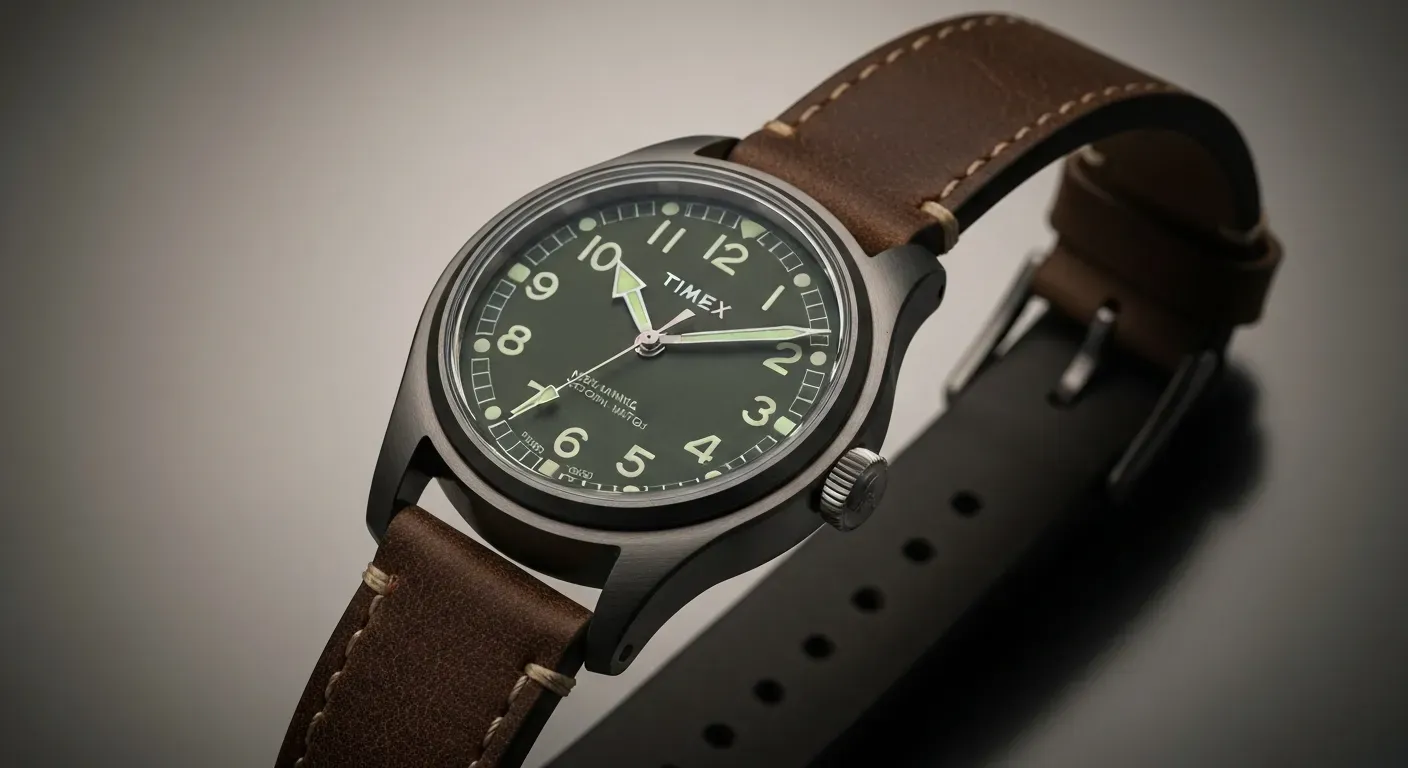
إن timex mechanical field watch serves as a prime example of the hand-wound category. Specifically, the Expedition North Field Mechanical features a versatile 38mm stainless steel case, a dimension that suits a wide variety of wrist sizes comfortably.
It provides 100m water resistance, ensuring reliability during river crossings or heavy rain. Furthermore, an anti-reflective sapphire crystal protects the dial from scratches and glare, a specification that significantly enhances legibility in bright sunlight.
“The appeal lies in its traditional watchmaking charm and direct user interaction with the mechanism.”
Owners must wind the watch to keep it running. This daily ritual appeals to those who value simplicity. It creates a grounding routine for 2026 adventures, separating the timepiece from the “always-on” nature of digital devices.
3. Automatic Watches: Convenience Meets Capability in 2026
Automatic watches offer set-and-forget convenience. The mechanism relies entirely on wrist movement to maintain power, eliminating the requirement for daily winding. Active individuals often prefer this system for continuous hiking or trekking where stopping to adjust gear is minimized.
Features like the “seconds hack” appear in many modern automatic and hand-wound watches. Pulling the crown out stops the second hand completely. This function allows for precise time synchronization with a reference clock or team members—a critical feature for coordinated navigation.
4. Key Contenders: Hamilton Khaki Field Automatic & Seiko 5
While Timex dominates the manual sector, other brands excel in automatics.
إن Hamilton Khaki Field Automatic utilizes the Swiss H-10 automatic movement. This caliber boasts an impressive 80-hour power reserve, allowing the watch to sit off the wrist for three days without stopping.
إن Seiko 5 line offers an accessible alternative. These watches typically house the NH35A automatic movement. This Japanese movement provides exceptional durability for everyday wear. Both contenders present distinct specifications compared to the manual Timex.
| Feature | Timex Expedition North (Mechanical) | Hamilton Khaki Field (Automatic) | Seiko 5 (Automatic) |
|---|---|---|---|
| Movement Type | Hand-Wound Mechanical | Automatic (Self-Winding) | Automatic (Self-Winding) |
| Caliber/Engine | Mechanical (Generic) | Hamilton H-10 | Seiko NH35A |
| Power Reserve | ~38-40 Hours (Est.) | 80 Hours | ~41 Hours |
| Water Resistance | 100m | 100m | 100m (Typical) |
| Crystal | الياقوت | الياقوت | Hardlex (Mineral) |
5. What is Field Watch DNA?
Field watch DNA consists of four core traits: legibility, durability, simplicity, and functionality. Designers prioritize these characteristics for outdoor utility. The dial must remain readable in low-light conditions or under stress.
Rugged construction is non-negotiable to withstand impact during military operations or general adventuring. Brands like Bertucci demonstrate this DNA through solid unibody cases. Their designs focus strictly on survival and time-telling efficiency without unnecessary complications.
6. Beyond Timex: Other Notable Field and Military Watches for 2026
Materials play a crucial role in modern selection. Titanium field watches offer a lightweight alternative to steel. Manufacturers use titanium to reduce wrist fatigue during long treks while maintaining high tensile strength.
Dive watches share ruggedness with field watches but serve a different primary purpose. While field watches prioritize land navigation and 24-hour scales, dive watches focus on underwater pressure resistance. However, both categories offer high durability for 2026 explorers.
Choosing Your 2026 Adventure Companion
Selecting the correct timepiece for 2026 requires understanding specific movement mechanics. Your choice defines your interaction with the device during expeditions. You must decide between the manual ritual of a hand-wound watch and the kinetic efficiency of an automatic model.
Mechanical vs. Automatic: The Core Decision
A timex mechanical field watch, such as the Expedition North Field Mechanical, requires direct user input. You wind the crown daily to store energy in the mainspring. This manual process creates a tactile connection to the gear.
Conversely, models like the Hamilton Khaki Field Automatic or Seiko 5 use a weighted rotor. Your arm movement generates kinetic energy to wind the watch.
| Feature | Hand-Wound (Mechanical) | Automatic |
|---|---|---|
| Power Source | Manual Crown Winding | Rotor / Wrist Motion |
| Example Model | Timex Expedition North | Hamilton Khaki Field |
| User Input | Daily Winding Ritual | Passive / Continuous Wear |
| Mechanism | Standard Mainspring | Weighted Rotor System |
Key Features to Consider for 2026
Prioritize specifications that withstand environmental stress:
Water Resistance: Look for 100m ratings to ensure protection during stream crossings or heavy rain.
Case Material: Titanium cases provide a high strength-to-weight ratio, reducing fatigue compared to 316L stainless steel.
Crystal: Select sapphire crystals for the display. Sapphire scores a 9 on the Mohs hardness scale, resisting scratches from granite or equipment.
Note: Legibility remains critical. Ensure the dial features high-contrast indices for reading in low-light conditions.
For precision, demand a “seconds hack” function. This feature stops the second hand completely when you pull the crown. It allows synchronization with GPS devices or team members to the exact second. Accurate timing aids in navigation and coordination during multi-person treks.
Maintenance and Care for Your Field Watch
Hand-wound units require a consistent winding schedule to maintain the power reserve. Automatic watches rely on active wear to keep the rotor spinning. If you leave an automatic model stationary for 38 to 40 hours, the spring loses tension. You must reset the time and date after these dormant periods.
Internal lubricants degrade over time regardless of the movement type. Schedule professional servicing every 3 to 5 years. A qualified watchmaker disassembles the mechanism, cleans the gears, and applies fresh oil. This maintenance prevents metal-on-metal wear and ensures the watch maintains accurate timekeeping for decades.
FAQ (Frequently Asked Questions)
Q1: What is the primary advantage of a mechanical field watch in 2026?
A1: The main benefit involves the tactile experience. Hand-winding a watch creates a physical connection to the mechanism. This daily ritual appeals to enthusiasts who value traditional craftsmanship. Unlike quartz options, a timex mechanical field watch requires user interaction to function.
Q2: Are automatic watches better for hiking than mechanical ones?
A2: Automatic watches offer specific conveniences for hikers. A rotor winds the mainspring using natural wrist movement. This feature reduces the need for manual intervention during active pursuits. However, hand-wound mechanical watches also withstand outdoor stress effectively.
Q3: How does the NH35A automatic movement compare to other watch movements?
A3: The NH35A caliber delivers high reliability. Manufacturers like Seiko and Bertucci utilize this movement in their field models. It features hacking seconds, allowing the user to stop the second hand for precise time synchronization. The NH35A offers durability and accurate timekeeping at a lower cost point than many Swiss alternatives.
Q4: Can a dive watch serve as a field watch?
A4: Dive watches function adequately in field environments. They possess high water resistance and rugged construction. However, they often lack the specific terrestrial focus found in field watch DNA. Dive bezels and heavy cases differ from the lightweight, 24-hour dial layouts typical of dedicated land-based timepieces.
Q5: What makes a watch have ‘field watch DNA'?
A5: Field watch DNA consists of four core principles: legibility, durability, simplicity, and functionality. These watches feature high-contrast dials for instant reading. Manufacturers use robust materials like stainless steel or titanium to resist impact. The design rejects unnecessary clutter, focusing strictly on timekeeping in military or outdoor settings.
خاتمة
In the evolving landscape of 2026 adventure gear, choosing between a timex mechanical field watch and an automatic model comes down to personal preference. Both options provide robust durability, but the mechanical version offers a unique, tactile connection that modern enthusiasts still crave. Whether you value the daily ritual of winding or the ease of kinetic energy, Timex ensures reliability for every journey.
To make the right decision, carefully evaluate your specific needs regarding water resistance and shock durability for your upcoming expeditions. Consider if the hands-on engagement of a manual wind aligns better with your lifestyle than the “set it and forget it” nature of an automatic. Assessing these factors ensures your timepiece perfectly matches your activity level.
Now is the perfect time to explore the rugged Timex Expedition North Field Mechanical and other top-tier automatic contenders. Visit our curated collection today to find the ideal companion that will keep you on track throughout 2026. Embrace the spirit of adventure and secure a watch that is ready for wherever the trail takes you!