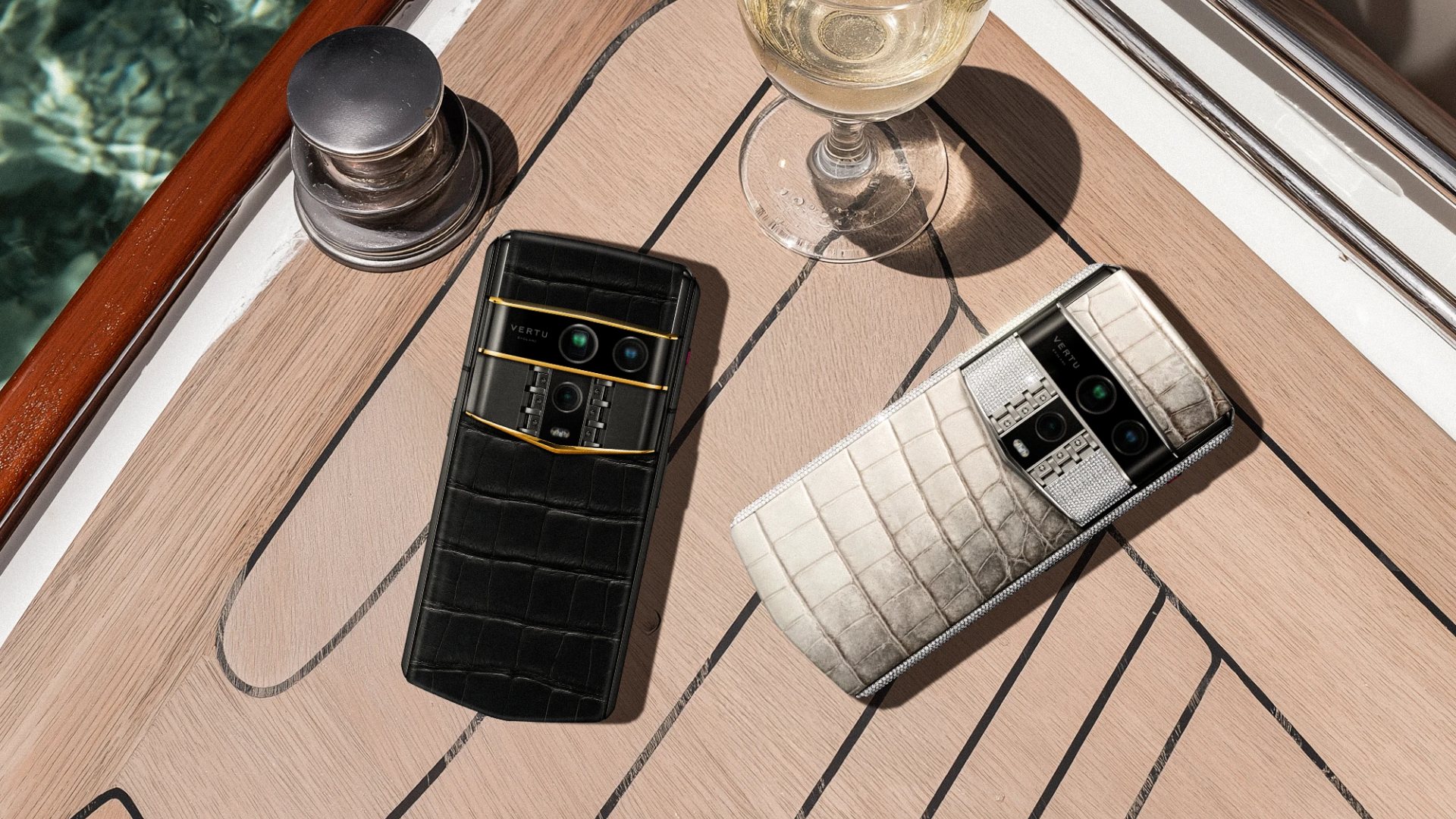
This growing danger is why the demand for a true luxury phone with anti-hacking features has never been higher. These devices are more than just status symbols; they are digital fortresses engineered to protect your most critical assets. This guide navigates the elite world where high-end design meets military-grade security. We will explore what defines a genuinely secure device, break down the essential anti-hacking technologies, and discuss the top considerations for protecting your communications in 2025. You'll discover why investing in this specialized technology is no longer an option but a necessity for the modern business leader.
Why Luxury Now Means Uncompromising Security
In 2025, the definition of luxury for high-profile individuals extends far beyond material opulence. It now encompasses the ultimate modern privilege: absolute digital privacy. For executives, diplomats, and high-net-worth individuals, a smartphone is a direct gateway to their most sensitive data. This has created a critical nexus where elite craftsmanship must merge with military-grade security, giving rise to the modern luxury phone with anti-hacking features—a device where peace of mind is the ultimate feature.
Beyond Aesthetics: What Defines a Secure Luxury Phone?
True digital security is not a gilded case or a concierge app; it is an architectural commitment. It's crucial to distinguish genuine security from clever marketing. While many premium brands offer aesthetic customization, a truly secure luxury phone is engineered from the ground up for protection.
This involves a hardened operating system with a minimal attack surface, hardware-based encryption keys stored in a secure enclave, and a curated ecosystem of vetted applications. The luxury is not in the superficial design but in the profound confidence that your communications are shielded by purpose-built defenses, not just a software layer on a vulnerable consumer device.
The 2025 Threat Landscape for Executives
High-level executives are no longer just potential targets; they are primary targets. The threat landscape has evolved into a highly sophisticated and personalized battlefield.
Cybercriminals and state-sponsored actors now deploy zero-click exploits, advanced persistent threats (APTs), and hyper-targeted spear-phishing campaigns designed to compromise the devices of key decision-makers. A single breach can expose trade secrets, derail mergers, and cause irreparable reputational damage.
These are not random attacks but calculated intelligence operations where the executive's smartphone is often the weakest link. The need for dedicated data privacy and protection solutions has never been more acute.
Why Standard Smartphones Fall Short for High-Stakes Communications
Mainstream smartphones are marvels of consumer technology, but their design philosophy prioritizes convenience and a vast, open app ecosystem over absolute security. This creates inherent vulnerabilities that are actively exploited. For high-stakes communication, these platforms are fundamentally inadequate.
| Feature | Standard Consumer Smartphone | Purpose-Built Secure Phone |
|---|---|---|
| Operating System | Mass-market (iOS/Android) with a large attack surface | Hardened, custom OS with security as the core principle |
| Hardware Security | General-purpose secure elements | Dedicated, isolated hardware for cryptographic keys |
| App Vetting | Open app stores with millions of potential threats | A closed, strictly vetted ecosystem of secure applications |
| Data Encryption | Standard encryption, often software-based | Multi-layered, hardware-accelerated encryption |
| Update Philosophy | Reactive security patches for known vulnerabilities | Proactive threat modeling and preventative architecture |
Ultimately, relying on a standard device for mission-critical information is a gamble. A dedicated luxury phone with anti-hacking features is an investment in digital sovereignty, ensuring that your most valuable asset—your information—remains exclusively yours.
Essential Anti-Hacking Features for Executive Devices in 2025
In an era where a single data breach can compromise an entire enterprise, the security of an executive's mobile device is paramount. A true luxury phone with anti-hacking features must be built with a security-first architecture, providing peace of mind as its ultimate feature.
Hardware-Based Encryption: Your Unbreakable First Line of Defense
Software-based encryption is a common security layer, but it is vulnerable to sophisticated malware and OS-level exploits. True digital fortification begins at the silicon level.
Hardware-based encryption utilizes a dedicated, isolated cryptographic co-processor to manage keys and perform cryptographic operations. This physical separation ensures that even if the main operating system is compromised, the keys remain secure in a tamper-resistant vault, making data extraction nearly impossible.
| Feature | Hardware-Based Encryption | Software-Based Encryption |
|---|---|---|
| Processing Core | Dedicated, isolated security chip | Shared main CPU resources |
| Performance Impact | Minimal to none; seamless operation | Can cause noticeable system slowdown |
| Key Storage | Secure, tamper-resistant hardware | System memory; vulnerable to attacks |
| Overall Security | Fundamentally more secure and robust | Susceptible to OS-level threats |
Secure Booting and Tamper Detection
A device's integrity must be guaranteed from the moment it is powered on. Secure booting accomplishes this by using cryptographic signatures to verify every piece of software before it runs. This process creates an unbreakable "chain of trust," ensuring no malicious code can be loaded at startup. In 2025, this is complemented by physical tamper detection, where sensors can trigger an automatic data wipe if an unauthorized attempt is made to open the device.
Advanced Privacy Controls and Network Security
An executive’s communications are a prime target, which is why advanced network security tools must be integrated natively. Key features include:
- Built-in, always-on VPNs that encrypt all data traffic, securing connections on any network.
- Physical or software "kill switches" that provide absolute certainty by instantly disabling microphones, cameras, Wi-Fi, and cellular data.
- Pre-loaded, hardened messaging applications that offer end-to-end encryption by default for all calls and texts.
The Gold Standard: Biometrics and Multi-Factor Authentication (MFA)
By 2025, biometrics are a core security pillar, not just a convenience. Advanced ultrasonic fingerprint sensors and 3D facial mapping provide highly accurate identification. However, the gold standard is robust Multi-Factor Authentication (MFA). This means combining a biometric scan with a secondary factor—such as a FIDO2-compliant physical security key or a code from a separate authenticator app—to prevent unauthorized access, even if a password or biometric is compromised.
Top Considerations When Choosing a Secure Luxury Phone in 2025
For those seeking a luxury phone with anti-hacking features, the decision in 2025 hinges on a balance of robust protection, seamless functionality, and long-term viability. It requires moving beyond surface-level specs to scrutinize the core principles of digital security.
Balancing Security with Usability and Performance
The most secure device is useless if it's too cumbersome for daily use. A critical consideration is assessing if advanced security compromises essential smartphone functions. An elite secure phone should integrate its protective layers without creating frustrating lags or an overly restrictive user experience. The goal is to achieve a state of "invisible armor," where protection doesn't hinder productivity.
| Feature | Standard Luxury Smartphone | Hardened Secure Smartphone |
|---|---|---|
| App Installation | Unrestricted access to public app stores. | Restricted to a vetted, secure app repository. |
| Authentication | Biometrics, PIN, Pattern | Multi-factor authentication, physical security keys. |
| Performance | Optimized for speed and multimedia. | May have slight overhead due to real-time encryption. |
| Connectivity | Open Wi-Fi, Bluetooth, NFC | Controlled ports, VPN enforcement, network analysis. |
Manufacturer Reputation and Security Update Policies
A manufacturer's commitment to security extends far beyond the initial purchase. The importance of long-term software support and timely security patches cannot be overstated. A premium price must be backed by a transparent and reliable update policy, guaranteeing immediate patches for zero-day vulnerabilities and consistent security updates for at least five to seven years. A brand's history of responding to threats is a key indicator of its dedication to user protection.
Understanding Compliance and Certifications
Marketing claims of "military-grade security" are common, but true validation comes from independent verification. It is vital to look for industry certifications that validate security claims, providing objective proof that a device meets stringent international standards.
Key certifications to look for include FIPS 140-2/3 (a U.S. government standard for cryptographic modules) and Common Criteria (CC), which provide a framework for independent security evaluation. A device holding these credentials has undergone rigorous testing, offering a higher level of assurance.
The Value Proposition: Cost vs. Risk Mitigation
While a luxury phone with anti-hacking features commands a significant premium, it's essential to frame the expense as an investment in digital sovereignty. The final step is evaluating the return on investment against potential breach costs. For an executive, a single data breach could lead to financial losses, reputational damage, or compromised intellectual property far exceeding the device's cost. In this context, the phone is a critical tool for risk management, making the enhanced security a sound investment.
FAQ (Frequently Asked Questions)
Q1: What is the main difference between a luxury secure phone and a high-end smartphone like an iPhone or Samsung Galaxy?
Answer 1The core difference is architectural. A standard smartphone prioritizes a vast app ecosystem and user convenience, which creates a large attack surface. A luxury phone with anti-hacking features is built from the ground up with a security-first principle, featuring a hardened operating system, hardware-based encryption, and a strictly vetted app environment to minimize vulnerabilities.
Q2: Are these ultra-secure phones difficult to use for daily activities?
Answer 2While there can be a learning curve, modern secure phones are designed to balance robust security with usability. They aim for "invisible armor," where protection runs seamlessly in the background. While app selection is more limited to ensure security, essential functions like secure calling, messaging, and browsing are often more intuitive and streamlined than on standard devices.
Q3: Can I still use common business applications on a secure phone?
Answer 3It depends on the manufacturer's ecosystem. Many secure phones come with a curated selection of pre-vetted, hardened applications for communication and productivity. Some may allow the installation of specific third-party apps within a secure, containerized environment, but unrestricted access to public app stores is generally not permitted to maintain the device's integrity. Always verify app compatibility before purchasing.
Conclusion
In the high-stakes environment of 2025, executive communications are a primary target for sophisticated cyber threats. Standard consumer smartphones are no longer adequate shields for sensitive corporate data. The solution lies in a purpose-built luxury phone with anti-hacking features, which integrates hardware-based encryption, a hardened operating system, and a security-first design philosophy. Making the right choice involves evaluating the balance of security and usability, the manufacturer's reputation for updates, and certified proof of its defensive capabilities.
Investing in this level of security is a direct investment in risk mitigation and digital sovereignty. Don't wait for a breach to reveal your vulnerabilities. Take the proactive step to fortify your most critical line of communication. Contact our security specialists today for a confidential consultation to assess your mobile threat profile and discover the secure communication solution that best protects your enterprise.