
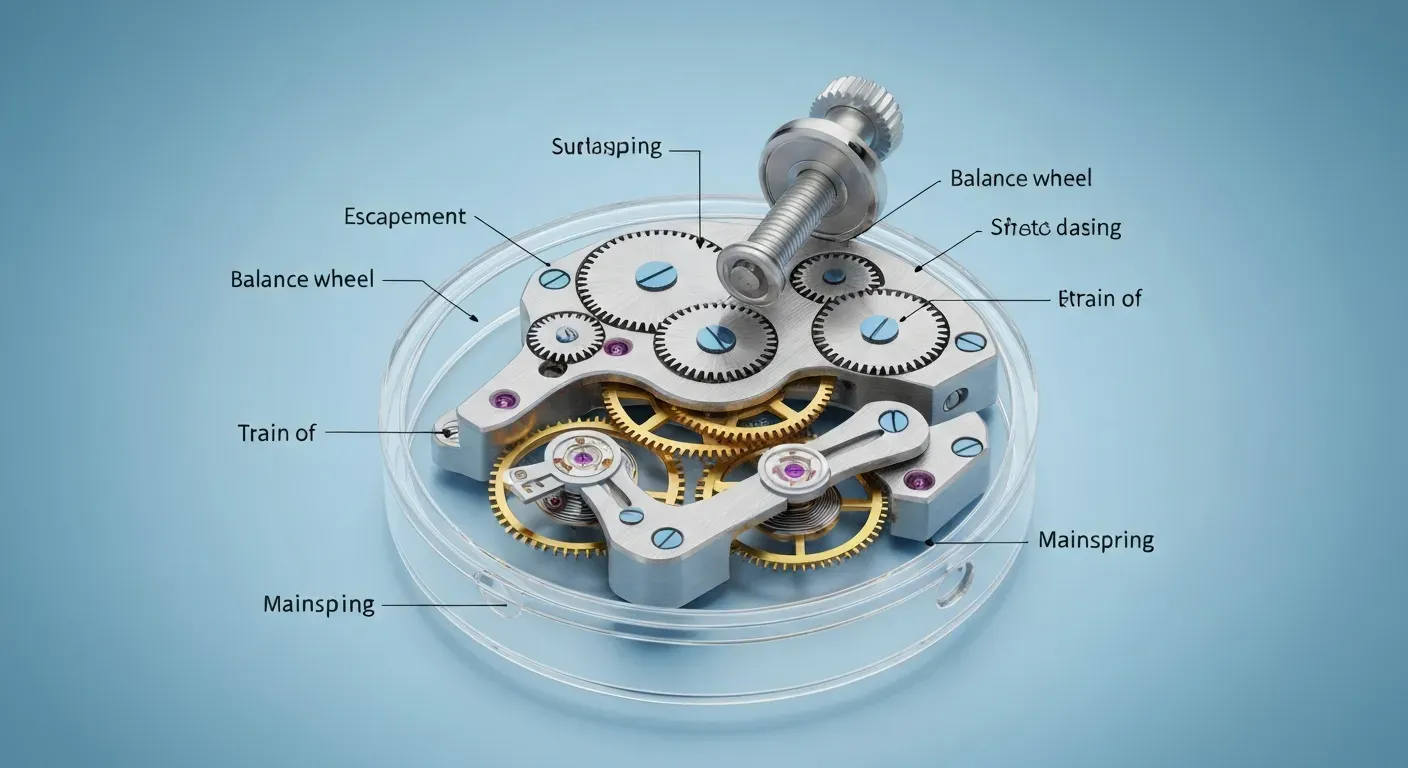
 Beyond the polished case and elegant dial, the true soul of any timepiece is its movement. This internal engine dictates its timekeeping accuracy and its very character. Deciding between a mechanical watch and the precision of quartz is the first crucial choice you'll make.
As we navigate 2026, understanding this difference is vital for a smart investment. Having the essential watch mechanisms explained clearly is key to focusing on what matters. It empowers you to find a timepiece that reflects your personality and daily needs.
This guide will illuminate the intricate world of watch movements. We’ll break down how each type works, compare their key features, and help you determine which fits your lifestyle. By the end, you'll have the clarity to choose with confidence.
A Guide to Watch Movements in 2026
A watch's movement is its internal engine, powering the hands and any other functions. Understanding the different types is key to choosing the right timepiece. This guide on watch mechanisms explained breaks down the core technologies you will find in 2026.
1. Mechanical Watch Movements
Mechanical movements represent the traditional heart of timekeeping. They operate without a battery, using a coiled mainspring for power. This spring releases energy through a complex system of gears and regulators, creating the characteristic “tick-tock” sound.
These movements connect the wearer to centuries of horological history and craftsmanship. Their intricate artistry and heritage are central to their appeal. Mechanical movements fall into two main categories: manually wound and automatic.
2. Automatic Watch Movements
Automatic movements are a self-winding type of mechanical movement. They use a weighted rotor that spins with your wrist's natural motion. This rotation winds the mainspring, storing energy to power the watch.
Many timepieces feature exhibition case backs to display this fascinating process. Enthusiasts favor these movements for their convenience and mechanical complexity. The hands of an automatic watch exhibit a smooth, continuous sweep across the dial.
3. Manually Wound Mechanical Movements
Manually wound movements represent a direct link to traditional horology. The wearer must periodically turn the crown to power the watch. This action tightens the mainspring, storing the energy needed to drive the hands.
The absence of a rotor allows for a thinner and lighter watch profile. This process fosters a unique, tactile connection with the timepiece. Collectors cherish these movements for their adherence to historical watchmaking practices.
4. Quartz Watch Movements
Quartz movements are renowned for their exceptional accuracy and low maintenance. A small battery powers the movement, sending a current through a tiny quartz crystal. This causes the crystal to vibrate at a precise frequency.
A circuit converts these 32,768 vibrations per second into the distinct one-tick-per-second movement of the second hand. This technology makes quartz movements incredibly reliable for everyday timekeeping. They are also more affordable to produce than mechanical counterparts.
| Feature | Mechanical (Manual) | Mechanical (Automatic) | Quartz | Hybrid (Solar/Kinetic) |
|---|---|---|---|---|
| Power Source | Mainspring | Mainspring | البطارية | Light / Motion |
| Winding Method | Manual (Crown) | Wrist Motion (Rotor) | None (Battery Change) | Self-Sustaining |
| Typical Accuracy | -10/+20 sec/day | -10/+20 sec/day | +/- 15 sec/month | +/- 15 sec/month |
| User Interaction | Daily Winding | Regular Wear | Periodic Battery Change | Minimal |
5. Hybrid Watch Movements (Kinetic & Solar)
Hybrid movements blend quartz accuracy with self-sustaining energy, reducing battery replacements.
Kinetic movements use the wearer’s motion to charge a capacitor that powers the watch.
Solar-powered movements use a panel to convert any light into electrical energy.
These eco-friendly movements are highly practical. They often feature power reserve indicators and can run for months on a full charge.
Mechanical vs. Quartz: Key Differences in 2026
In 2026, the choice between mechanical and quartz remains a primary decision. Each movement offers a distinct ownership experience. Having these core watch mechanisms explained helps you balance precision engineering against traditional craftsmanship.
Accuracy and Reliability
Quartz movements maintain a clear lead in precision. An electrical current causes their quartz crystal to vibrate at a remarkably consistent frequency. This results in a deviation of only a few seconds per month, offering superior reliability.
Mechanical movements show a wider variance. High-end, chronometer-certified models can achieve COSC certification, guaranteeing daily accuracy within -4 to +6 seconds. This performance requires complex engineering and precise calibration of all components.
| Feature | Quartz Movement | Mechanical Movement |
|---|---|---|
| Power Source | البطارية | Wound Mainspring |
| Typical Accuracy | ±15 seconds / month | -4 to +6 seconds / day (COSC) |
| Second Hand Motion | Ticking (one beat/sec) | Sweeping (multiple beats/sec) |
Maintenance and Longevity
Quartz watches require minimal upkeep. Owners typically only need to replace the battery every few years. This simple process makes quartz a practical, hassle-free choice for daily wear.
Mechanical watches demand regular maintenance to sustain their performance. A full service is recommended every 3 to 5 years. This involves disassembling, cleaning, lubricating, and adjusting the movement's components to ensure it runs smoothly.
Craftsmanship and Aesthetics
Mechanical movements are celebrated as marvels of intricate artistry. Enthusiasts value the smooth sweeping motion of the second hand. They also appreciate the visible complexity of the gear train, often viewed through an exhibition case back.
Quartz movements prioritize function and precision. While they execute their timekeeping task flawlessly, they generally do not offer the same level of detailed craftsmanship. Their appeal lies in their reliability and modern efficiency.
Cost and Value
Quartz watches are often more affordable. Their manufacturing processes are simpler and require less skilled manual assembly. This makes them accessible to a wider market.
Mechanical watches typically command higher prices. The cost reflects labor-intensive craftsmanship, sophisticated engineering, and rich heritage. Complex models represent a significant investment in horological art.
Choosing the Right Watch Movement for Your Needs
Selecting a watch in 2026 means choosing the engine that drives it. The movement dictates accuracy, maintenance, and the overall user experience. With these watch mechanisms explained, you can find a timepiece that perfectly aligns with your lifestyle.
For the Precision Seeker
If absolute, set-it-and-forget-it precision is your priority, a quartz movement is the optimal choice. These movements offer unmatched reliability for daily timekeeping with minimal user input. A solar-powered watch provides this same precision without needing battery changes.
| Feature | Quartz Movement | Automatic Movement | Solar-Powered Movement |
|---|---|---|---|
| Accuracy | +/- 15 sec/month | +/- 20 sec/day | +/- 15 sec/month |
| Power Source | البطارية | User's motion | Light (natural/artificial) |
| Maintenance | Battery change (2-5 yrs) | Service (5-10 yrs) | Minimal; capacitor may need eventual replacement |
| User Interaction | Minimal | Constant wear or winding | Exposure to light |
For the Heritage Enthusiast
A mechanical movement connects the wearer to the rich history of horology. These intricate machines operate without electronics, powered solely by a wound spring. An automatic movement winds itself, while a manual one requires daily winding.
Both types feature a smooth, sweeping second hand. This is a beautiful visual indicator of the complex mechanics inside.
For the Everyday Wearer
For maximum durability and simple operation, quartz movements are ideal. Their solid-state construction withstands shocks better than many mechanical alternatives. They do not require regular winding to function.
You simply set the time, and the watch operates reliably. Its battery will need replacement every 2-5 years.
For the Eco-Conscious
Hybrid movements offer a sustainable and modern alternative. Solar-powered watches convert light into energy, storing it in a rechargeable cell. This eliminates the need for disposable batteries.
Kinetic movements use a rotor to generate and store electrical power. These innovative options reduce waste and appeal to environmentally aware consumers.
FAQ (Frequently Asked Questions)
Q1: What is the main difference between mechanical and quartz watches?
A1: A mechanical watch uses a wound spring and gears, showcasing craftsmanship. A quartz watch uses a battery and a vibrating crystal for high accuracy. The choice is between traditional art and modern precision.
Q2: Why are mechanical watches more expensive?
A2: Mechanical watches cost more due to their intricate craftsmanship and the skilled labor required for assembly. Their complex system of tiny gears, springs, and jewels is much harder to produce than a simple quartz electronic circuit.
Q3: Does an automatic watch ever stop working?
A3: Yes, an automatic watch will stop if not worn for a day or two, as it relies on wrist motion to stay wound. Most have a power reserve of 38-48 hours. You can manually wind it to restart it.
خاتمة
In 2026, the choice between mechanical and quartz hinges on your priorities. With these intricate watch mechanisms explained, you can make an informed decision. You are choosing between the soulful artistry of traditional watchmaking and the flawless precision of technology.
Consider your daily lifestyle, appreciation for history, and need for pinpoint accuracy. Reflect on whether you prefer the low-maintenance reliability of quartz or the engaging ritual of a mechanical watch.
Now that you understand the heart of a timepiece, you are ready to choose with confidence. Begin exploring brands and models that excel in your preferred movement category. Find the perfect watch that doesn't just tell time, but also tells your unique story.