
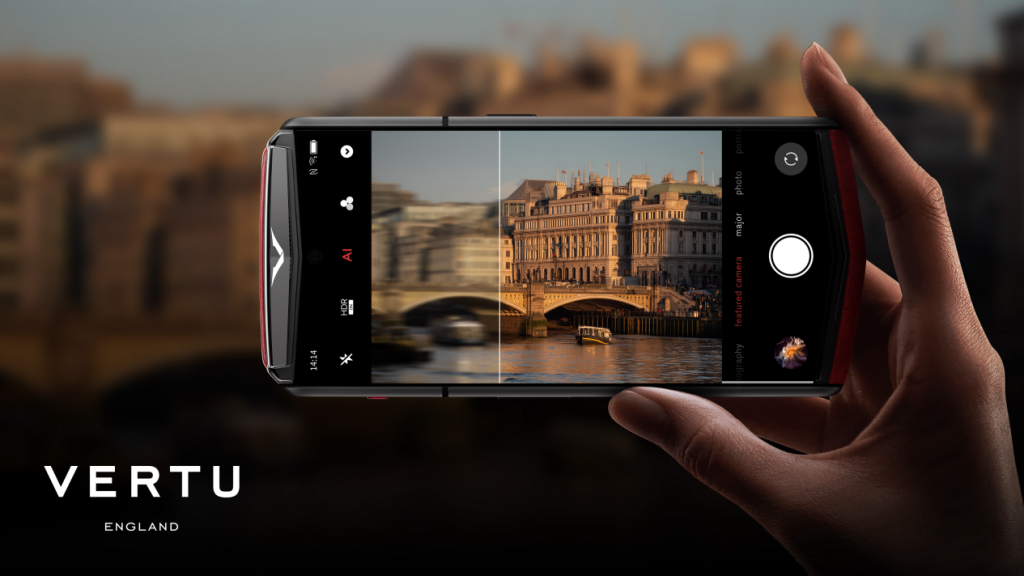
By 2025, the days of lugging around bulky DSLRs are largely behind us. Your smartphone has evolved into a creative powerhouse, capable of capturing cinematic video and gallery-worthy photography that fits right in your pocket. Yet, with technology advancing at breakneck speed, choosing the right device is harder than ever.
Navigating through marketing hype to find the truth requires a detailed phone camera performance review. You need to know which device truly delivers on its promises, looking beyond mere megapixel counts to actual real-world results.
In this guide, we dive deep into the essential benchmarks that define superior imaging today. We will rigorously dissect the evolving landscape of mobile photography, focusing on heavy hitters like the Samsung Galaxy S25 Ultra, Apple iPhone 17 Pro, and Google Pixel 10 Pro. Whether you prioritize low-light mastery, stabilization for vlogging, or AI-driven editing tools, our comparison empowers you to make an informed decision. Let’s explore these top models to help you find the perfect match for your unique photography and videography needs.
The Evolving Landscape of Smartphone Photography in 2025
As we navigate the technological terrain of 2025, the metrics defining a successful phone camera performance review have fundamentally changed. The era of chasing higher numbers on a spec sheet is fading, replaced by a nuanced appreciation for how hardware and software coalesce to create professional-grade imagery.
In 2025, discerning photographers understand that sensor size, aperture, and advanced image processing often outweigh raw megapixel counts. A massive megapixel count on a tiny sensor yields noise rather than detail. The current priority is physical sensor area—capturing more photons for superior dynamic range and natural bokeh. Industry insiders now note that the best camera is no longer the one with the most pixels, but the one with the biggest “bucket” to catch light.
To illustrate this shift, consider the changing priorities in camera specifications. Modern focus has shifted from raw resolution to pixel binning technology for superior low-light sensitivity. Zoom capabilities have moved from digital cropping to optical periscope lenses that retain lossless detail. Furthermore, processing has evolved from global HDR filters to semantic segmentation using AI to optimize specific subjects like faces and skies.
The true revolution lies in software. AI features are revolutionizing smartphone photography, moving beyond simple filters to intelligent scene reconstruction. Computational photography now handles complex tasks like extreme low-light enhancement and stabilization, rendering tripods obsolete for casual night shoots. Furthermore, intelligent editing tools allow users to reimagine shots post-capture, utilizing generative AI to remove distractions or expand backgrounds. While software refines the image, hardware remains the foundation. We are witnessing the latest hardware advancements, including larger sensors approaching the 1-inch standard and improved optical zoom capabilities.
2025's Top Camera Phone Contenders: In-Depth Reviews
As 2025 unfolds, mobile photography has shifted from a megapixel race to a battle of computational intelligence and sensor efficiency. This section analyzes how the year's leading devices handle complex lighting, video stabilization, and AI integration.
إن Samsung Galaxy S25 Ultra maintains its status as the zoom king. Samsung has refined its 200MP primary sensor, delivering exceptional sharpness in well-lit environments. The standout feature remains the quad-telephoto system, now offering improved stabilization at 100x digital zoom. In low-light scenarios, the S25 Ultra’s adaptive pixel technology reduces noise significantly, though it tends to slightly oversaturate colors compared to reality. Video capabilities have expanded to support 8K recording at higher frame rates, making it a robust tool for content creators.
Apple continues to dominate the video sector with the iPhone 17 Pro series. It introduces enhanced spatial video capture and superior LOG recording capabilities, allowing for professional color grading workflows. In terms of still photography, the photonic engine now resolves texture nuances with greater accuracy. Dynamic range is class-leading, preserving highlight details in high-contrast scenes where other contenders often clip. While the zoom range is less aggressive than Samsung's, the optical quality at 5x remains unmatched for portraiture, delivering natural bokeh without excessive edge artifacts.
Google’s Pixel 10 Pro and XL prioritize software over raw hardware specs. Utilizing the latest Tensor architecture, these devices excel in computational photography. The “Magic Editor” has evolved, allowing users to reconstruct parts of an image using generative AI with frightening realism. The Pixel’s strength lies in its “point-and-shoot” reliability. It consistently delivers the most accurate skin tones and white balance across varied lighting conditions. Night Sight is faster than ever, capturing astrophotography-level detail in handheld shots.
Head-to-Head Comparison: 2025's Best Camera Phones
The landscape of mobile photography in 2025 is defined by massive sensor upgrades and generative AI integration. Here we break down the technical specifications of the top contenders.
Samsung Galaxy S25 Ultra
Samsung continues its dominance in versatility. The S25 Ultra features a staggering 200MP main camera, paired with a 50MP ultrawide and dual telephoto lenses: a 50MP 5x zoom and a 10MP 3x zoom. The experience is refined by the AI ProVisual Engine and Galaxy AI tools, ensuring sharp details across focal lengths. For videographers, the inclusion of Pro Video mode, LOG video recording, and 8K 30fps capture makes it a portable cinema camera.
Apple iPhone 17 Pro / Max
Apple has unified its sensor resolution, deploying 48MP sensors across the main, ultrawide, and 4x telephoto rear cameras. A standout hardware addition is the Camera Control button, offering tactile adjustments. The 18MP ‘Center Stage' front camera improves selfies, while professionals benefit from ProRes RAW, Genlock support, and Dual Capture features.
Xiaomi 15 Ultra & Vivo X200 Pro
The competition outside the “big three” is fierce. The Xiaomi 15 Ultra leverages a massive 1-inch sensor and Leica optics to produce images with natural depth. Similarly, the Vivo X200 Pro excels in stabilization with its gimbal system and a unique 200MP 3.7x telephoto capable of close focus macro shots.
Google Pixel 9a
For budget-conscious users, the Pixel 9a offers a 48MP main camera with a wider aperture. It retains core strengths like Astrophotography, Google AI features, and reliable point-and-shoot results, proving that you do not need to spend over $1,000 for top-tier image processing.
Ultimately, the S25 Ultra wins on zoom versatility, while the Xiaomi 15 Ultra dominates in raw sensor size. The iPhone 17 Pro remains the choice for video workflow integration, and the Pixel series leads in AI utility.
Choosing the Right 2025 Camera Phone for Your Needs
Navigating the smartphone market in 2025 requires looking beyond simple megapixel counts. A comprehensive phone camera performance review suggests that the “perfect” device is subjective, depending entirely on your specific creative workflow and financial constraints.
First, distinguish between still photography and videography needs. If your priority is photography, focus on sensor size and computational strengths—specifically how the phone processes HDR and skin tones in challenging lighting. Devices excelling here often utilize AI to balance exposure in high-contrast scenes. Conversely, video-first users must prioritize hardware stabilization (OIS) and sustained performance. For content creators, thermal management and audio capture quality often outweigh raw resolution numbers. Look for phones that support LOG recording if you plan to color grade your footage.
The gap between flagship and mid-range has narrowed significantly. While top-tier models dominate in zoom capabilities, value devices like the Pixel 9a offer stunning main-camera performance by leveraging the same image processing pipelines as their premium siblings. Additionally, consider the manufacturer's commitment to software longevity. In 2025, leading brands are offering extended support windows, sometimes up to seven years. This is vital for camera phones, as manufacturers frequently roll out “Feature Drops” that improve image processing algorithms and add new shooting modes long after the initial hardware release.
FAQ (Frequently Asked Questions)
Q1: Which phone has the best camera for video recording in 2025?
A1: The iPhone 17 Pro Max is widely considered the best for video due to its superior stabilization, ProRes LOG recording capabilities, and consistent frame rates. It offers the most seamless workflow for content creators and professionals who need to color grade their footage.
Q2: Does a higher megapixel count (like 200MP) always mean better photos?
A2: No, not necessarily. While a 200MP sensor, like the one in the Galaxy S25 Ultra, allows for incredible detail and cropping flexibility, sensor size and image processing are more critical. A larger sensor captures more light, reducing noise in low-light situations, which often results in better overall image quality than a smaller sensor with more pixels.
Q3: Is the Google Pixel 10 Pro better than the Samsung S25 Ultra for photos?
A3: It depends on your preference. The Pixel 10 Pro generally produces more accurate skin tones and handles high-contrast scenes better thanks to superior AI processing (“point-and-shoot” reliability). However, the Samsung S25 Ultra is superior for zoom photography and offers more manual controls for enthusiasts who want to tweak settings.
Q4: Are “Pro” or “Ultra” phones worth the extra money for casual photography?
A4: If you primarily take photos for social media in good lighting, a mid-range phone like the Pixel 9a is sufficient. You should invest in “Pro” or “Ultra” models if you need specific features like optical zoom (telephoto lenses), high-quality night mode, or professional video recording formats.
خاتمة
In 2025, the smartphone landscape has evolved into a true powerhouse of optical innovation. As we have explored throughout this phone camera performance review, the battle for imaging supremacy is fiercer than ever before. While industry titans like Samsung, Apple, and Google continue to lead the pack, challengers such as Xiaomi and Vivo are delivering formidable devices that keep the competition on their toes. The defining trends of this year—sophisticated AI processing, crystal-clear zoom capabilities, and remarkable low-light sensitivity—have fundamentally raised the bar for mobile photography.
Selecting your next device requires looking beyond mere megapixel counts. We strongly encourage you to evaluate your primary use case against the benchmarks we analyzed. Are you prioritizing cinematic videography, or do you need a telephoto lens for wildlife shots? Consider how your budget and preferred ecosystem align with these features.
Ready to upgrade your mobile photography game? Don't just rely on the specs—experience the difference yourself. Check the latest prices and trade-in deals for these top-tier devices at your preferred retailer today, and start capturing your world in professional quality. If you found this guide helpful, subscribe to our newsletter for more in-depth tech reviews and future-proof buying advice.