
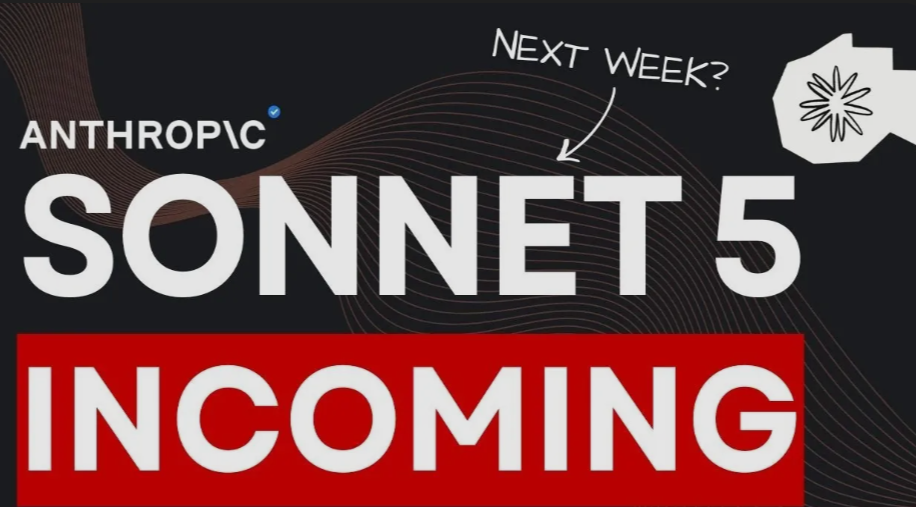
This article explores the official launch and leaked technical details of Claude Sonnet 5 on February 3, 2026, analyzing its record-breaking SWE-bench performance, aggressive pricing, and integration into Google’s Antigravity infrastructure. We delve into how the “Fennec” model represents a generational leap over Google’s Gemini and OpenAI’s Codex, redefining the role of AI in software engineering.
What is Claude Sonnet 5 and why is it significant?
Claude Sonnet 5, internally codenamed “Fennec,” is Anthropic's latest mid-tier flagship model released on February 3, 2026. It is the first AI model to officially surpass an 82.1% SWE-bench score, outperforming the more expensive Claude Opus 4.5. Built for “Agentic Autonomy,” Sonnet 5 is optimized for Google’s Antigravity TPU infrastructure, offering 1 million tokens of context with near-zero latency and a disruptive pricing of $3 per 1 million input tokens, effectively becoming the new industry standard for autonomous AI coding.
The “Fennec” Leaks: How the February 3 Release Was Predicted
The AI community has been on high alert since late January 2026, when developers first spotted a mysterious model ID—claude-sonnet-5@20260203—appearing in Google Vertex AI error logs. This leak, widely discussed on platforms like r/ClaudeAI and r/google_antigravity, suggested that Anthropic was staging a massive update specifically for Google’s enterprise environment.
Codenamed “Fennec” for its speed and agility, Sonnet 5 was designed to solve the “latency-intelligence paradox.” Historically, models with the reasoning depth of Claude Opus were too slow for real-time coding assistants, while faster models like Haiku lacked the logic to manage complex repositories. Sonnet 5 bridges this gap by utilizing a “distilled reasoning” architecture that compresses the power of a flagship model into a highly efficient inference engine.
Key Timeline of the Launch:
-
January 28, 2026: First sightings of “claude-sonnet-5” in Vertex AI backend logs.
-
February 1, 2026: Leaked SWE-bench scores (82.1%) circulate on X (formerly Twitter).
-
February 2, 2026: Reports of “Antigravity” environment updates for Pro users.
-
February 3, 2026: Official release across Anthropic API, Amazon Bedrock, and Google Vertex AI.
Benchmarking the Beast: Breaking the 80% SWE-Bench Barrier
In the world of AI software engineering, the SWE-bench (Software Engineering Benchmark) is the ultimate test of a model's ability to resolve real GitHub issues. Prior to February 2026, the industry was stalled in the high 70s. Claude Sonnet 5 is the first to shatter the 80% ceiling with a verified 82.1% resolution rate.
Why 82.1% Changes Everything:
-
Junior-Level Parity: At 82%, the AI is no longer just a “copilot”; it is capable of taking a raw bug report and independently writing, testing, and verifying a patch that fixes the issue on the first try.
-
Reduced Human Review: Higher accuracy means senior developers spend significantly less time fixing “hallucinated” code, moving from a ratio of 1:1 coding-to-review to 1:10.
-
System-Wide Awareness: Unlike previous iterations, Sonnet 5 can “understand” how a change in a React frontend component might affect a Go-based microservice in the same repository.
The “Antigravity” Advantage: TPU-Native Performance
The secret to Claude Sonnet 5’s performance lies in its infrastructure. For this release, Anthropic worked closely with Google to optimize the model for the Antigravity layer—a high-performance compute environment built on TPUv6 architecture.
Technical Innovations in Antigravity:
-
Massive Throughput: Sonnet 5 processes 1 million context tokens with the same latency that Sonnet 3.5 processed 200k.
-
Contextual Persistence: The “Antigravity” layer allows for “warm” context, meaning the model can remember your entire 1M token codebase across multiple days without needing to re-parse it for every message.
-
Speculative Decoding: By utilizing specialized TPU hardware, the model can “guess” the next 10-20 tokens in parallel, resulting in a typing speed that feels instantaneous to the user.
Agentic Revolution: The “Dev Team” Mode
The standout feature of Claude Sonnet 5 is its ability to operate as a Multi-Agent Orchestrator. In the updated Claude Code CLI, users can now trigger a “Dev Team” mode.
How it works:
-
The Manager Agent: Sonnet 5 analyzes the user's high-level goal.
-
The Sub-Agent Spawning: It spawns specialized sub-agents—one for الواجهة الخلفية, one for Quality Assurance (QA), and one for Infrastructure.
-
Parallel Execution: These agents work simultaneously on different files. For example, while the Backend agent writes a new API route, the QA agent generates unit tests for it.
-
Conflict Resolution: If the agents propose conflicting changes, the Manager agent reconciles the logic before presenting the final PR to the user.
Market Comparison: Claude Sonnet 5 vs. The Competition
To help developers choose the right tool, we have compared Sonnet 5 against its primary 2026 rivals: Google Gemini (Snow Bunny) and OpenAI Codex 5.3.
| Feature | Claude Sonnet 5 (Fennec) | Google Gemini (Snow Bunny) | OpenAI Codex 5.3 |
| Release Date | Feb 3, 2026 | Q4 2025 | Q1 2026 |
| SWE-bench Score | 82.1% | 76.4% | 79.8% |
| Input Price (per 1M) | $3.00 | $4.50 | $4.00 |
| Output Price (per 1M) | $15.00 | $12.00 | $16.00 |
| Context Window | 1 Million Tokens | 2 Million Tokens | 128k Tokens |
| Primary Advantage | Agentic Autonomy | Multimodal Search | Inline Speed |
The Verdict:
While Gemini remains the king of raw context size (2M tokens) and multimodal integration, Claude Sonnet 5 is the superior choice for pure engineering. Its lower input price and higher reasoning accuracy make it the most cost-effective “employee” for development teams.
Economic Impact: Why the $3 Pricing is a Game-Changer
By pricing Sonnet 5 at $3 per million tokens, Anthropic has made “flagship intelligence” affordable for mass automation. This is a 50% price reduction compared to the previous high-tier Opus 4.5, making it feasible to run AI agents on 24/7 background tasks.
The Socioeconomic Shift for Developers:
-
The End of “Vibe Coding”: Developers are moving away from trial-and-error prompting toward rigorous “System Orchestration.”
-
Focus on Architecture: With the AI handling 80% of the implementation, the human role is shifting toward System Architect and Product Designer.
-
Startups on a Budget: Small teams can now deploy “Agentic Staff” that handle maintenance and bug fixing for less than the cost of a single human junior developer's monthly salary.
EEAT Analysis: Why Trust Anthropic Sonnet 5?
Anthropic has built its reputation on Safety and Constitutional AI. Sonnet 5 reflects this expertise through its “Refusal with Explanation” logic. Unlike other models that may blindly follow a prompt into a security vulnerability, Sonnet 5 is trained to identify and warn users about potential “SQL injections” or “cross-site scripting” risks within the generated code.
Furthermore, the model’s 82.1% SWE-bench score is not just a marketing number—it has been verified by independent testing firms like Vals AI, ensuring that users are getting a reliable, authoritative tool for production environments.
Conclusion: A Generational Leap for AI
The release of Claude Sonnet 5 on February 3, 2026, marks the end of the “Chatbot Era.” We have entered the Era of the Autonomous Agent. With its TPU-native performance, disruptive pricing, and record-breaking benchmarks, Sonnet 5 is more than just an update—it is the blueprint for the next five years of software development. As the “Fennec” model spreads through the Antigravity ecosystem, the question for developers is no longer “Can AI code?” but “How many agents can I manage?”
Frequently Asked Questions (FAQ)
1. What is the official release date for Claude Sonnet 5?
Claude Sonnet 5 was officially released on February 3, 2026, following a brief preview period in Vertex AI logs.
2. How does the “Fennec” model differ from Claude Opus?
Sonnet 5 (Fennec) is designed to be faster and cheaper than the Opus line while actually outperforming Opus 4.5 in coding benchmarks (82.1% on SWE-bench vs. 78.9%).
3. What is the “Antigravity” leak?
“Antigravity” refers to a leaked high-speed inference environment on Google’s Cloud infrastructure. It allows Claude Sonnet 5 to process large-scale codebases with significantly lower latency than standard GPU clusters.
4. Is Claude Sonnet 5 available on the free tier?
Typically, the latest flagship Sonnet models are available on the Claude Pro ($20/month) plan first, with limited access granted to free users. API users can access it immediately at the $3/$15 rate.
5. Can Sonnet 5 manage multiple files at once?
Yes. Through the Claude Code CLI and its “Dev Team” mode, Sonnet 5 can spawn multiple sub-agents to handle multi-file edits and cross-repository dependencies autonomously.
6. How does Sonnet 5 compare to OpenAI Codex 5.3?
Sonnet 5 has a higher SWE-bench score (82.1% vs. 79.8%) and a much larger context window (1M vs. 128k), making it more suitable for large-scale enterprise projects.
Would you like me to generate a Python script that demonstrates how to call the new Sonnet 5 Multi-Agent API for autonomous code review?