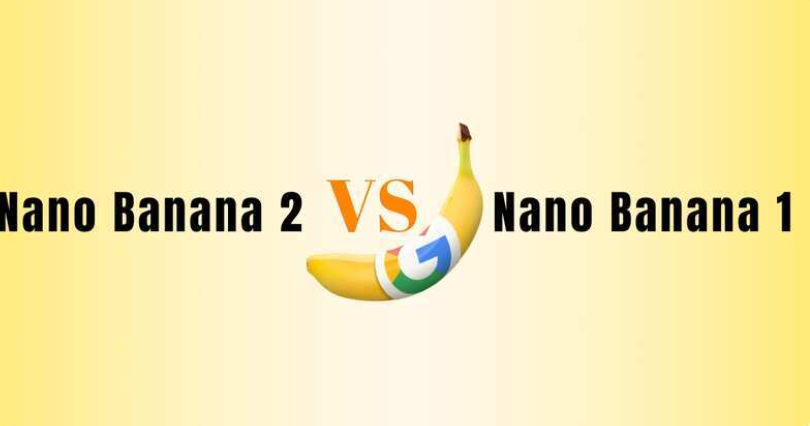
With the launch of Google Gemini 3, the landscape of AI image generation has been redefined by a powerful new player: the Nano Banana series. Beyond the playful name, these tools represent Google's latest breakthroughs in multimodal understanding and native image generation. For creators and developers, this raises a critical question: should you opt for the lightweight Nano Banana, or invest in the flagship Nano Banana Pro? And what other contenders on the market can keep up?
This article provides a detailed breakdown of these two tools, powered by different Gemini cores, and introduces three formidable alternatives to consider for your creative workflow.
The Core Difference: Nano Banana (Gemini 2.5) vs. Nano Banana Pro (Gemini 3)
The primary distinction between the Nano Banana models lies in their “brain”—the version of the Gemini model they run on. This core difference directly impacts their reasoning capabilities, comprehension of complex prompts, and the level of detail in the generated images.
Performance and Feature Comparison
| Core Metric | Nano Banana | Nano Banana Pro |
| Base Model | Gemini 2.5 Flash Image | Gemini 3 Pro Image |
| Core Strength | Speed and Efficiency. Delivers extremely fast generation with low latency and minimal cost. | Reasoning and Logic. Possesses “thinking” capabilities to understand complex scene descriptions and logical relationships. |
| Text Rendering | Good. Suitable for simple words and logos. | Excellent. Can accurately render long sentences, complex layouts, and text for posters. |
| Lighting & Texture | Excellent Realism. Offers great photorealism but can occasionally produce an overly smooth “AI feel.” | Cinema-Grade Quality. Achieves more accurate physical light logic and highly realistic textures for skin, fabric, and more. |
| Prompt Adherence | Medium-High. Understands most descriptions but may struggle with complex spatial relationships (e.g., “a cat to the left of a dog”). | Extremely High. Flawlessly executes spatial instructions, object counts, and complex negative prompts. |
| Primary Use Case | Quick illustrations, social media content, brainstorming sketches, and bulk image generation. | Ad-quality posters, complex illustrations, marketing materials with text, and high-fidelity product images. |
| Typical Access | Gemini App (Free Tier), Google AI Studio (Flash Tier). | Gemini Advanced, Google AI Studio (Pro Tier), Vertex AI. |
In-Depth Analysis: Which Model Is Right for You?
1. Nano Banana (Based on Gemini 2.5)
Positioning: The “King of Speed.” Nano Banana is engineered to provide high-quality images with the lowest possible latency. Built on the efficient architecture of Gemini 2.5 Flash, it is the perfect choice for applications requiring real-time generation. If your workflow involves creating 20 draft images per minute for selection or developing a responsive mobile application, this is your go-to tool.
-
Ideal Users: Social media managers, mobile app developers, and designers who need to validate creative ideas quickly.
-
How to Access: Typically integrated into the free version of the Gemini App or available via the gemini-2.5-flash-image API in Google AI Studio.
2. Nano Banana Pro (Based on Gemini 3)
Positioning: The “Master of Logic.” Nano Banana Pro doesn't just draw; it thinks about your image. Powered by the advanced native multimodal reasoning of Gemini 3, it can interpret complex prompts that blend style, content, and specific text commands. An example would be: “Create a photo that looks like a 90s film still, with a sign that reads ‘Welcome Home' in a neon font.”
-
Ideal Users: Professional advertisers, UI/UX designers, and artists who demand strict logical consistency and precision in their visuals.
-
How to Access: Requires a Gemini Advanced subscription or can be accessed by selecting the gemini-3-pro-image model in Google AI Studio.
Top 3 Alternatives to Nano Banana Pro
If you find that the Google ecosystem isn't the right fit or your projects demand a specific artistic touch, these three powerful competitors are the best on the market today.
1. Midjourney v6.1 (and subsequent versions)
-
Why it's recommended: It remains the undisputed leader in artistic aesthetics. While Google's tools have made massive strides in logic and text rendering, Midjourney continues to dominate when it comes to “aesthetic scoring.” Its default output style is incredibly artistic, producing stunning results for oil paintings, photography, and cyberpunk art with minimal prompt tweaking.
-
Competitive Edge: Compared to Nano Banana Pro, Midjourney’s textures often feel more authentic and less “perfect,” giving them a human-like quality that avoids the sterile AI look.
2. Black Forest Labs FLUX.1 (Pro/Dev)
-
Why it's recommended: The king of open-source text rendering. Before Nano Banana Pro, FLUX.1 was widely recognized as the most accurate model for generating typography within images. As an “open weights” model, its Dev version can be deployed on your own servers for maximum control and privacy.
-
Competitive Edge: If your work requires exceptional anatomical accuracy (especially with hands and limbs) and flawless text integration, FLUX.1 is the best choice, particularly for those who prioritize privacy or need a self-hosted solution.
3. OpenAI DALL-E 3 (via ChatGPT)
-
Why it's recommended: The original trendsetter in semantic understanding. As Gemini's long-standing rival, DALL-E 3 excels at “getting what you mean.” Its greatest advantage is its seamless integration with ChatGPT. You don't need to be an expert in writing prompts; simply describe what you want in plain language, and ChatGPT will rewrite it into a perfect prompt for DALL-E 3.
-
Competitive Edge: It offers an extremely low barrier to entry. For users unfamiliar with prompt engineering, the DALL-E 3 experience is often more user-friendly than professional models that require precise and detailed instructions.
Final Recommendations
-
For Speed and Low/No Cost: Your best option is Nano Banana (Gemini 2.5 Flash).
-
For Precise Control, Text Rendering, and Complex Logic: Choose Nano Banana Pro (Gemini 3).
-
For Unmatched Artistic Beauty and Atmosphere: The top choice remains Midjourney.