The 2026 watch market is defined by a fascinating tension between centuries of Swiss heritage, the rapid quality ascent of Chinese manufacturing, and the extreme engineering required for ultra-thin records. This guide explores the brands and timepieces that dominate these diverse sectors, offering insights into prestige, value, and technical mastery.
Which are the best watch brands and models in 2026?
For Swiss Luxury, Rolex (notably the 100th Anniversary Oyster), Patek Philippe, and Vacheron Constantin remain the “Big Three” for prestige and investment. In the Chinese Watch sector, Atelier Wen and Sea-Gull lead in craftsmanship and value, while San Martin dominates the “affordable luxury” niche. For Ultra-Thin Engineering, the Bulgari Octo Finissimo Ultra COSC holds the crown for thinnest mechanical watch at a staggering 1.70 mm, narrowly edging out the Richard Mille RM UP-01 ($1.75\text{ mm}$).
1. The Swiss Powerhouse: Heritage and the 2026 Milestone
Swiss watchmaking continues to be the gold standard for luxury, combining artistic finishing with industrial precision. In 2026, the industry is celebrating significant historical milestones that have revitalized interest in “blue-chip” models.
The “Big Four” of Swiss Luxury
-
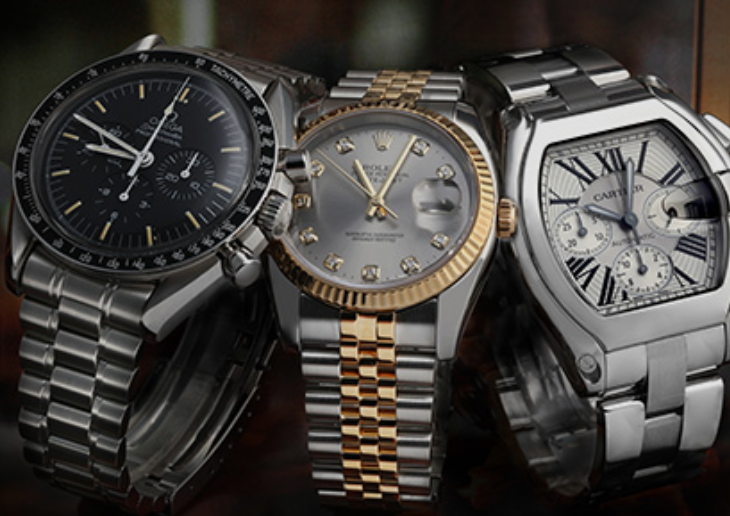
Rolex (The King of Consistency): 2026 marks the 100th Anniversary of the Oyster Case. Rolex has used this milestone to release commemorative Submariner and Day-Date models that emphasize the brand's history of waterproofing. Rolex remains the primary choice for asset retention.
-
Patek Philippe (The Heirloom): Celebrating the 50th Anniversary of the Nautilus in 2026, Patek remains the pinnacle of “Haute Horlogerie.” Their movements, such as the Caliber 240, are celebrated for their thinness and reliability.
-
Vacheron Constantin (The Oldest Master): Marking 270 years of continuous production, Vacheron is the choice for collectors who value hand-finished movements and the prestigious “Hallmark of Geneva.”
-
Audemars Piguet (The Cultural Icon): The Royal Oak continues to evolve with new material sciences, including “frosted gold” and full-ceramic cases, maintaining its status as a fashion and cultural juggernaut.
2. The Rise of Chinese Horology: Redefining “Made in China”
The stigma surrounding Chinese watches has vanished in 2026, replaced by an appreciation for high-spec components at competitive prices. Chinese brands now compete in two distinct tiers: high-end artisan craftsmanship and high-value “homage” pieces.
Leading Chinese Watch Brands
-
Atelier Wen: This brand has spearheaded the “Pride in China” movement. Their Perception series features hand-guilloché dials made by master artisans in China, paired with integrated bracelets that rival Swiss finishing.
-
Sea-Gull: As the world’s largest manufacturer of mechanical movements, Sea-Gull is the backbone of the industry. The 1963 Air Force Chronograph (utilizing the ST19 movement) remains an essential entry-level piece for any collector.
-
Behrens: A Shenzhen-based brand that focuses on “wandering hours” and futuristic displays. Behrens has earned GPHG nominations, proving that Chinese engineering can be as avant-garde as MB&F or Urwerk.
-
San Martin & Sugess: These brands have mastered “attainable performance.” By using high-grade stainless steel, sapphire crystals, and reliable movements (like the NH35 or PT5000), they offer 90% of the luxury feel at 10% of the cost.
3. The Race to the Bottom: The Thinnest Watches in the World
Ultra-thin watchmaking is the ultimate “flex” of engineering prowess. Reducing a mechanical movement to the thickness of a credit card requires rethinking every component, from the escapement to the mainplate.
The Record Breakers of 2026
-
Bulgari Octo Finissimo Ultra COSC ($1.70\text{ mm}$): The current record holder. Bulgari achieved this by using the caseback as the movement’s mainplate and incorporating a QR code on the barrel for digital authentication.
-
Richard Mille RM UP-01 Ferrari ($1.75\text{ mm}$): A marvel of material science using Grade 5 Titanium. Unlike other ultra-thin watches, the movement is a standalone assembly within the case, allowing it to withstand $5,000$G of shock.
-
Piaget Altiplano Ultimate Concept ($2.00\text{ mm}$): The pioneer of the modern ultra-thin era. It uses a specialized cobalt alloy to ensure the case does not bend, which could stop the movement.
-
Konstantin Chaykin ThinKing ($1.65\text{ mm}$ Prototype): While still in the prototype phase in 2026, this Russian-made watch is pushing the boundaries even further, suggesting that the limit of mechanical thinness has not yet been reached.
4. Brand & Category Comparison Table
This table helps collectors compare Swiss luxury, Chinese value, and Ultra-thin engineering across key performance metrics.
| الفئة | Representative Brand | Movement Origin | Case Material | 2026 Est. Price (USD) | Best For |
| Swiss Luxury | Rolex | Swiss (In-house) | 904L Steel / Gold | $9,000 – $50,000+ | Investment & Status |
| Swiss Trinity | Vacheron Constantin | Swiss (In-house) | Precious Metals | $25,000 – $200,000+ | Haute Horlogerie |
| Chinese Artisan | Atelier Wen | Chinese (Custom) | 904L Steel | $3,000 – $4,500 | Design & Finishing |
| Chinese Value | San Martin | Japan / China | 316L Steel | $200 – $600 | Daily Utility / EDC |
| Ultra-Thin | Bulgari | Swiss (BVL 180) | Tungsten / Ti | $450,000+ | Engineering Mastery |
| Ultra-Thin | Richard Mille | Swiss (In-house) | Grade 5 Titanium | $1,800,000+ | Ultra-Elite Sport |
5. Decision Guide: Swiss vs. Chinese vs. Ultra-Thin
Choosing a timepiece in 2026 depends on your primary goal as a collector. Adhere to these steps to make an informed decision:
-
Define Your Budget: If you have under $1,000, Chinese value brands offer the best specs (sapphire, ceramic, automatic). Between $5,000 and $15,000, Swiss entry-luxury (Omega, Tudor) is the sweet spot.
-
Evaluate Movement Specs: Do you want the prestige of a COSC-certified Swiss movement or the fascinating history of a Sea-Gull ST19 chronograph?
-
Consider Wearability: Ultra-thin watches are stunning but often have low water resistance (typically $10\text{ m}$ to $30\text{ m}$). If you need a “GADA” (Go Anywhere, Do Anything) watch, a slightly thicker Swiss or Chinese diver is better.
-
Resale Value: If you plan to trade or sell, Rolex and Patek Philippe are unmatched. Chinese brands generally have lower resale but higher “enjoyment-per-dollar.”
FAQ: Frequently Asked Questions
Are Chinese watches as good as Swiss watches in 2026?
Technically, the gap has closed significantly. While a $500 San Martin does not equal a $10,000 Rolex in finishing, brands like Atelier Wen and Behrens produce watches that rival Swiss luxury in originality and craftsmanship.
Why are ultra-thin watches so expensive?
Ultra-thin horology is a “complication” in itself. The R&D required to ensure a $1.7\text{ mm}$ watch doesn't snap under wrist pressure involves exotic materials (Cobalt, Tungsten) and years of prototyping.
Is a “Swiss Made” watch entirely made in Switzerland?
Not necessarily. According to Swiss law, only 60% of the manufacturing costs must be incurred in Switzerland. Many “Swiss Made” watches use cases or bracelets manufactured in China to stay competitive.
What is the most famous Chinese watch movement?
إن Sea-Gull ST19. It is a column-wheel chronograph movement based on the Swiss Venus 175, widely loved for its mechanical beauty and affordable price point.
Which watch should I buy for a first-time investment?
In 2026, the Rolex Submariner or the Omega Speedmaster Professional are considered the safest “blue-chip” entries into watch collecting.
Summary
The global watch industry in 2026 is a multi-polar landscape. Switzerland remains the heart of luxury and heritage, while China has evolved from a manufacturer into a creator of horological art. Meanwhile, the pursuit of the “thinnest watch” continues to push the physical limits of what a mechanical object can be. Whether you seek the status of a 100th-anniversary Rolex or the artisan dial of an Atelier Wen, there has never been a better time to be a watch enthusiast.